


















![The market-builder who restrained the market [Part 2]](https://muslimviews.co.za/wp-content/uploads/2026/08/PHOTO-2026-08-25-17-16-32-360x180.jpg)
![The merchant preceding the Prophetic mission [Part 1]](https://muslimviews.co.za/wp-content/uploads/2026/08/01-360x180.jpg)







As disputes move from ulama councils to courts, South Africa’s Muslim community faces a growing crisis of leadership, trust and communal conflict resolution.
By SAYED RIDHWAAN MOHAMED
The dignity of our community is being eroded, one court order at a time. Across the Western Cape, we are witnessing a disturbing trend: the intimate, sacred affairs of the Muslim community are being stripped of their spiritual character and dragged into the cold, clinical glare of secular courts. What was once handled through shura (consultation), mediation, and the wisdom of community elders is being replaced by adversarial litigation, injunctions, and the heavy hand of law enforcement.
We are left to ask: how did we arrive at this spectacle?
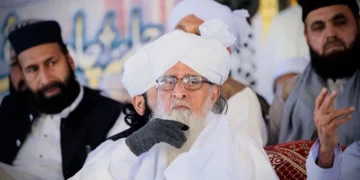
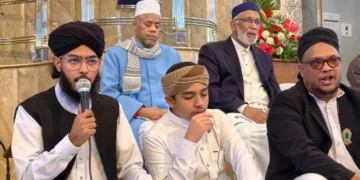
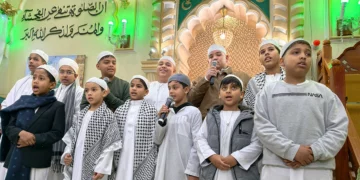
Consider the recent, deeply unsettling images circulating in our community. We see an elderly Moulana – a man who dedicated decades to serving his congregation – being allegedly arrested for the ‘crime’ of performing dua at a masjid he once called home. This is not just a legal matter; it is a profound rupture in our social and spiritual fabric. When the sanctity of a place of worship is breached by police intervention, and when the act of leading prayer becomes grounds for an arrest warrant, the message sent is that our internal mechanisms for conflict resolution have not just failed – they have been bypassed in favour of a system that neither understands nor respects the nuance of our religious traditions.

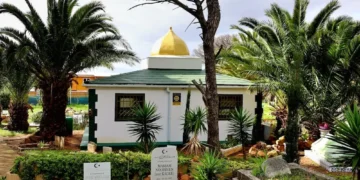
This is not an isolated incident. Look at the recent battles over our burial sites of Moslem Cemetery Board. The legal wrangling over mortuary facilities at our cemeteries has turned sacred ground into a theatre of dispute. We see cemeteries, the final resting places of our ancestors, governed by centuries of waqf tradition – subject to the rigid interpretation of secular title deeds and high court interdicts.
The spectacle we are witnessing is the erosion of communal autonomy. We are becoming a community that looks to the secular judge, rather than the scholar, to settle our disputes. But we must be painfully, brutally honest about why: the vacuum left behind is not an accident; it is a symptom of a deeper crisis. Many in our community have lost faith in the ulama and institutional leadership for their own valid, deeply felt reasons. When those who are meant to be the custodians of our ethics are perceived as failing, silent, or partisan, the community is left at a breaking point. When the traditional pillars of authority are fractured, the people do not simply stop seeking resolution; they seek it where they can find it, even if that means opening the doors of our mosques to the state.
Perhaps the antidote to this obsession with ‘winning’ lies in the wisdom of the Sufi path. The great masters of the tasawwuf tradition often emphasised the concept of fana (annihilation of the ego) and adab (sacred etiquette). Conflict, in the eyes of the arif (the knower of Allah), is rarely about the triumph of one’s own legal claim. It is about the mirror of the soul. If our mosques have become battlegrounds, it is because we have allowed the nafs (ego) to occupy the mihrab (prayer niche). We have replaced the pursuit of rida (divine contentment) with the pursuit of legal vindication. A community that is spiritually grounded does not need a court interdict to tell it how to treat an elderly servant of the faith; it treats him with the mercy and respect that the Prophet Muhammad (SAW) demonstrated, even toward those he disagreed with.
So, what is a possible way forward?
You may also want to read


![Why becoming a wealthy Muslim is commendable in Islam [+videos]](https://muslimviews.co.za/wp-content/uploads/2026/09/Muslim-Trade-Business-1-120x86.webp)

- Reclaim the majlis of reconciliation: We must move away from top-down, opaque institutional governance and toward transparent, community-led mediation councils. These councils should include not only scholars but also community activists, legal professionals, and elders who hold no personal stake in the outcome.
- Radical accountability: Our religious institutions must open their books and their hearts. Trust cannot be legislated by a court; it must be earned through accountability. We need a clear, codified, and public process for grievance handling that does not involve the police.
- Spiritual re-education: We must pivot our public discourse back to the maqasid al-sharia (the higher objectives of the law), which prioritise the preservation of honour, life, and community harmony over the technicalities of corporate trust law.
- A ‘non-litigation’ covenant: Communities should consider a voluntary charter, signed by trustees and congregants alike, pledging to resolve internal disputes through binding community arbitration, keeping the sanctity of the mosque out of the adversarial grip of the state.
If we continue down this path, we will become a community defined by its litigation rather than its faith. We must choose between becoming a litigious society held together by police tape, or a faith community held together by the courage to reconcile. Our faith, our traditions, and our dignity deserve better than a courtroom floor. We must reclaim our communal agency before the next arrest or the next injunction completely dismantles the foundations of our community life.
Sayed Ridhwaan is a South African community journalist, researcher and honours graduate in Islamic Studies. A steadfast advocate for humanitarian rights and global justice, he lends his expertise to numerous committees specialising in interfaith advocacy and the advocacy of human rights in Palestine and beyond. He currently serves on the exco of the Cape Town Ulama Board, an executive member of the Sunni Ulama Council (Cape), and is a co-founder of the Ahlus Sunnah Media Network.