































![The market-builder who restrained the market [Part 2]](https://muslimviews.co.za/wp-content/uploads/2026/08/PHOTO-2026-08-25-17-16-32-360x180.jpg)
![The merchant preceding the Prophetic mission [Part 1]](https://muslimviews.co.za/wp-content/uploads/2026/08/01-360x180.jpg)










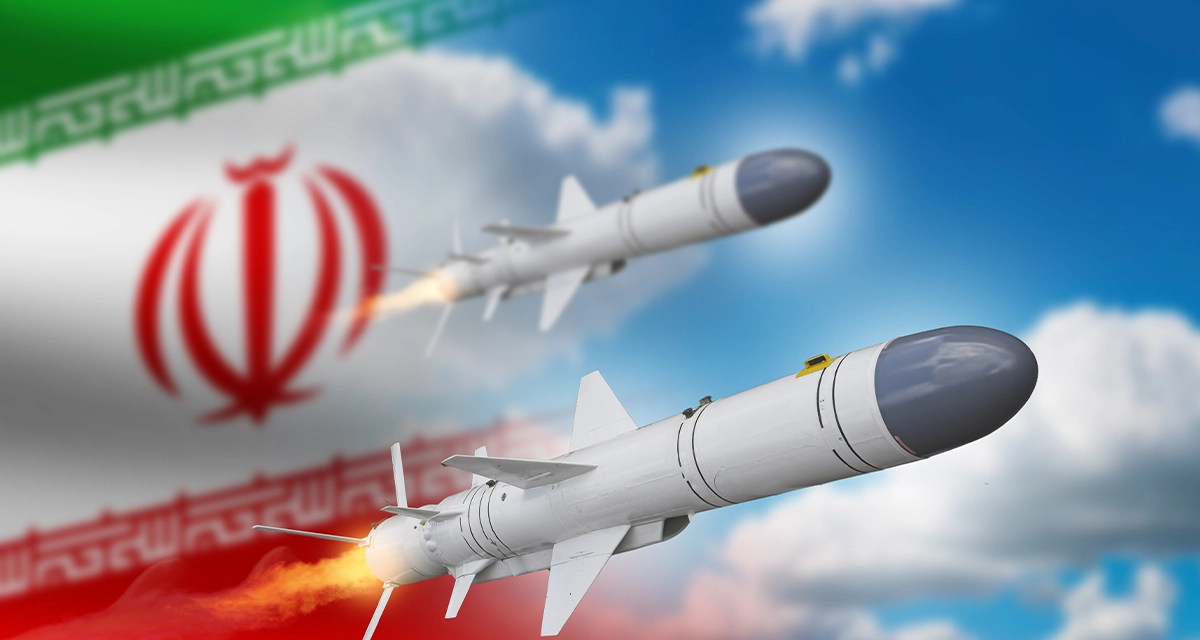

Iran’s response to US–Israel attacks is forcing Trump to rethink his misadventure which was undertaken under prompting by Netanyahu.
By IQBAL JASSAT
‘They promised us in the last war in Iran in June that we destroyed the majority of the infrastructure for the ballistic missiles and the nuclear plan of Iran. Then in nine months, [Iran rebuilt] everything from scratch? I don’t understand that. I feel that they are lying to us.’ – Journalist and activist Anat Saragusti, whose apartment building in central Tel Aviv began to shake as she ran to seek shelter from Iranian missiles targeting the city following the US–Israel attack that morning.
The ‘shock and awe’ tactic used by the Bush administration to bomb, invade and occupy Iraq during 2003 rode on the back of a deliberately constructed lie about ‘weapons of mass destruction’ (WMD).
The driving force behind the myth of WMD has been Benjamin Netanyahu.
Almost a quarter century later, the same Zionist leader – who in the interim has had a warrant of arrest issued against him by the International Criminal Court (ICC) – pressured the Trump administration to join him by using all of America’s military power and assets to attack Iran.
The number of myths created by him this time varied from ‘nuclear bomb’ to ‘imminent threat’.
However, to the disappointment of Netanyahu and his ally Trump, the strategy of ‘shock and awe’ has been turned on its head by the Islamic Republic of Iran. It has instead become a strategic instrument in Iran’s retaliatory strikes against Israel and the US.
The controversy surrounding these claims has resulted in damning questions by lawmakers at a US congressional hearing. Since the unlawful military attack on Iran in late February, the hearing became the first public briefing on intelligence.
The key question was why the US struck Iran and whether Trump and his war cabinet were aware of potential backlash, including the closure of the Strait of Hormuz.
Trump has advanced many irrational arguments, including contradictory claims to justify the war, which featured in the hearing by his intelligence chief Tulsi Gabbard.
Appearing alongside the heads of the CIA, FBI, National Security Agency and Defense Intelligence Agency, Gabbard declined to answer when asked repeatedly by Senator Jon Ossoff, a Democrat, whether she had viewed Iran as an imminent threat.
‘The only person who can determine what is and is not an imminent threat is the president,’ she said.
Yet the inescapable fact is that the US bought into Israel’s claims, attacked Iran and is now desperate to seek an off-ramp to exit an unwinnable war.
Given Netanyahu’s criminal record and the multiple claims he is publicly known to use to justify the mass slaughter of Palestinians in Gaza and the Occupied Palestinian Territories, few outside his Zionist circle believe that Iran was developing nuclear weapons or posed an imminent threat to the US.
Indeed, to add to Netanyahu’s self-inflicted predicament, hours before the hearings, Joe Kent resigned from his role as director of the National Counterterrorism Center, stating in a publicly posted resignation letter that Iran had posed ‘no imminent threat’ to the US and criticising Trump for the war.
In addition, US journalist Tucker Carlson insists the war on Iran contradicts the principle of ‘America First’, claiming that Israel chose its timing, not the US.
Joe Kent’s resignation is not an anomaly but an alarm: elite dissent is surfacing early because this war is built on deception, observes Ramzy Baroud, editor of Palestine Chronicle.
All the while, in desperation and frustration, Netanyahu has been seeking to downplay widely held public opinion that Israel had influence over Donald Trump’s decision to launch Operation Epic Fury in Iran.
Despite his hasbara efforts, he has not been able to quell widespread criticism and debate within US media over the reasons why the US entered this war, and the role Israel played.
That debate reached a fever pitch with the resignation of Kent, given that he is known to be a longtime Trump ally and veteran of the US special operations community.
The sting in his criticism, which Netanyahu cannot easily dismiss, is Kent’s unambiguous claim: ‘It is clear that we started this war due to pressure from Israel and its powerful American lobby.’
Media reports and a flurry of social media posts indicate that Kent expanded on his allegations in a subsequent two-hour interview with conservative commentator Tucker Carlson, stating that ‘Israel drove the decision’.
He also charged emphatically that ‘Israeli officials were circumventing normal channels to influence US lawmakers to push for war’.
Facing these critical allegations of subordination to Netanyahu, Trump took to social media to deny previous reporting that the US had prior knowledge of an Israeli attack on Iran’s South Pars field – a message which some interpreted as frustration by the US president.
What is clear is that Netanyahu has drawn Trump into a quagmire.
You may also want to read
![Why becoming a wealthy Muslim is commendable in Islam [+videos]](https://muslimviews.co.za/wp-content/uploads/2026/09/Muslim-Trade-Business-1-120x86.webp)




A dangerous place indeed: like the muddy shoreline of a pond, will Trump be able to climb out?
Iqbal Jassat is an executive member of Media Review Network, Johannesburg, South Africa.