


































As cyclists prepare for the Hijrah Cycle Tour from Makkah to Madinah, Adnaan Adams reflects on community, friendship, responsibility and the lessons learned from riding alongside others while pursuing a shared goal.

By ADNAAN ADAMS
What are we prepared to build within ourselves, within our communities, and for those who come after us?
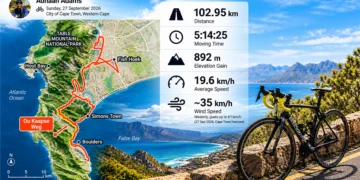
That question continues to shape my preparation for the Hijrah Cycle Tour, a journey of approximately 475 kilometres from Makkah to Madinah alongside 39 other riders.
I began by wondering whether I could ride the distance. Three months into cycling, I am also asking what it takes to ride well with others. Faith shapes both concerns through the intention with which I train and the responsibility I carry towards those alongside me.
Beginning with uncertainty
Among fellow beginners, I have heard questions that go beyond technique. Am I capable of this? Am I cut out for the tour? During a demanding ride, concern about a higher-than-expected heart rate can lead someone to doubt their ability.
I take comfort in knowing that riders I now learn from began with similar doubts. Their experience helps me put early struggles in perspective. Progress becomes imaginable when someone remembers where they started and takes time to guide you.
Commitment and discipline remain mine to practise. Friendship helps me sustain them while the outcome is uncertain. Gradually, I am learning to begin without knowing exactly what I will be capable of in the weeks ahead.
How a group becomes a community
A group ride brings people onto the same road. Through repeated encounters, we learn whether we can rely on one another. We begin to recognise who needs encouragement, who can offer guidance and when someone is struggling and needs a helping hand. Shared expectations develop around safety, communication and care. Through these relationships, the group begins to take shape as a community.
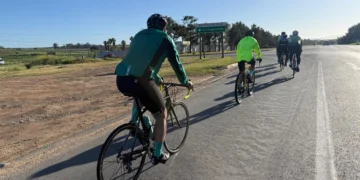
I am learning to follow a wheel safely, hold my line and remain alert to those beside and behind me. My movements affect another person’s safety. A hand points towards broken glass. A call warns of a pothole or sunken drain cover.
Along the N7 towards Silwerstroomstrand and beyond, we watch for thorns. The rider who sees a hazard warns those whose view is blocked. A brief suggestion about changing gears helps me approach the next climb with better judgement. Knowledge carries a responsibility to share it.
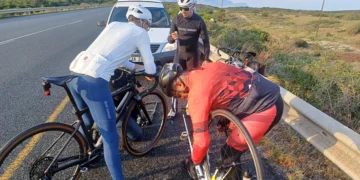
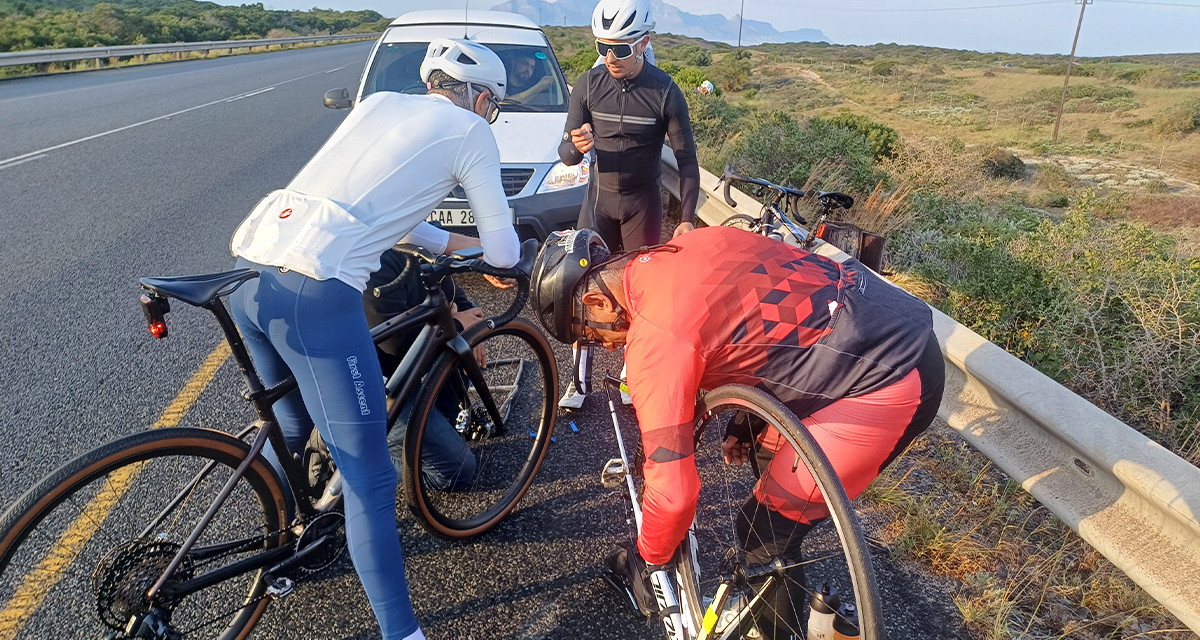
After a demanding stretch, a puncture can feel like a small mercy, allowing time to catch my breath and eat something. The rider who stops with me interrupts their own progress to help. Receiving that care teaches me what I should be prepared to offer when someone else needs assistance.

Being seen, coming to know
Initially, I sensed some scepticism about a newcomer taking on the tour. Riding together gave us time to talk and revise our first impressions. Welcome matters before someone has demonstrated their ability. How a group receives the uncertain beginner reveals something about the belonging it offers.
Even a greeting from a passing cyclist acknowledges a shared presence. Over time, recognition deepens as we learn names, hear stories and understand what has brought someone onto the road.
In Surah al-Hujurat (49:13), the Qur’an speaks of humanity being made into nations and tribes “so that you may know one another”. Through reading and reflection, I have come to understand taʿāruf, or associative knowing, as an invitation to approach others with humility, respect and recognition of their dignity, conscious of how little appearance or performance tells us about their worth before Allah.
This requires listening and allowing an encounter to revise our assumptions. It also asks whether the concern cultivated within our riding group extends to unfamiliar cyclists, pedestrians and others sharing the road.
You may also want to read


The person community helps form
Every group communicates what it values. If speed attracts all the recognition, slower riders may measure their belonging by how long they can keep up. When patience, sound judgement and assistance receive acknowledgement, members learn a broader understanding of achievement.
Community therefore deserves reflection. Do newcomers feel able to ask questions? Can someone admit difficulty without embarrassment? Does encouragement help riders develop judgement about their effort? The answers shape both the group’s culture and the people participating in it.
As an educator, I recognise these questions. Learners notice whose contributions receive attention and how mistakes are treated. Confidence develops through opportunities to attempt challenging work, guidance that preserves dignity and time to try again. On the road and in the classroom, people learn through the relationships surrounding their effort.
I hope to begin the Hijrah Cycle Tour stronger and more observant to those around me. The patience and generosity I have received leave me with a responsibility to offer the same to others.
Somewhere behind us, another newcomer is approaching. Perhaps part of our preparation is learning to become the people we needed when we first began.
Adnaan Adams is a Hijrah Cycle Tour participant and founder of The Muslim Thinker. He can be reached on 083 687 0559.


