


![Does ta’wīl mean interpretation or fulfilment? A Quranic reassessment [+video]](https://muslimviews.co.za/wp-content/uploads/2026/10/Tawil-Kaskas-360x180.webp)



















![Why becoming a wealthy Muslim is commendable in Islam [+videos]](https://muslimviews.co.za/wp-content/uploads/2026/09/Muslim-Trade-Business-1-360x180.webp)


![The market-builder who restrained the market [Part 2]](https://muslimviews.co.za/wp-content/uploads/2026/08/PHOTO-2026-08-25-17-16-32-360x180.jpg)






By PROFESSOR NAJMA MOOSA
In her 2021 study, The Mystery of the Apostasy of Shaykh Yusuf of Makassar’s Alleged Grandchildren: The Children of the Rajah of Tambora, Prof Najma Moosa challenges centuries of accepted Cape historiography.
She argues that the children of the twice exiled Rajah of Tambora—who converted to Christianity at the Cape—were not the biological grandchildren of the revered Indonesian Islamic icon Shaykh Yusuf. For decades, the historiographical consensus stemming from the German academic Dr Johann MH Hoge’s 1951 publication, The family of the Rajah of Tambora at the Cape, maintained that the Rajah’s wife was the Shaykh’s daughter. While Moosa was able to refute this because of the absence of documented alternative identities, James C Armstrong’s 2023 publication A Further Look at Rajah Tambora and His Wife highlights an archival discovery that provides vital primary documentation that is needed to validate her central conclusion.
The historiographical problem and Moosa’s thesis
For generations, scholars assumed that the Rajah of Tambora married a daughter of Shaykh Yusuf while exiled at the Cape. Consequently, when the Rajah’s children embraced Christianity in the 1720s and 1730s, local history recorded them as the apostate grandchildren of Shaykh Yusuf. However, by re-examining the primary evidence, Moosa identified a critical genealogical disconnect: no contemporary VOC records list a daughter of the Shaykh marrying the Rajah, thereby demonstrating that the direct line of consanguinity cannot be supported by the historical record.
Archival support from Armstrong’s findings
Armstrong presents a 1710 petition of the Rajah to Commissioner Joan van Hoorn The Cape Archives, C 1072 document that provides direct documentary evidence of the identity of the Rajah’s wife:
Sister-in-law, not daughter: The 1710 petition explicitly identifies the Rajah’s wife, Dain Karsalie of Makassar, as the “suster van d’ vrouw van’t Zeyk Joseph” (sister of the wife of Shaykh Yusuf).
Arrival timeline and exile date: The petition notes that the Rajah’s wife had been at the Cape for 16 years (dating to the arrival of Shaykh Yusuf and his entourage in 1694) and that the Rajah had been there for 13 years. The reference to 13 years accurately reflects the Rajah’s period of exile. He was formally exiled to the Cape by a resolution dated August 1697, arriving shortly thereafter in February 1698 aboard the Lands Welvarend.
Petitions on hardship and uncharacteristic pleas for forgiveness: In VOC colonial historiography, both Shaykh Yusuf and the Rajah of Tambora submitted formal mercy petitions highlighting their advancing age, failing health and extreme physical suffering owing to the harsh, cold Cape climate. They appealed for repatriation on the grounds of being old and suffering in the cold. Uncharacteristically, both leaders also explicitly asked VOC authorities for forgiveness in their respective petitions, in a desperate bid to return home.
Return and repatriation of remains: A further significant parallel confirmed by Armstrong—which was raised but not answered in Moosa’s original 2021 study—is that just as Shaykh Yusuf’s wives and his earthly remains were finally returned to Indonesia following his death at the Cape, the Rajah’s wife was also eventually allowed to return home, and the Rajah’s remains were repatriated to Indonesia shortly after her return.
Complexities of wives and sister relationships: Considering the composition of Shaykh Yusuf’s household at the Cape, further logical possibilities emerge regarding the exact identity of Dain Karsalie of Makassar. Shaykh Yusuf was accompanied to the Cape by two wives from Indonesia: Care Contoe and Care Pani. Care Contoe, his “head wife”, was the daughter of Sultan Ageng, while Care Pani was the daughter of an Indonesian Muslim leader (imam). Historical records note that Shaykh Yusuf was married to two royal sisters (princesses) sequentially; he married Care Contoe only after her sister (Sharifa Habiba) had died. Nonetheless, the Shaykh is estimated to have entered into some nine marriages during his lifetime (six of these women in/from Indonesia). Regardless of which wife Dain Karsalie was sister to, the genealogical distinction evident from the petition clearly confirms that she was a sister-in-law to Shaykh Yusuf, rather than a daughter. Her royal title “Daeng” highlights her nobility, and the petition confirms that she was part of the royal family network that accompanied the Shaykh’s entourage in 1694.
Brother-in-law, not son-in-law: Crucially, Armstrong’s findings reframe the relationship of the Rajah himself. Because his wife was the sister of a wife of Shaykh Yusuf, the Rajah was in fact the brother-in-law of Shaykh Yusuf, so completely disproving the long-held assumption that he was the Shaykh’s son-in-law.
Direct validation of Moosa’s premise: The petition definitively supports Moosa’s core argument: the Rajah’s wife was not Shaykh Yusuf’s daughter. Therefore, his children were not the Shaykh’s grandchildren, so exonerating the Shaykh’s direct lineage from the historical charge of apostasy.
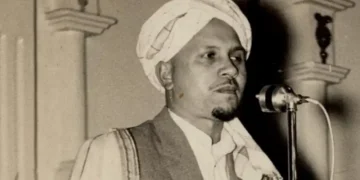
I was requested to do the above video clip in commemoration of the 400th anniversary (1626-2026) of the birth of Sheikh Yusuf Al Makassary and the 327th anniversary of the death of Sheikh Yusuf Al Makassary (1699-2026) by the Chairman of the Committee of Haul Akbar (Grand Rememberance Day) of Shaykh Yusuf Al Makassary.
Contextualising the household link
The 1710 record confirms that while the Rajah’s wife was not Shaykh Yusuf’s daughter, she was an integral part of the Shaykh’s broader household network following their 1694 arrival. Armstrong’s findings also clarify why previous researchers struggled to track her: Makasarese nobility regularly accumulated multiple titles and names (such as Care Sale, Zytie, Sitina Sara, Saranatsje, Dain Karsalie and Dain Hiarsali) across different records.
Conclusion
While Armstrong refines Moosa’s work by demonstrating that a close familial bond did exist—making the Rajah Shaykh Yusuf’s brother-in-law rather than a son-in-law—the primary text strongly aligns with Moosa’s thesis. The children of the Rajah of Tambora were not the grandchildren of Shaykh Yusuf. Ultimately, while these records do not reveal the precise identity of the Rajah’s wife, this primary source brings a crucial, well-documented figure into the ongoing scholarly discourse. Armstrong’s archival discovery provides essential documentary support that substantially strengthens Moosa’s initial deduction, so offering a far more compelling and historically grounded perspective on this long-standing historiographical debate.
References
You may also want to read


Armstrong, J.C. 2023. “A Further Look at Rajah Tambora and His Wife”, Bulletin of the National Library of South Africa, Vol. 77, No. 2, December 2023, pp. 37–50.
Hoge, M.H. 1951. “The family of the Rajah of Tambora at the Cape”, Africana Notes and News, Vol. IX, No. 1, pp. 27–29.
Moosa, N. 2021. The Mystery of the Apostasy of Shaykh Yusuf of Makassar’s Alleged Grandchildren: The Children of the Rajah of Tambora, KamPress, Cape Town.
Author
This book was written as a sadaqah jariyah. It is available for purchase from Shaykh Shahid Esau (mobile: +27 82 704 5378). Proceeds from the sale are intended to go towards bursaries for deserving students.
Acknowledgements
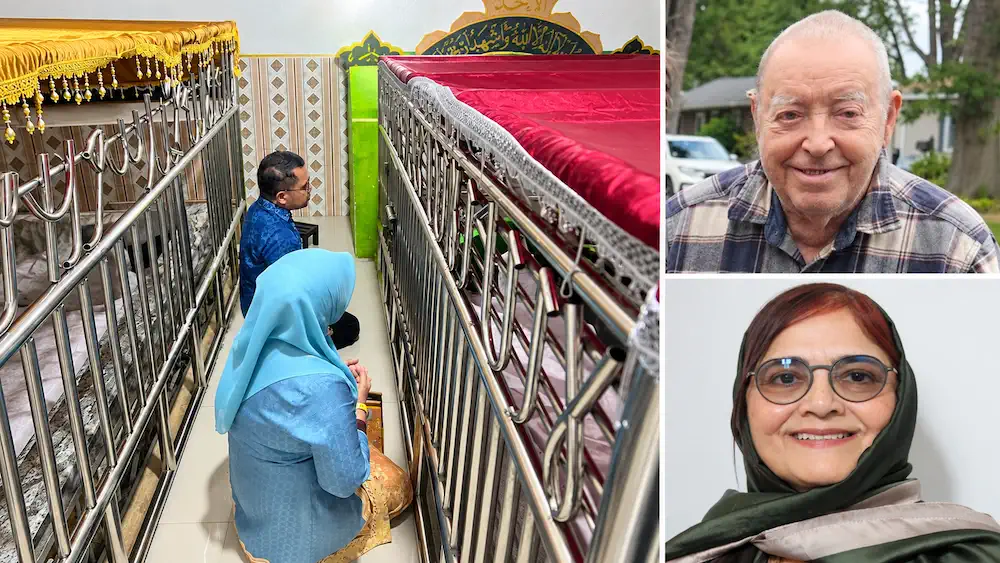
This paper is dedicated to the memory of Mr. J.C. Armstrong (1936–2026), retired Field Director of the US Library of Congress and esteemed Cape historian. I am profoundly grateful for his generosity in sharing his final insights on the Rajah of Tambora and his extensive notes from the Cape Archives and The Hague VOC archives. His expert guidance on document C 1072 significantly strengthened the arguments in this study.
Najma Moosa is Senior Professor in the Faculty of Law at the University of the Western Cape.