
























![The market-builder who restrained the market [Part 2]](https://muslimviews.co.za/wp-content/uploads/2026/08/PHOTO-2026-08-25-17-16-32-360x180.jpg)
![The merchant preceding the Prophetic mission [Part 1]](https://muslimviews.co.za/wp-content/uploads/2026/08/01-360x180.jpg)










South Africa’s Marriage Bill acknowledges Muslim marriages, but registration alone is not enough. Legal gaps, opt-out risks and unfulfilled promises remain.
By MOHAMED HOOSAIN SUNGAY
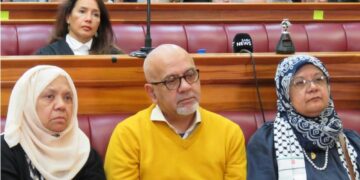
The oral and written submissions made by the Al Jama-ah political party to Parliament’s Portfolio Committee on Home Affairs regarding the Marriage Bill of 2022 present a comprehensive set of legal arguments advocating for the formal recognition of Muslim marriages (nikah) in South Africa.
This opinion piece focuses specifically on the comments and proposed amendments submitted by Al Jama-ah. It assesses three interconnected issues: the efficacy and limitations of the superficial registration of nikah marriages, the legal and practical implications of the proposed opt-out clause, and the substantive amendments proposed by the Al Jama-ah legal team to the Marriage Bill, also referred to as Marriage Bill 1 (The Marriage Bill, 2022, published in the Government Gazette no. 48914 of 7 July 2023) as well as other pieces of legislation put forward, which includes the Registration of Muslim Marriages Bill No 45275 of 8 October 2021, Recognition of Religious Marriages Bill and the Arbitration Amendment Bill.
Recent legislative accommodation allowing nikah marriages to be registered with the Department of Home Affairs, driven largely by Al Jama-ah’s advocacy, represents an important symbolic victory for the Muslim community. Registration confers dignity on Muslim unions and provides administrative relief, particularly for Muslim women.
However, this recognition remains legally superficial. Its primary value lies in granting immediate access to existing statutory protections under civil law, including remedies available through legislation such as the Divorce Act. This offers prima facie protection for children and facilitates potential property claims.
Yet the limitations of this approach are evident. Registration is administrative rather than substantive and does not provide a comprehensive statutory framework for integrating Muslim Personal Law (MPL). This creates legal uncertainty, particularly in relation to property distribution in polygynous marriages, and undermines the judicial predictability that a dedicated Muslim Marriages Act could provide. While registration is a necessary and functional interim measure, it does not amount to full legal recognition.
A central feature of the proposed reforms is the opt-out clause, which introduces the principle of voluntary statutory application. This would allow Muslim couples to elect not to be governed by the Marriage Bill. In legal terms, opting out would exclude the marriage from regulation under the Act. In practical terms, it would affirm religious tenets by allowing couples to avoid the compulsory application of civil law principles in favour of MPL.
The opt-out mechanism could also spare couples the financial burden associated with civil processes, such as the use of notaries to draft marital contracts. It allows flexibility for both existing and future marriages and, in the author’s view, strikes a balance between religious freedom and access to legal recourse.
However, this flexibility carries risks. It may lead to judicial inconsistency, as some Muslim couples choose to rely on MPL while others pursue civil remedies. This fragmentation could undermine legal certainty and equal protection under the law.
Al Jama-ah’s legal team has submitted extensive proposed amendments to the Marriage Bill. These highlight longstanding challenges faced by Muslim marriages within South Africa’s legal framework. Currently, Muslim marriages are indirectly subjected to the Divorce Act while being expressly excluded from the Recognition of Customary Marriages Act.
This contradiction is compounded by the continued unconstitutionality of the common-law definition of marriage and the incompatibility between civil law and MPL, which forces aspects of Muslim marriages into private regulation. Access to formal civil remedies also remains prohibitively expensive for many citizens.
You may also want to read


Previous legislative efforts, including earlier versions of the Marriage Bill and related proposals such as the Registration of Muslim Marriages Bill of 2021, the Recognition of Religious Marriages Bill and the Arbitration Amendment Bill, have failed to incorporate the essential legal features of nikah marriages, despite clear constitutional obligations.
While progress has been made, significant gaps remain. This is particularly evident in the structural compromises negotiated between the Portfolio Committee and Al Jama-ah following the withdrawal of earlier legislative proposals in favour of the current Marriage Bill.
Although Al Jama-ah’s interventions represent a meaningful step towards recognising the diverse legal needs of the Muslim community, the current framework remains inadequate. It does not fully address the complex legal and social realities facing Muslim families.
The broader debate around the legal integration of nikah marriages exposes a persistent tension between symbolic accommodation and substantive reform. Registration offers dignity and immediate civil protection, but its limited scope perpetuates uncertainty, especially around property and marital consequences.
The proposed opt-out clause affirms religious autonomy and choice, yet risks deepening inconsistency in the legal system. These shortcomings highlight the need for sustained and principled legislative reform.
More than three decades after the promise of recognition made during South Africa’s democratic transition, Muslim Personal Law remains unrecognised in its own right. This prolonged delay has eroded public confidence in the legislative process. While Al Jama-ah’s efforts deserve recognition, much more work is required if Parliament is to fulfil its constitutional commitments to the Muslim community.
Mohamed Hoosain Sungay is a lecturer in the Department of Private Law at the University of the Western Cape and an LLD candidate.