



















![The market-builder who restrained the market [Part 2]](https://muslimviews.co.za/wp-content/uploads/2026/08/PHOTO-2026-08-25-17-16-32-360x180.jpg)
![The merchant preceding the Prophetic mission [Part 1]](https://muslimviews.co.za/wp-content/uploads/2026/08/01-360x180.jpg)






Transformation requires more than talk — it demands power shifts, ideological clarity, and popular agency. Until then, national dialogues will remain little more than festivals of forgetfulness.
By MPHUTLANE WA BOFELO
The mainstream media’s addiction to spectacle — its relentless pursuit of sensationalism, hype, and grand personalities — relies on a deeply embedded amnesia. For the public to remain thrilled about ‘the next big thing’, they must forget how the last one faded into irrelevance. This culture of forgetting extends beyond media into the political establishment, which frequently recycles grand ideas, policies, and events, betting on the public’s short memory to repackage old promises as new hope.
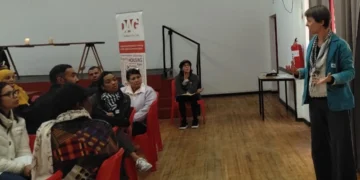
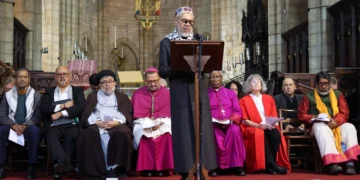
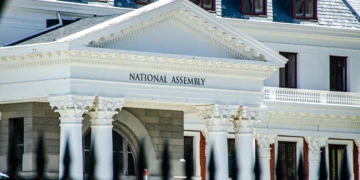
The latest such spectacle is South Africa’s National Dialogue, marketed as a monumental moment of consensus-building. Its declared purpose is noble: to determine the kind of South Africa that citizens want — and the kind they reject. Yet, to be genuinely enchanted by this initiative, one must overlook much of the country’s political and social history. To forget, for example, that we’ve been here before.
In 1955, the Freedom Charter, adopted at the Congress of the People in Kliptown and later embraced by the United Democratic Front and Mass Democratic Movement, envisioned a non-racial, non-sexist, and democratic South Africa anchored in civil liberties and socioeconomic rights for all. The Pan-Africanist manifesto of 1957 emphasised self-reliance, African socialist democracy, and sovereignty. The Mafikeng Manifesto of the Black People’s Convention promoted Black Communalism adapted to modern conditions. In 1985, the Azanian Manifesto — a collaborative product of Black Consciousness, Pan-Africanist, and Trotskyist formations under the National Forum — called for an anti-colonial, anti-racist, anti-sexist and egalitarian society with state-provided education, housing, healthcare, and other essential services.
Across these ideological currents, a broad left vision emerged: the democratisation of both state and economy, decommodification of public services, nationalisation of key industries, and a shift toward social ownership and participatory democracy.
Fast forward to CODESA and the negotiated settlement of the early 1990s. The Constitution of South Africa was hailed as the embodiment of the Freedom Charter’s principles. Since 1994, the ANC has claimed continuity with this legacy, asserting that its socioeconomic policies reflect the Freedom Charter’s spirit. A variety of public participation platforms have been established — on paper at least — to give citizens a voice. And yet, here we are, thirty years later, being invited to a new ‘dialogue’, repackaged in different colours, at the same national stage.
The very idea of launching another grand consultation effort suggests that either those earlier visions were never fully pursued — or that their failure is now being erased and replaced with another cycle of lofty promises. For such a move to work, the political system must rely heavily on public forgetfulness and the depoliticisation that has accompanied state dysfunction and service delivery failures. Worse still, the National Dialogue seems to ask the public to share collective responsibility for systemic failures — without redistributing real power. While ordinary citizens are called to participate in ‘fixing the nation’, political elites continue to centralise control of resources, governance, and agenda-setting. Calls for self-organisation, worker control, and participatory democracy are often met with suspicion or suppression.
In this setup, we are told ‘we’re in this together’ — but only when things fall apart. When it comes to setting priorities, managing resources, or holding power, the space is tightly controlled. The very structure of this dialogue assumes that the problems South Africa faces — racial and economic inequality, gender-based oppression, institutional collapse — can be resolved within the existing frameworks that produced them. It sidesteps the ideological battles and power struggles at the heart of these issues.
You may also want to read


This is the central contradiction: you cannot consensus-build your way out of a crisis created by consensus-avoidance. Social accords and elite agreements are inadequate tools for tackling what are, at root, deep systemic problems. South Africa’s crisis is not one of temporary imbalance but of structural failure — rooted in the long-term trends of a capitalist system that prioritises profit over people, and stability over justice.
True dialogue requires not only the remembrance of history, but the willingness to confront it. And transformation requires more than talk — it demands power shifts, ideological clarity, and popular agency. Until then, national dialogues will remain little more than festivals of forgetfulness.
Mphutlane wa Bofelo is a political theorist who focuses on the interface between politics, governance and development.


