






![Does ta’wīl mean interpretation or fulfilment? A Quranic reassessment [+video]](https://muslimviews.co.za/wp-content/uploads/2026/10/Tawil-Kaskas-360x180.webp)









![Why becoming a wealthy Muslim is commendable in Islam [+videos]](https://muslimviews.co.za/wp-content/uploads/2026/09/Muslim-Trade-Business-1-360x180.webp)





Drawing parallels between the 1905 Battle of Tsushima and today’s Strait of Hormuz, the writer argues that the global balance of power is shifting towards a more multipolar world.
By CASSIEM KHAN
In May 1905, the world changed in the waters of the Tsushima Strait. There, the Imperial Japanese Navy annihilated Russia’s Baltic Fleet in one of the most decisive naval victories in modern history. To European observers, it was a military defeat, but to the peoples of Asia, Africa, Latin America and the Muslim world, it was something far greater. It was the first crack in the myth of Western invincibility.
For centuries, European colonial powers had dominated vast territories across the globe while simultaneously justifying the notion that their domination was the natural order of things. Tsushima shattered that illusion. For the first time in the modern era, a non-Western nation had defeated a major European power in open warfare.
Indian intellectual Pankaj Mishra opens his remarkable work From the Ruins of Empire with a recollection of this battle because of its profound global psychological significance. Across the colonised world, Muslim scholars, academics, reformers, nationalists and anti-colonial activists saw in Japan’s victory a glimpse of a future beyond empire. It inspired a generation of thinkers from Morocco to Indonesia who began asking a revolutionary question: if Russia could be defeated, why not Britain, France or any other colonial power?
Among those influenced by this changing political landscape were Muslim intellectuals who sought not merely political independence but civilisational renewal. Their concern was not only who ruled, but what kind of world would emerge after colonial rule ended.
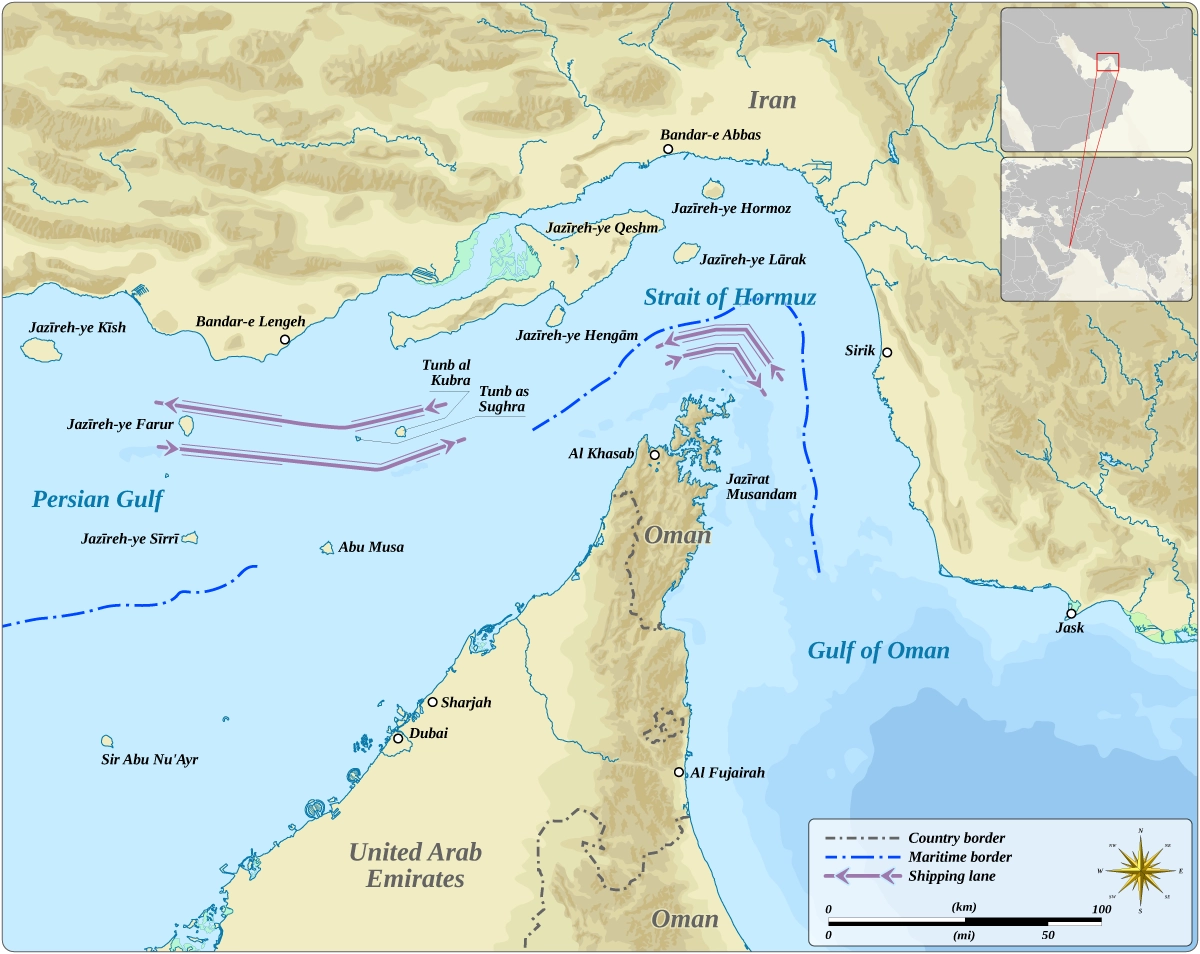
More than a century later, another strategic waterway has become the focus of global attention: the Strait of Hormuz.
While the circumstances are very different, there is an intriguing parallel. Tsushima symbolised the beginning of the end of unquestioned European supremacy. The recent Israel-United States war on Iran, and the subsequent diplomatic efforts to prevent a wider regional and global war, may similarly represent a moment when the limits of Western power have become increasingly visible.
For decades, West Asia has been shaped by the assumption that Western military power could determine political outcomes across the region. From Iraq to Afghanistan, from Libya to Syria, military intervention became a defining feature of international politics. Yet recent developments suggest a changing reality.
Despite enormous military capabilities, the United States was incapable of unilaterally imposing its preferred political outcome on Iran or establishing hegemony across the region.
Former British diplomat and founder of Conflicts Forum, Alastair Crooke, has argued that the recent conflict reveals a profound shift in the global balance of power. In his assessment, attempts to isolate or fundamentally weaken Iran have failed to achieve their objectives. More significantly, he suggests that the conflict demonstrated the emergence of a world in which regional powers can no longer be compelled to submit to external dictates in the manner that characterised the unipolar era following the collapse of the Soviet Union.
Crooke’s observations point towards a broader transformation that is becoming increasingly difficult to ignore. The age of a single dominant superpower appears to be coming to an end.
Iranian Deputy Foreign Minister Saeed Khatibzadeh has repeatedly emphasised principles of sovereignty, regional dialogue and the right of nations to determine their own futures without external interference. These themes resonate deeply within societies whose collective memories are shaped by colonialism, occupation and foreign military intervention.
Yet Khatibzadeh’s interpretation goes far beyond the language of geopolitics. Speaking in Cape Town days after the signing of the 14-point Memorandum of Understanding between Iran and the United States, he described the moment as ‘the most important juncture in the history of West Asia, of the Islamic Ummah and even of international politics’. He argued that Iran’s struggle was not simply a national struggle but one undertaken ‘for the sake of all humanity’. According to him, Iran had chosen what he called ‘ultimate resilience’ to demonstrate that powerful states cannot use naked force to determine the destiny of nations.
This language may sound ambitious, but it speaks to a sentiment increasingly shared across much of the Global South. For many countries that experienced colonial rule, the central question is no longer whether one state is stronger than another. The question is whether international relations will be governed by law, sovereignty and mutual respect rather than by military and economic coercion, which remain the primary instruments of global hegemony.
This does not mean that the United States is disappearing as a global force. American economic, military and technological power remains immense. What is changing is the ability of any single state to determine the course of world affairs without taking into account the dignity of others.


Across Asia, Africa and Latin America, new centres of power are emerging. The expansion of BRICS reflects a growing desire among many nations to participate in a more balanced global system. Within this broader transformation, Iran is emerging to occupy a unique position.
For nearly half a century, the Islamic Republic has defined itself through resistance to external domination. Many view it as a model of strategic independence. Its critics accuse it of pursuing its own regional ambitions. Iran’s ability to withstand sustained pressure, sanctions and military threats has attracted attention throughout the Global South.
For Muslims in particular, the significance of these developments extends beyond geopolitics. The twentieth century witnessed the political liberation of much of the Global South from formal colonial occupation. Yet political independence did not always bring genuine sovereignty. Economic dependency, military intervention and intellectual subordination often persisted long after formal colonial rule had ended.
Many contemporary debates within previously colonised societies revolve around this unfinished project of decolonisation. How can previously colonised societies recover confidence in their own intellectual traditions while remaining engaged with modernity? How can they participate in global affairs without remaining subordinate to larger powers? How can justice, dignity and self-determination be realised in a world still marked by profound inequalities?
Historians often identify specific moments that signal the transition from one age to another. Tsushima was one such moment. It announced that the peoples of Asia would no longer remain passive spectators in global affairs.
The events unfolding around Hormuz may represent a similar turning point, where the assumptions that governed geopolitics for decades are being openly challenged.
Khatibzadeh framed this challenge in civilisational terms. He argued that Iran’s resistance was intended to demonstrate that nations retain the right to determine their own futures and that no hegemonic power, however strong, can permanently impose its will upon others. He presented this not as an Iranian cause alone, nor even as a Muslim cause, but as a cause for humanity.
The Quranic vision of human society recognises diversity among peoples and nations while affirming moral accountability and justice as universal principles. The challenge before humanity is therefore not merely to redistribute power but to cultivate a more ethical and equal global order.
For Muslims, the challenge is to ensure that this emerging multipolar order is guided by the higher values of justice, dignity, equality and human freedom. The decline of the US empire is not the end of history. It is merely the beginning of a new chapter in humanity’s continuing struggle for a more just and equal world.