


![Does ta’wīl mean interpretation or fulfilment? A Quranic reassessment [+video]](https://muslimviews.co.za/wp-content/uploads/2026/10/Tawil-Kaskas-360x180.webp)
















![Why becoming a wealthy Muslim is commendable in Islam [+videos]](https://muslimviews.co.za/wp-content/uploads/2026/09/Muslim-Trade-Business-1-360x180.webp)

![The market-builder who restrained the market [Part 2]](https://muslimviews.co.za/wp-content/uploads/2026/08/PHOTO-2026-08-25-17-16-32-360x180.jpg)






By ANWAR OMAR
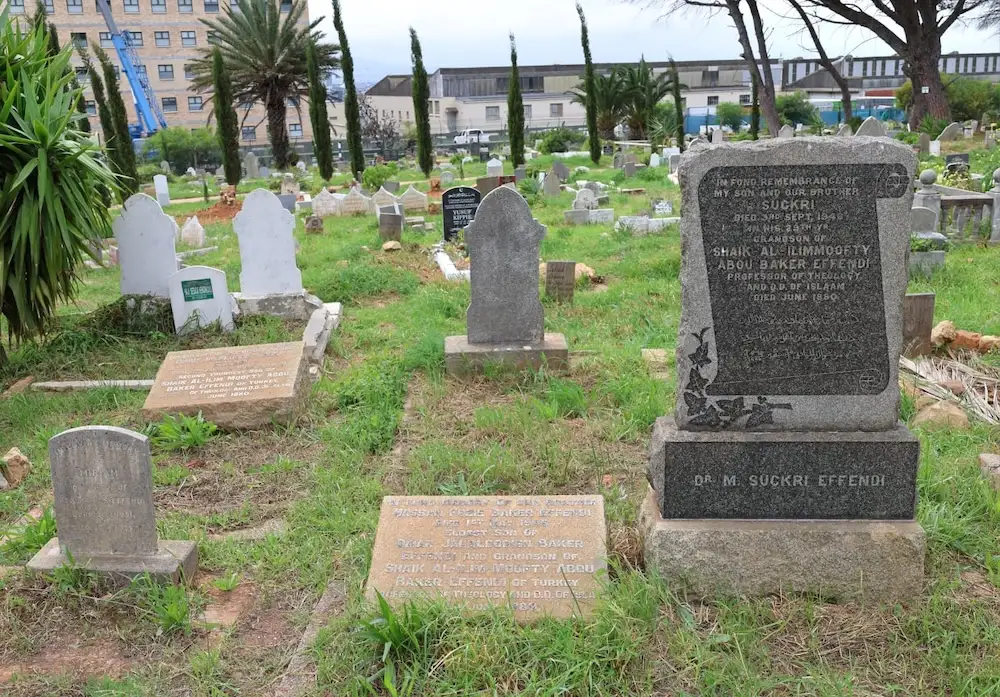
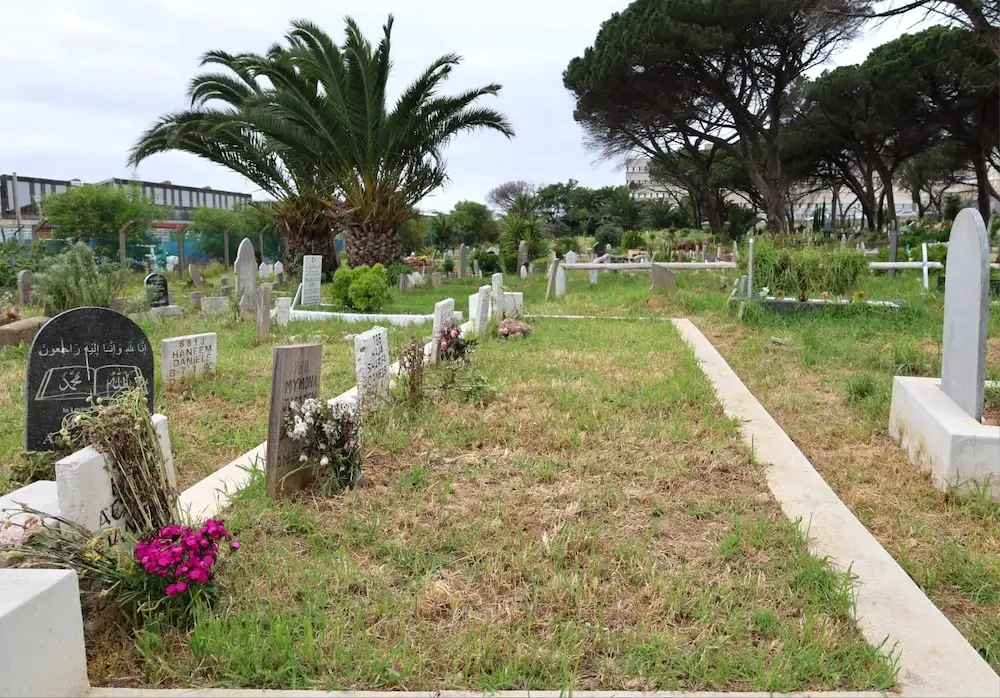
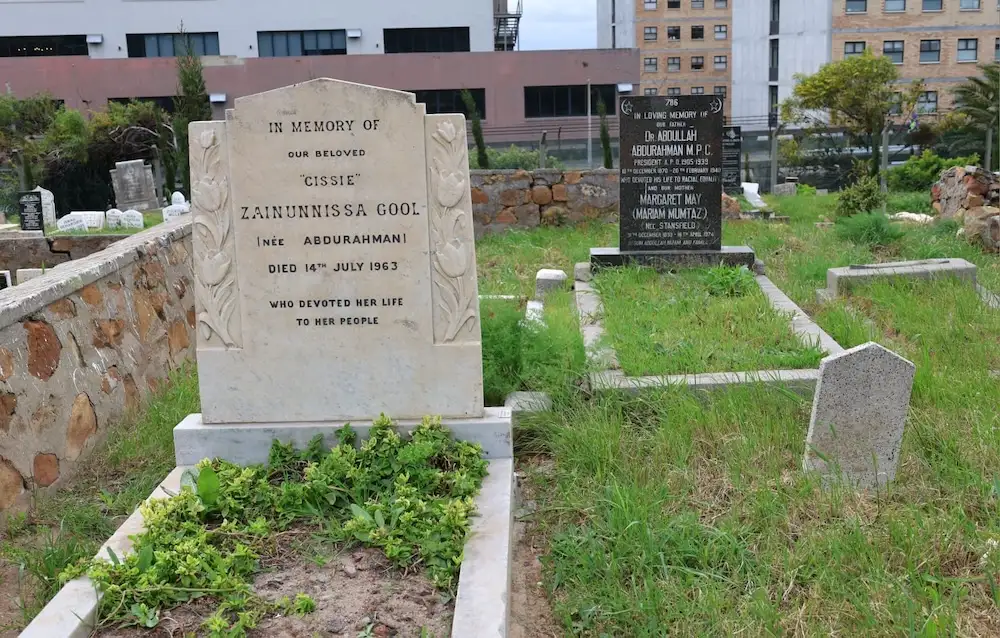
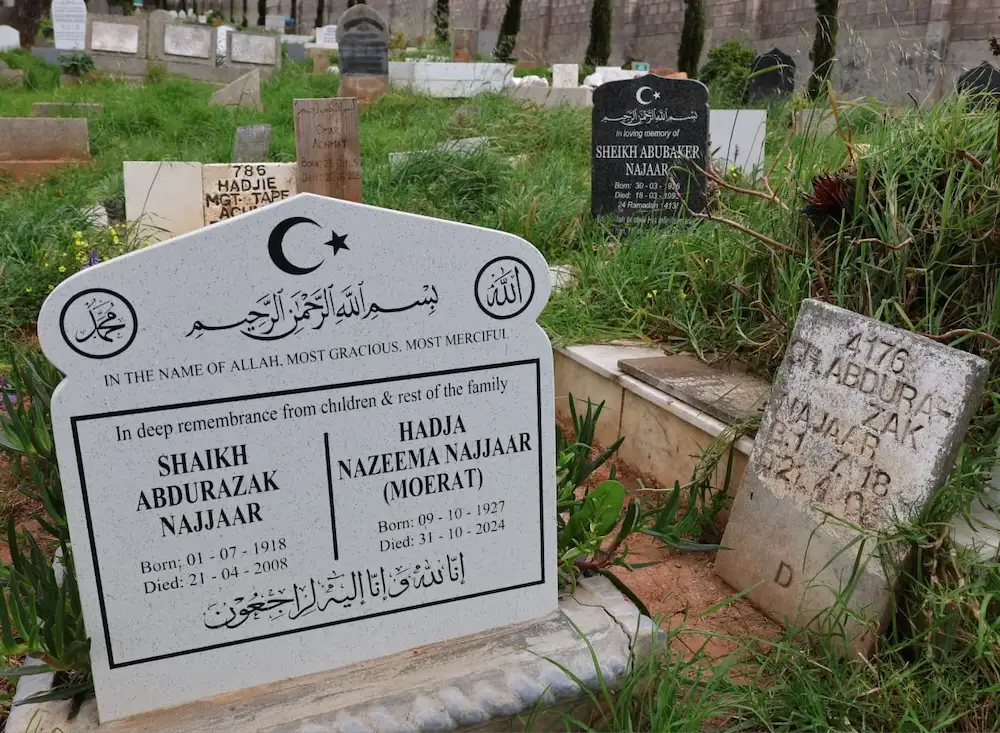
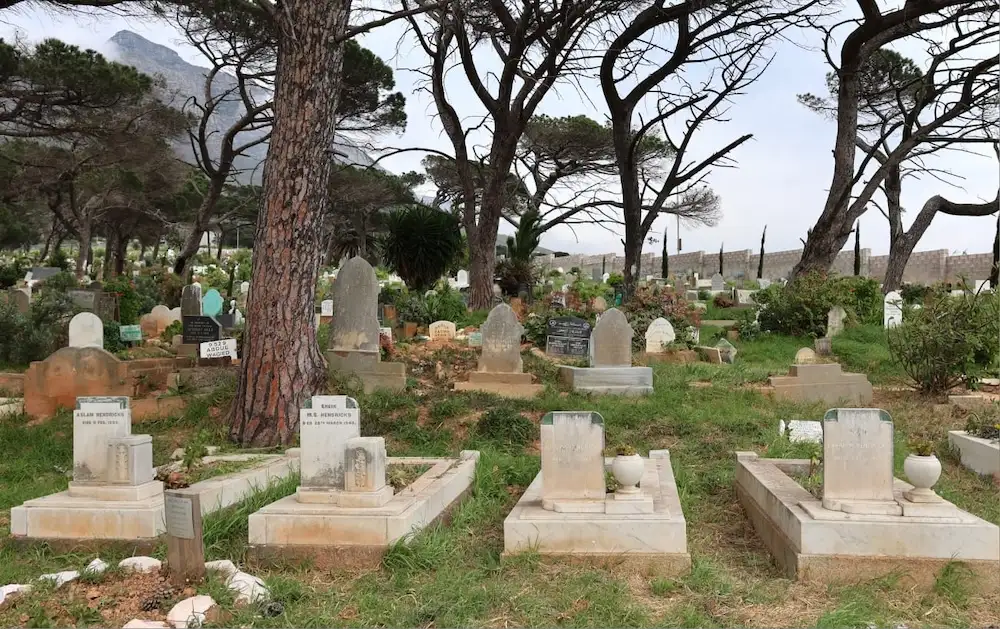
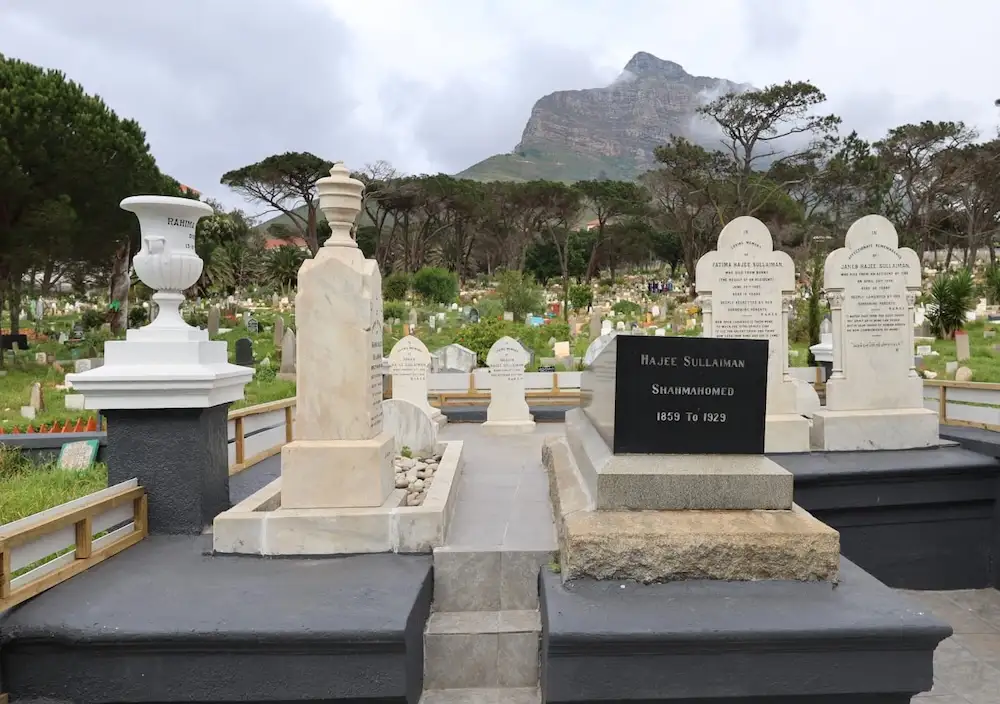
Lineal descent has become a live legal and Islamic governance question at Mowbray Muslim Cemetery. The debate turns on whether lineage can confer participation rights without granting descendants perpetual authority over a public waqf.
This changed when the cemetery’s governance came under the spotlight in the Western Cape High Court in March 2026, in a dispute over a mortuary built without a demonstrably valid mandate. Up until then, membership had been confined to a closed set of founding families, while the 2020 constitution – later found procedurally invalid – retained a lineal-descent category of its own. The court held that lineage remains a legitimate basis for membership but rejected any reading, from either side, that treats it as the exclusive basis for membership, given the cemetery’s character as waqf property dedicated to the wider Muslim community. It is this view, and the public defence of lineal-descent-based governance that persisted, that this analysis seeks to address.
It should be noted that the court’s ruling on this should not be regarded as an endorsement of the 2020 constitution’s approach to membership. The 2020 constitution was found procedurally invalid and was never treated as a source of authority. The court’s remedial order is grounded in its own reading of the 1948 constitution’s “interested or concerned” language, rather than the 2020 constitution’s articulation of the membership provision. Clause 4(b) remains untouched and only its exclusive application was declared invalid by the court. Substantive amendment of this provision remains the responsibility of the duly elected board, and the court intervened only because none yet existed at the time.
Introduction
A recurring justification for lineal-descent-based governance at Mowbray cemetery and, by extension, for the 1948 constitution’s original descent clause, invokes the maqasid al-shariah (the higher objectives of Islamic law), specifically the classical daruriyat (essential preservations): life, faith, intellect, progeny/lineage (nasl) and property (mal). Because preserving lineage is one of the five core objectives, the argument claims that lineage-based membership of the cemetery is Islamically legitimate.
When challenged that lineage may confer a right to participate but not to govern, the counter-argument points to Mowbray’s small family kraals. These plots were paid for by forefathers and reserved for specific families. This position posits that hereditary claims arising from ancestral contribution are already recognised in practice and should therefore be equally valid grounds for governance.
What follows examines the lineal-descent argument to demonstrate that the underlying argument is fundamentally flawed and that it does not support that inference.
The lineage argument
Preservation of lineage should not be conflated with preservation of governance. Hifz al-nasl (preservation of lineage and family) in classical fiqh concerns the integrity of parentage and family relationships, the legitimacy of children, the prohibition of zina (unlawful sexual intercourse), marriage and inheritance rules. It safeguards the social fabric of family life.
Nothing in its classical usage extends to a hereditary claim by an institution’s original subscribers’ descendants to control that institution’s governance a century later. Applying it to justify membership and board control repurposes a principle about family integrity into a justification for institutional succession, conflating two entirely different principles.
The Prophet’s (ﷺ) lineage analogy is also not applicable. Proponents point to the reverence accorded the Prophet’s (ﷺ) descendants as proof that lineage carries Islamic weight. However, that reverence rests on the Prophet’s (ﷺ) own unique, unrepeatable position, generating narrow, specific fiqh rulings tied to that singular sanctity. This is not a general precedent that “lineage confers governance rights”, transferable to nineteenth-century Cape Town burial-fund subscribers’ descendants. The analogy borrows the theological weight of the Prophet’s (ﷺ) lineage to legitimise something entirely unrelated.
Waqf jurisprudence distinguishes waqf khayri, a charitable, public endowment dedicated to a defined beneficiary class (the Muslim community), from waqf ahli/dhurri, a family waqf in which the founder explicitly stipulates that descendants are the beneficiaries or administrators. Nothing in the title deed or the 1948 constitution stipulates a dhurri structure; the property is waqf land “for Moslems”, administered by a board on the community’s behalf.
The hifz al-nasl (preservation of lineage) argument holds only if this were a family waqf, a view that the High Court rejected, finding that the cemetery “contemplates a living and evolving membership body, rather than a static or historically frozen class”.
Comparing the 1948 and 2020 constitutions
Another argument cites the 2020 constitution’s retention of a lineal-descent clause – one uniquely subject to a fee no other category pays – as evidence that it too has not moved past the lineage provision. On closer examination, this is only partially correct. Textually, it checks out: Clause 4.1.3 retains lineal descent as a category and is the only one subject to both a R20 fee and discretionary board approval. General membership (4.1.1) and surviving subscribers (4.1.2) carry neither condition. So it is accurate to say lineage has not been expunged from the 2020 constitution, and also accurate that lineal descendants alone are required to pay for membership.
But the comparison overstates its conclusion. The 1948 constitution recognised only two routes to membership – original subscribers or their lineal descendants – making descent, practically, the sole ongoing gate into membership. The 2020 constitution, by contrast, adds a category not reflected in the 1948 version: any Muslim over 14, admitted with no lineage requirement at all. This demotes lineal descent from the sole path to membership to one of two: a residual, fee-based route subject to trustee discretion, alongside general membership. The fee actually discriminates against reliance on lineage rather than entrenching it.
Citing the clause’s mere presence in both documents, without accounting for its different structural role in each, compares things that are not equivalent. Although the 2020 constitution has not fully purged lineage from its text, it is not as exclusionary as the 1948 constitution. The evidence suggests the opposite.
The property question: the Kubis kraals and the Farewell Sermon
Another justification for lineal descent is property-based, not lineage-based. Proponents of this view cite the family kraals reserved through ancestral payment. If hereditary claims are illegitimate, they ask, why are these plots reserved? And how does that fit with the Prophet’s (ﷺ) Farewell Sermon’s declaration that property, blood and honour are sacred and inviolable?
There is, in fact, no conflict here unless one conflates two distinct rights that Islamic property law separates. The tension dissolves once one distinguishes between haqq al-intifa’ (usufructuary right, here haqq al-dafn, a right of burial) and milkiyyah (ownership of the raqabah, the corpus). Usufruct is not ownership. These families have the right to bury there but do not own these plots. Once land is validly constituted as waqf, its corpus leaves private ownership permanently. This was the same principle invoked by the court when the MCB litigation described the board’s administrators as custodians, not owners.
Waqf administrations have historically allocated usufructuary rights to specific families in recognition of an original contribution, without converting that right into private property ownership. The kraals show waqf inalienability and family usufruct coexisting without contradiction, not because the land is divided among families, but because usufruct and ownership are simply different things.
Correctly applied, hifz al-mal (preservation of property) is therefore not an argument for perpetuating any family’s claim to the land; it protects the land itself from diversion, unauthorised construction, unaccounted funds or governance concentrated in the hands of any one bloodline or family beyond what an original dedication granted.
Reconciling the two principles
You may also want to read
![Ebrahim Moosa’s political theology of Gaza [+ videos]](https://muslimviews.co.za/wp-content/uploads/2026/09/moosa-120x86.jpg)



There is no real conflict between hifz al-nasl (protection of lineage or family) and hifz al-mal (protection of property) in this instance. The debate repeatedly conflates two distinct rights. Lineage can legitimately establish a right to participate as a beneficiary, be inscribed as a member, receive a burial allocation and vote, without that translating into governance authority over the institution or ownership of the underlying land.
This is precisely what the 1948 constitution’s registration mechanism envisaged, and precisely what the kraals demonstrate for individual burial rights. Correctly applied, both principles protect the waqf for its intended beneficiaries. Neither permits a founder’s descendants to control it in perpetuity.
The kraals confirm this distinction rather than contradict it. A family whose forefathers paid for a plot retains an enduring right to bury in that plot. What they do not retain is a hereditary claim to govern the cemetery on everyone’s behalf because of a century-old contribution. These are different rights, resting on different foundations, and conflating them is exactly where the lineage-governance argument overreaches.
A proposed framework
Applied in unison, the two Maqasidi principles reflect a coherent, workable standard rather than a contradiction.
Burial rights at individual or family level, such as reserved allocations like the kraals, should be honoured as vested usufructuary rights, inheritable within the family as historically practised, entirely separate from governance questions.
Membership at a participatory level, including registration, should remain open to any Muslim demonstrating a genuine connection to the cemetery, by lineage, by family buried there, by sustained service, by community standing or willingness to contribute. Lineage is one legitimate door among several, never the only one, a reading the High Court adopted, construing the 1948 constitution’s reference to persons “interested or concerned” in the cemetery as extending membership beyond the closed categories Clause 4 sets out.
Governance at an institutional level, including authority, should rest on periodic, transparent, independently supervised elections, open to the full registered membership – not descent, tenure or informal control – with financial transparency and conflict-of-interest safeguards as standing requirements rather than concessions extracted through litigation.
This is what hifz al-mal (protection of property) actually requires in the case of a waqf khayri (endowment for the public good): an honestly administered trust, protected for the benefit of the community it was dedicated to serve.