


















![The market-builder who restrained the market [Part 2]](https://muslimviews.co.za/wp-content/uploads/2026/08/PHOTO-2026-08-25-17-16-32-360x180.jpg)
![The merchant preceding the Prophetic mission [Part 1]](https://muslimviews.co.za/wp-content/uploads/2026/08/01-360x180.jpg)











The future belongs to those who organise; those who understand that education is not a privilege but a right, and that the fight for access and transformation is part of a broader struggle for a just and inclusive society.
By KHALID SAYED
Education is one of the most powerful tools we have to build a better society. And, since the founding of the South African Students’ Congress (SASCO) in 1991, one clear principle has endured: education is a right, not a privilege. Yet, despite decades of struggle and progress, many students across South Africa still face systemic barriers that limit their access to and success in higher education.
These barriers are not accidents or isolated problems. They are part of a deeply entrenched system that protects the interests of the few and marginalises the majority — especially poor and working-class students, students from African language backgrounds, and those who experience institutionalised racism in various forms.
At the heart of transforming higher education lies a critical battle — not just in courtrooms, not just in protest marches, but in the battle of ideas. This is where the work of the student movement is essential. It is a battle to challenge dominant narratives, to shift campus culture, and to build a leadership that genuinely represents the student body’s diverse interests and needs.
Understanding power and hegemony on campus
The Italian Marxist revolutionary, Antonio Gramsci, introduced the concept of ‘hegemony’ — the idea that power is not maintained through force alone but through winning consent by shaping what people accept as ‘normal’ or ‘common sense.’ In other words, the dominant groups convince society that their way of seeing the world is the natural way.
On South African campuses today, this form of hegemony can be seen in how exclusion is framed as meritocracy, racism is disguised as neutrality, and poverty is blamed on individual effort rather than systemic inequality. The very structures and policies of universities often reinforce these ideas, creating an environment where many students feel alienated or disempowered.
This is why winning the ‘battle of ideas’ is as important as any protest or policy victory. Without changing the way students think about themselves, their rights, and their role in shaping their education, meaningful transformation will remain out of reach.
The real challenges facing students
Across campuses in the Western Cape and beyond, students face daily challenges that reflect broader social inequalities:
Financial exclusion: Many poor and working-class students are unable to register or continue their studies because of historical debt or insufficient financial aid. This is not merely an administrative issue — it reflects a political choice about who is allowed to participate in higher education.
Language and curriculum: African languages are often marginalised in university curricula, which remain dominated by colonial languages and perspectives. This limits the ability of students to engage fully with their education in ways that reflect their identities and realities.
Accommodation shortages: University residences are too few and often prohibitively expensive, pushing students to unsafe or distant living situations that impact their ability to study and participate fully in campus life.
Racism and institutional culture: Many students encounter racism that is embedded in institutional culture, policies, and practices — often dismissed as tradition or ‘institutional norms’. This creates hostile environments that harm student wellbeing and academic success.
Mental health pressures: Economic pressures, social isolation, and academic stress contribute to a mental health crisis on campuses, without adequate support services to meet the growing need.
These issues are interconnected and systemic. They are not the result of individual failure but of entrenched social and institutional structures. To address them requires organised, strategic action.
Why the SRC matters
When the SRC is effective and representative, it can turn protest demands into policy changes and tangible improvements.
At the centre of student governance is the Student Representative Council (SRC). Too often, the SRC is underestimated or misunderstood as a minor committee or a stepping stone for political careers. But the SRC is far more than that — it is the democratically elected political government of the student body.
The SRC holds real power:
- It allocates resources that affect student welfare and activities.
- It sets the official student positions on transformation, fees, accommodation, and other critical matters.
- It has the authority to challenge university management and participate in institutional decision-making forums.
- It serves as the formal voice of students in negotiations with university leadership and external bodies.
When the SRC is effective and representative, it can turn protest demands into policy changes and tangible improvements. For example, fighting fee exclusions with the SRC’s institutional leverage is far more effective than isolated demonstrations. Demanding expanded residences and better mental health support gains weight when the SRC can influence university budgets and strategies.
Moreover, the SRC can push for curricula that reflect African histories, languages, and realities, creating a more inclusive academic environment that recognises the diversity of student experiences.
In short, winning the SRC is not just about electoral victory — it is about gaining the keys to the room where decisions are made. Without those keys, students remain outside, knocking on the door. With those keys, students can govern themselves and shape their education.
The role of political education and organising
Winning the SRC and transforming campuses requires more than good intentions. It requires disciplined organisation and deep political education. Student leaders must be more than figureheads — they must be organisers who understand the struggles of their peers and can lead effectively.
This means:
- Developing branches and student groups that are active, disciplined, and united well before SRC elections.
- Ensuring that all student leaders are equipped with the knowledge and skills to articulate demands, engage with management, and mobilise support.
- Building a campus culture where transformation and inclusion become ‘common sense’ — the default assumption in all student activities and conversations.
- Political education must be ongoing and rooted in the lived realities of students. It should not be a once-off event but part of a continuous process that strengthens the movement from within.
Building alliances beyond the campus
The fight for a transformed and accessible higher education system does not exist in isolation. It is connected to broader struggles for economic justice, workers’ rights, and social inclusion.
Student movements must build strong alliances with workers’ unions, academic staff, and local communities.
Student movements must build strong alliances with workers’ unions, academic staff, and local communities. These alliances broaden the base of support, strengthen negotiating power, and highlight the interconnected nature of social transformation.
For example, campus workers who provide cleaning, security, and food services often share the same economic challenges as students. When students and workers organise together, their combined voices carry greater weight in demanding fair wages, decent working conditions, and a more equitable campus environment.
Similarly, engaging academics who are committed to transformation can help push for curricula reform and better student support. Collaborations with community organisations help connect campus struggles to the lived experiences of the communities from which students come and to which many will return.
Controlling the narrative
In every struggle, narrative control is critical. If the dominant voices — whether university management, conservative media, or political opponents — define the issues and frame the debate, students risk losing half the battle before it begins.
Students must proactively tell their own stories: the realities of exclusion, the vision for an inclusive education system, and the practical solutions they demand. This means being active in campus newspapers, radio, social media, and public forums. It means shaping the conversation in a way that resonates not only with students but also with the broader society.
You may also want to read


![The Prophet’s legacy beyond nostalgia and ritual [+ videos]](https://muslimviews.co.za/wp-content/uploads/2026/05/awqaf-photo-120x86.webp)


Controlling the narrative helps build public support, attract allies, and places pressure on decision-makers. It also counters misinformation and stereotypes that often marginalise student voices.
The challenge and the opportunity
Antonio Gramsci once said, ‘The challenge of modernity is to live without illusions and without becoming disillusioned.’ This is especially true for the student movement today.
There are no quick fixes or easy victories in the struggle for a transformed, accessible, and decolonised education system. The fight is political, cultural, and ideological. It requires resilience, strategy, and vision.
Yet, there is tremendous opportunity. Student governance is the training ground for future leaders who will shape society in years to come. When students govern themselves effectively on campus, they build the skills, networks, and confidence needed to transform institutions beyond the university walls.
Winning the ideas means winning the culture and winning the SRCs. It means building a student movement that is rooted in the struggles of students, disciplined in organisation, and committed to justice.
The future belongs to those who organise; those who understand that education is not a privilege but a right, and that the fight for access and transformation is part of a broader struggle for a just and inclusive society.
Let us embrace this challenge with clarity and determination. The keys to the future are in our hands.
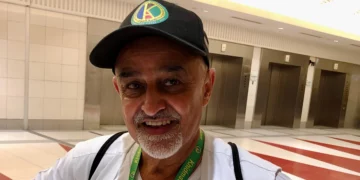
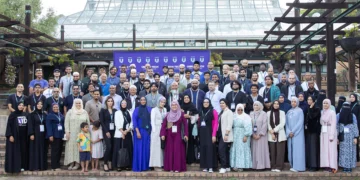
Khalid Sayed is the Leader of the Opposition in the Western Cape Legislature. This article is based on a speech he delivered at Sasco’s Provincial Strategic Session which was held on Sunday, August 10 at the Cape Peninsula University of Technology (CPUT) District Six Campus. (Photo: Supplied)