




![Does ta’wīl mean interpretation or fulfilment? A Quranic reassessment [+video]](https://muslimviews.co.za/wp-content/uploads/2026/10/Tawil-Kaskas-360x180.webp)









![Why becoming a wealthy Muslim is commendable in Islam [+videos]](https://muslimviews.co.za/wp-content/uploads/2026/09/Muslim-Trade-Business-1-360x180.webp)







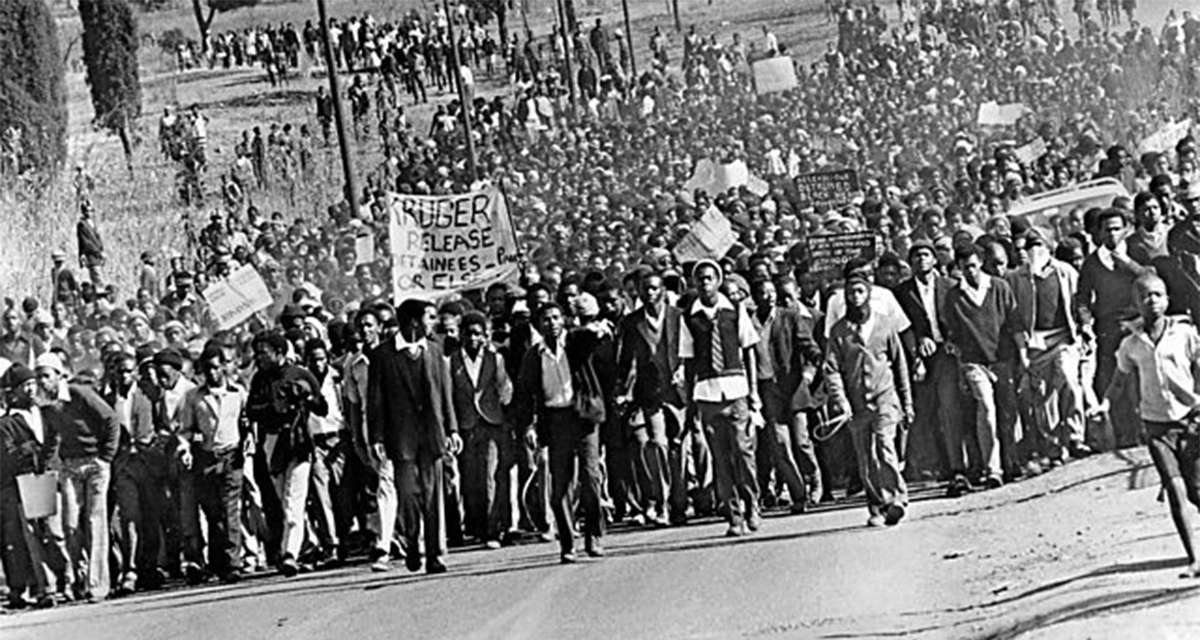

CASSIEM KHAN examines the often-overlooked role of the Pan Africanist Congress in shaping the 1976 Soweto Uprising and South Africa’s liberation movement.
The 1976 student uprising remains a pivotal watershed moment in South African liberation politics. For decades, mainstream narratives have frequently framed this historic rebellion almost exclusively through the ideological lens of the Black Consciousness Movement (BCM).
While the BCM’s contribution is undeniable, a deeper critical analysis reveals a persistent, underground, and often secretive presence of the Pan Africanist Congress (PAC) of Azania fuelling the revolutionary fervour.
As the historian and political scientist Dr Motsoko Pheko notes, the Soweto Uprising did not simply drop from the sky or fall from a tree like a ripe fruit; it was carefully organised and led secretly by an underground political movement dominated by PAC militants.
The role of the PAC during this period was neither passive nor merely reactive; it represented a direct continuation of its foundational commitment to Africanist liberation, anti-colonialism, and the absolute rejection of the apartheid state machinery. This reflection explores how the PAC’s internal underground structures, intellectual conduits, and international diplomatic campaigns, specifically exemplified by the Bethal Treason Trial and the global advocacy of David Sibeko, shaped the trajectory of the 1976 national awakening.
To understand 1976, one must look beyond institutional facades to the transmission of political philosophy. As Tom Lodge (1984) meticulously documented, the early history of the PAC was characterised by a distinct ‘insurrectionism’; a confrontational populism and an assertive rhetoric that sought the total overthrow of the settler-colonial state. Although the state’s brutal banning of the PAC following the 1960 Sharpeville Massacre forced its leadership into prisons and exile and drove its armed wing, Poqo, underground, the ideological footprint of Robert Sobukwe remained a potent, lingering symbol for radical youth seeking alternatives to the cautious or suppressed strategies of other liberation movements.
You may also want to read


![Iran, empire and the limits of ‘banality’: A moral reckoning at sea [+video]](https://muslimviews.co.za/wp-content/uploads/2026/03/IRIS-Dena-120x86.webp)


The PAC was a public legal organisation for only 12 months (April 6, 1959 – April 8, 1960) before it was banned by the apartheid government. By the mid-1970s, a new generation of township students was rediscovering the rhetoric of Sobukwe and the PAC’s unyielding emphasis on ‘Azania’, a term that directly challenged the legitimacy of the white settler minority regime. Ali Hlongwane (2009) highlights this dynamic, arguing that despite severe institutional fractures, the organisation maintained clandestine, local underground networks inside South Africa.
Dr Pheko’s historical insights bring to light the exact mechanics of these underground operations. To bypass state security, the banned PAC established essential cover organisations, notably the Young African Christian Movement (YACM), which later became the Young African Religious Movement (YARM) to accommodate individuals of other faiths. These religious fronts were deliberately used to conscientise students about their oppression and the inferior Bantu Education system. Clandestine meetings were held behind classrooms, such as at Masupatsela High School, and at private residences, where student delegations and PAC operatives openly discussed the stark disparities between black and white workers’ salaries, mineral exploitation, and how the Bantustan system was engineered to fragment African unity.
The youth marching on June 16 were not just protesting the technical imposition of Afrikaans as a medium of instruction; they were asserting a radical African identity and demanding an undivided, liberated Azania. As a 21-year-old student, Terence Makhubela, later testified, it was common knowledge among the youth that continuing with Bantu Education meant ‘their certificates would be written with blood when freedom was attained’.
The most damning historical evidence of the PAC’s profound internal influence during the uprising does not come from its own propaganda, but from the apartheid state’s defensive judicial response. The State vs Zephania Mothopeng and 17 others, famously known as the Bethal Treason Trial (1977–1979), presided over by Judge David Curlewis, stands as a monumental state effort to decapitate the resurgent internal leadership of the PAC. Apartheid security officials firmly believed that the 1976 uprisings were neither entirely spontaneous nor merely the independent machinations of schoolchildren. Instead, the regime was convinced that pre-emptive plans, organisational logic, and active instigation had been driven by seasoned PAC operatives working in the shadows.
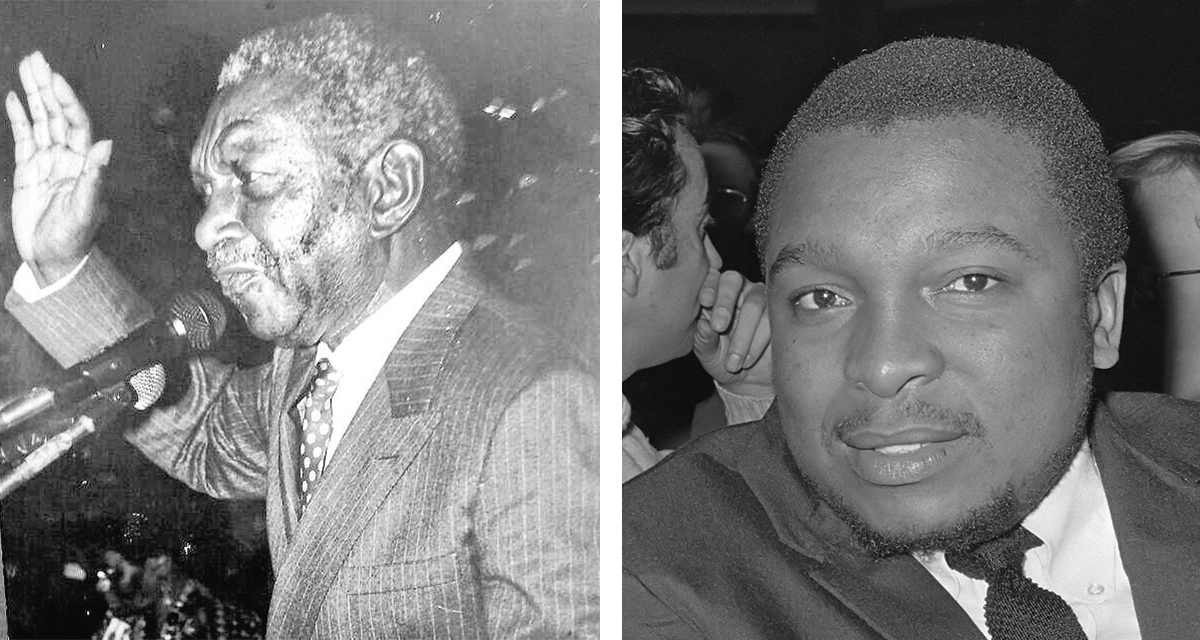
Zephania Mothopeng, a founding member of the PAC and a former teacher at Orlando High School, became the focal point of this state repression. Court testimonies revealed that as early as 1975, Mothopeng (‘Uncle Zeph’) was actively plotting the uprising. At secret regional meetings, he exchanged the classic open-palm PAC salute and the rallying cry, ‘Izwe Lethu! iAfrika!’. Mothopeng explicitly told cadres that the PAC was organising riots to spark a revolution, which would begin with students throwing stones and burning down apartheid property to cripple the economy, after which the adults would take over. He predicted that while the exact date was pending, a synchronised alarm signal would trigger the uprisings nationwide.
The state’s prosecution enlisted a staggering 165 state witnesses, underscoring the regime’s intense panic regarding the PAC’s true organisational reach. When the Soweto riots erupted on June 16, 1976, the planned operational sequence rippled immediately into neighbouring regions. For example, in Kagiso, local PAC leaders under the guidance of Michael and Daniel Matsobane activated their students on June 17, resulting in the burning of the state bottle store and local schools.
The Bethal Trial exposed the raw brutality of the apartheid judicial machine. Conducted largely in the remote town of Bethal to isolate the accused from urban protest hubs, 14 of the defendants testified to horrific torture. They were subjected to electric shocks, beaten, denied food and sleep, forced into freezing showers, and hung from iron bars. Johnson Nyathi was thrown out of a high building window by police, shattering his legs, in an attempt to extract a confession and stage a ‘suicide’. Activists like Dr Naboth Ntshuntsha, Aaron Khoza, Samuel Malinga, and Bonaventure Malaza died under these brutal conditions in detention.
In his final 21-hour judgment, Judge Curlewis directly affirmed the PAC’s culpability, telling Mothopeng: ‘You, Mothopeng, acted to sow seeds of anarchy and revolution. The riots you organised and predicted eventually took place in Soweto on 16 June and at Kagiso the next day.’ Except for one acquittal, the remaining 17 activists were sentenced to a collective 162 years of imprisonment, with the 66-year-old Mothopeng receiving 30 years. Even the Appellate Division, upon reviewing the defence’s appeal in July 1979, swiftly upheld the convictions, concluding that the PAC had systematically used underground religious bodies as a front to incite riots and recruit youth.
This ideological maturation debunked the ‘Soweto-centric’ historical narrative. The 1976 contagion quickly transformed from a local Johannesburg strike into a nationwide school students’ protest movement. In working-class townships far removed from the Witwatersrand, such as Galeshewe in the Northern Cape, student leaders openly cited a direct philosophical connection to Sobukwe’s 1960 anti-pass campaigns.
This geographic diffusion reflects what Gregory Houston (2015) and T.S. Khumalo (2020) identify as part of the PAC’s broader strategic vision: despite the logistical limits of its external facilities, the core philosophy of a ‘People’s War’ rooted in grassroots urban and rural resistance continued to inspire the youth. Dr Pheko highlights that this internal programmatic education was deeply tethered to a broader military agenda.
Cadres like John Ganya (Accused No. 2) were convicted of organising 90 young people, including 17 municipal police officers, to undergo military training in PAC camps across Tanzania, China, Yugoslavia, and Libya, utilising Swaziland and Botswana as transit pipelines. This underground network ensured that trained cadres, such as Jerome Kodisang, were returning to South Africa precisely as the June 1976 dynamic exploded.
While Mothopeng and internal cadres faced the wrath of the regime on the home front, the PAC’s external mission worked tirelessly to internationalise the struggle. Central to this global effort was David Sibeko, the PAC’s Director for Foreign Affairs and representative in New York. Sibeko was a master diplomat who understood that the survival of the liberation movement relied on breaking the Western diplomatic shield protecting apartheid South Africa.
Sibeko’s primary contribution was his relentless advocacy for the total removal of the apartheid government from the United Nations. Working alongside international anti-apartheid groups, Sibeko scored historic diplomatic victories, including lobbying for the eventual suspension of South Africa from the UN General Assembly. Following the June 16 massacre, Sibeko utilised his international platform to ensure that the images of state violence inflicted upon black children were broadcast worldwide, framing the student uprising not as an isolated riot, but as a legitimate global anti-colonial struggle.
Tragically, the internal factionalism and leadership crises that plagued the PAC in exile cut his life short. On June 12, 1979, David Sibeko was assassinated in Dar es Salaam. This tragedy mirrored the warnings found in classic liberation texts, such as Pokela Khosana’s Lest We Forget (1988), which lamented how internal structural disharmony and exile politics routinely compromised the PAC’s immense revolutionary potential. Yet, before his death, Sibeko successfully forced the UN Centre Against Apartheid to launch vigorous campaigns investigating the systemic torture of political detainees and the specific horrors of the Bethal Trial.
The statistics of the Bethal Trial alone – 165 sitting days, 5 200 pages of evidence, and 86 named co-conspirators – prove that the regime viewed the PAC as an active, existential threat. While Black Consciousness pioneers like Steve Biko and Barney Pityana played an invaluable revolutionary role in developing the psychological framework of resistance, the operational and structural underpinnings of the uprising bore a distinct PAC signature.
The legacy of June 16 does not belong to a single ideological group, but to a collective national awakening. To honour the totality of the 1976 uprising is to restore the PAC’s contribution from the margins of history, recognising its unyielding demand for total liberation and land restoration.
Cassiem Khan is the Media Liaison Officer and Spokesperson for the Minister of Land Reform and Rural Development. He writes in his personal capacity.
The PAC Western Cape commemorates the 50th anniversary of the June 16 Uprising on Tuesday at the Mandalay Community Hall.