
































![The market-builder who restrained the market [Part 2]](https://muslimviews.co.za/wp-content/uploads/2026/08/PHOTO-2026-08-25-17-16-32-360x180.jpg)
![The merchant preceding the Prophetic mission [Part 1]](https://muslimviews.co.za/wp-content/uploads/2026/08/01-360x180.jpg)










MAHMOOD SANGLAY
In July we published an analysis of the relevance of King IV to South African Muslim NPOs. This month MAHMOOD SANGLAY focuses on the Governance Code for Islamic NPOs, published in 2021 by a coalition of South African Muslim institutions.
Awqaf SA, the South African National Zakah Fund (SANZAF), the Association of Muslim Accountants and Lawyers (AMAL) and the United Ulama Council of South Africa (UUCSA) joined hands to produce the first Governance Code for Islamic NPOs. [Click here to download a copy of the Code] It marks a significant milestone in formalising standards of ethical leadership and institutional accountability in the Muslim non-profit sector.

The Code is informed by Islamic values and the King IV Report on Corporate Governance, and anticipates alignment with the draft King V, due for release late in 2025. The Islamic Code aims to provide practical guidance to Islamic non-profits—especially those reliant on public trust and community funding—on embedding sound governance aligned with both legal standards and Shariah principles.
This analysis of the Code critically examines it in the context of the South African regulatory landscape and the broader ethical discourse in Islamic governance. It integrates comparative insights from King IV and King V, as well as responses from the compiler and two of the four endorsing organisations, to evaluate the Code’s strengths, shortcomings, and evolving relevance for Muslim civil society.
A code grounded in revelation
Unlike secular codes, the Islamic Code opens with a distinct theological premise. Governance is not only a fiduciary duty to donors and stakeholders, but a divine trust (amanah) with ultimate accountability to Allah. Quranic verses and ahadith frame justice, transparency, consultation, and truthfulness as indispensable:
- ‘Each of you is a shepherd and each of you is responsible for his flock.’ (Bukhari & Muslim)
- ‘And consult with them in matters.’ (Quran 3:159)
- ‘Allah commands you to render back the trusts to whom they are due…’ (Quran 4:58)
This ethical anchoring differentiates the Islamic Code from King IV and King V, which rest on humanistic and constitutional values, but with parallel aspirations: cultivating an ethical culture, effective control, sustainable performance, and legitimacy.
Structural parallels with King IV and King V
The Islamic Code consciously mirrors the outcomes-based structure of King IV and V, adopting principles, recommended practices, voluntary application, and a focus on shaping organisational culture. Its equivalents to King’s pillars are clearly defined. Ethical culture is expressed through taqwa, amanah, sidq, and ihsan. Good performance is reflected in strategic vision, accountability, and impact. Effective control is ensured through risk management, delegation, and internal checks, and legitimacy is achieved by fostering transparency, Shariah compliance, and stakeholder trust.
Like King V’s principle of integrated thinking, the Islamic Code frames governance in relation to economic, social, environmental, and spiritual interdependencies. Both insist that governance is not a matter of compliance checklists but of achieving outcomes—ethical leadership, sustainable performance, and public trust.
Distinctive strengths of the Islamic Code
The Islamic Code explicitly promotes servant leadership, urging humility, selflessness, and God-consciousness (taqwa), thereby augmenting King’s emphasis on ethical leadership. Its procedural governance practices—such as board composition, conflict management, and performance reviews—are firmly tied to Quranic ethics, making accountability dual: to the community and to Allah.
Moreover, the Islamic Code adopts an expansive understanding of stakeholders, encompassing not only donors and beneficiaries but also future generations, the environment, and Allah. This reflects the principles of khilafah (stewardship) and Maqasid al-Shariah (the higher objectives of Islamic law), thereby broadening the governance mandate beyond human accountability.
Implementation by SANZAF, Awqaf SA and AMAL
The South African National Zakah Fund (SANZAF), Awqaf SA and the Association of Muslim Accountants and Lawyers (AMAL) are among the four sponsors of the Code. The former affirmed its adoption of the Code, noting that many of its governance practices pre-dated the Code but were validated by it. Its practices—oversight by trustees, independent audit committees, International Financial Reporting Standards (IFRS)-compliant reporting, and succession planning—demonstrate transparency and consistency, and have earned external recognition such as commendation from Cambridge Islamic Finance Awards.
Awqaf SA likewise emphasised that governance has been integral to its mission from inception. The organisation notes that many of the principles later captured in the Governance Code were already embedded in its own frameworks: robust policies for managing donor funds, strong board oversight, clear financial controls, independent audits, and transparent reporting to donors and supporters. Given the perpetual nature of waqf assets, Awqaf SA regards such measures not only as best practice but as an inherent obligation of the institution of waqf. The organisation stressed that it remains committed to continuous improvement, ensuring its governance remains current, aligned with regulatory developments, and worthy of the public trust placed in it.
AMAL highlights its long-standing commitment to governance through constitutional alignment, inclusive board practices, audited financial statements, subcommittees, and stakeholder consultation. Its notable contribution is capacity-building through its Annual NPO/PBO Governance Workshop, which has become a sought-after platform for training and peer learning across the sector.
Responses from the chief compiler
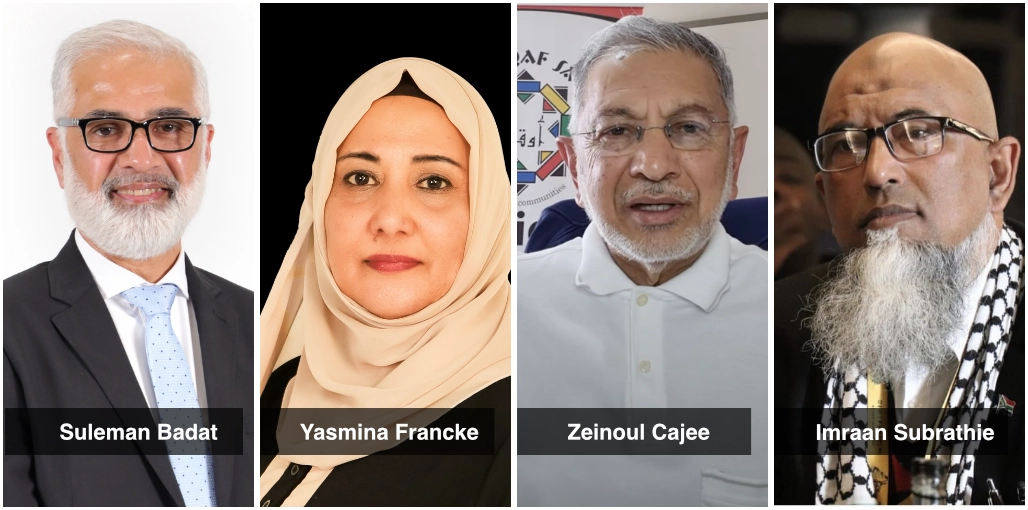
Suleman Badat, a renowned chartered account and corporate governance advisor, is the chief compiler of the Islamic Code. Badat responded to a series of questions from Muslim Views. He notes that the Code addresses entrenched founder-led models by mandating board independence, succession planning, and periodic strategic reviews—all framed as shura (consultation) and amanah (trust). On the Code’s voluntary nature, he emphasises that uptake will require self-assessment tools, training resources, and grassroots advocacy, especially for smaller NPOs.
On the aspiration to act in a manner ‘pleasing to Allah,’ Badat insists this is measurable in ethical behaviour: integrity in finance, fulfilment of donor commitments, and dignified treatment of staff and beneficiaries. These spiritual metrics are designed to complement conventional governance indicators.
He further explains that drafting the code required reconciling religious, legal, financial, and social perspectives through ijtihad and shura, yielding a framework that is both principled and practicable. Looking forward, a revised edition is planned to align with King V, and will be supplemented with practical tools—model constitutions, whistleblowing mechanisms, and audit templates—addressing one of the major critiques of the current Code.
Importantly, Badat clarifies that while there are no formal international endorsements yet, the Code’s principles are universally applicable and could inform global dialogue on Islamic governance. He also stresses that the Code equips NPOs to navigate politically sensitive terrains—such as aid to Gaza or mosque disputes—by promoting neutrality, mission fidelity, and integrity. Finally, he notes that while future donor or state conditionality on compliance would raise standards, genuine transformation must stem from voluntary conviction rather than box-ticking.
You may also want to read





Shortcomings and areas for improvement
The analysis of the Islamic Code, together with the responses provided by Badat, converge on some notable limitations:
- Insufficient practical tools: Unlike King V’s disclosure templates and sector supplements, the Islamic Code currently lacks operational aids. Badat’s commitment to remedying this is encouraging.
- No ‘apply and explain’ regime: King V innovates with an ‘apply and explain’ disclosure regime. The Islamic Code could benefit from adopting this to encourage contextualised transparency.
- Limited scope: A ‘one-size-fits-all’ approach does not serve both large waqf institutions and small burial societies. Proportional guidance, as in King V, would improve uptake.
- Over-reliance on moral incentives: While the Code places due emphasis on seeking Allah’s pleasure, codified accountability mechanisms remain rudimentary.
- Minimal legal integration: Despite being a South African document, the Code underutilises local frameworks such as the NPO Act or Companies Act, which could improve enforceability and alignment with donor requirements.
Nevertheless, The Governance Code for Islamic NPOs represents a landmark achievement. It is a governance framework that frames accountability as a sacred duty and embeds ethics as worship. It aligns with King IV and anticipates King V, while offering a distinctively faith-based vision.
Yet, its enduring value will depend on evolving from a principle-rich document into a practical tool of transformation. This requires the forthcoming revised edition to integrate templates, capacity-building programmes, and peer-review mechanisms. With the demonstrated examples of SANZAF, Awqaf SA and AMAL, and with Badat’s roadmap for future iterations, the Code can truly position Islamic NPOs as trustworthy custodians of public funds and sacred missions.
The Governance Code for Islamic NPOs is therefore best understood as a foundation, not a finished product. It signals an intention to anchor Muslim institutional life in both Islamic values and modern governance. Larger organisations such as SANZAF and Awqaf SA already embody many of its aspirations, demonstrating that Islamic institutions can combine ethical vision with robust controls and transparent reporting. The real challenge lies in equipping smaller, less resourced NPOs with the tools, training and proportional guidance needed to make governance a lived reality. Only then can the Code fulfil its promise: to transform governance from a statement of values into a framework of trust.