























![The market-builder who restrained the market [Part 2]](https://muslimviews.co.za/wp-content/uploads/2026/08/PHOTO-2026-08-25-17-16-32-360x180.jpg)
![The merchant preceding the Prophetic mission [Part 1]](https://muslimviews.co.za/wp-content/uploads/2026/08/01-360x180.jpg)










As Islamic finance grows into a multi-trillion-dollar global industry, ethical accountability is becoming increasingly important. DR ISMAIL LAGARDIEN argues that Muslim investors should be confident that their savings and investments do not inadvertently support injustice.
Global Islamic finance faces a stern test as key Muslim-led financial powerhouses in the Gulf, Saudi Arabia and Indonesia have aligned themselves with the Trump family business – a vanity project with questionable ethics. This places an extra burden on Islamic financial practices to prevent the savings and investments of Muslims from being used to further the geostrategic aims of the United States and its partners in the Muslim world.
The Gulf states, particularly the United Arab Emirates (UAE) and Dubai, have positioned themselves as conduits for funds flowing between Western Asia and Wall Street. The Dubai International Financial Centre (DIFC) leads the way in channelling money from Africa and South Asia, through Western Asia, to European and North American financial institutions. In the language of the DIFC, the Middle East, Africa and South Asia (MEASA) is a treasure trove of capital that remains difficult for individual depositors and investors to track. The DIFC relies on investment returns to encourage individuals to continue placing their money in Gulf states that have aligned themselves with the United States.
The US-Israeli war on the people of Iran has inspired retaliatory attacks on military installations in the Gulf that host American personnel and military assets.
Individual investment advisers have followed the lead of Gulf states by promoting the unrestricted transfer of vast sums of money sourced, for example, from more than 100 hedge funds and US$700 billion in assets managed by firms such as BlackRock, Millennium, Brevan Howard and Balyasny. Almost all are closely intertwined with US and Western European financial and geopolitical interests.
Dubai presents a curious case of a shift towards what many regard as less ethical finance. The Dubai Islamic Bank, established in 1975, has played an important role in facilitating and managing global Islamic finance over the past five decades. Dubai has, however, become increasingly controversial because of its alignment with a liberal capitalist system that, critics argue, is implicated in the destruction of communities across Western Asia and the Levant.
Saudi Arabia, too, has continued to deepen its political alignment with the United States and has committed substantial investment to Donald Trump’s son-in-law, Jared Kushner, whose investment activities have attracted ethical scrutiny. What emerges from this political shift is a growing lack of trust in Dubai as a global manager of Islamic finance.
A more trustworthy global system that is compliant with Shariah principles may therefore be required. Such a system would establish banking standards and practices while ensuring greater transparency. In this regard, there are credible alternatives. Smaller countries are emerging as leaders in Islamic finance and could provide more trustworthy and ethical global leadership. Malaysia, for example, has one of the world’s most highly developed Islamic finance systems, while Hong Kong has made significant strides in creating incentives and institutions to support Islamic finance. The relatively small island state of the Maldives has also demonstrated initiatives worthy of global attention.
Shifting our gaze from Dubai reveals an Islamic finance industry that is remarkably vibrant and continues to gain momentum. The Maldives and Hong Kong, in particular, have been forward-looking in establishing themselves as centres for global Islamic finance. Early last year, the Maldives Monetary Authority launched the Tamweel Islamic Finance Initiative to raise awareness of Islamic finance while strengthening training and capacity-building across the sector. The Maldives also established a Capacity Development Fund and launched media campaigns and higher education scholarships in Islamic finance.
Hong Kong has likewise reaffirmed its ambition to revitalise its Islamic finance sector by attracting global expertise while supporting regional growth and integration. It has also taken steps to address talent shortages and improve literacy in Islamic finance. The Chinese government has identified more than 60 professions experiencing shortages in Islamic banking and finance, creating opportunities for both local and international professionals. Notably, neither Hong Kong nor the Maldives forms part of the US-Israel military alliance, a factor that may enhance perceptions of their trustworthiness.
Indonesia, meanwhile, remains something of a wild card. Although President Prabowo Subianto has aligned himself politically with Donald Trump, domestic demand for retail sukuk has continued to grow over the past six to seven years. Beyond being Shariah-compliant, retail sukuk are regarded as relatively secure investments that offer competitive returns and are generally backed by the government. Their comparatively low minimum investment also makes them accessible to a wide cross-section of Indonesian society while promoting financial literacy.
According to the 2025 report by the Islamic Corporation for the Development of the Private Sector and the London Stock Exchange Group, individual investors have invested an estimated US$33 billion in Indonesian retail sukuk. The same report notes that by 2024 the global Islamic finance industry had expanded to 140 countries with an estimated value of US$5.98 trillion, representing annual growth of 21 per cent. If this trajectory continues, the industry could reach US$9.7 trillion by 2029, further strengthening cross-border connectivity and the need for regulatory improvements. Islamic finance is now a major global industry that requires secure, transparent and accountable oversight.
The world’s ten most developed Islamic finance jurisdictions are Malaysia, Saudi Arabia, the United Arab Emirates, Indonesia, Pakistan, Kuwait, Bahrain, Iran, Qatar and Türkiye. Of these, Malaysia has not explicitly aligned itself with the US-Israel alliance, while Türkiye presents a more complex case because of its NATO membership and longstanding aspirations to join the European Union. Malaysia nevertheless stands out for its institutional development and practice, while the work undertaken in the Maldives provides a useful model if knowledge production and trust in the global Islamic banking system are to be strengthened independently of global political alliances.
You may also want to read
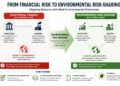



What should not be overlooked is that when someone in Cape Town places their life savings or pension into a local financial institution, that money is invested elsewhere. In a more transparent and trustworthy financial system, individuals, families and small businesses should be able to know where their money goes after it has been deposited.
As matters currently stand, given the close political relationships between several Gulf states and the US-Israel alliance, there is little assurance for many investors that their funds will not ultimately be directed towards projects or investments that raise profound ethical concerns. For Muslims seeking to ensure that their wealth is managed in accordance with the principles of justice, accountability and responsible stewardship, transparency is no longer simply desirable – it has become an essential requirement of a credible Islamic financial system.
Dr Ismail Lagardien is an internationally recognised political economist and writer. His main interests are in global political economy, global finance and historical capitalism.