































![The market-builder who restrained the market [Part 2]](https://muslimviews.co.za/wp-content/uploads/2026/08/PHOTO-2026-08-25-17-16-32-360x180.jpg)
![The merchant preceding the Prophetic mission [Part 1]](https://muslimviews.co.za/wp-content/uploads/2026/08/01-360x180.jpg)











MAHMOOD SANGLAY
Takaful promises protection through mutual care, yet millions remain excluded and participants cannot always see how funds are managed. Could artificial intelligence and blockchain make Islamic insurance fairer, faster and trusted?
Insurance is supposed to offer security when illness, death, disaster or financial loss strikes. Yet conventional insurance remains inaccessible or religiously unacceptable to many Muslims, while takaful has not always fulfilled its promise as an ethical and inclusive alternative.
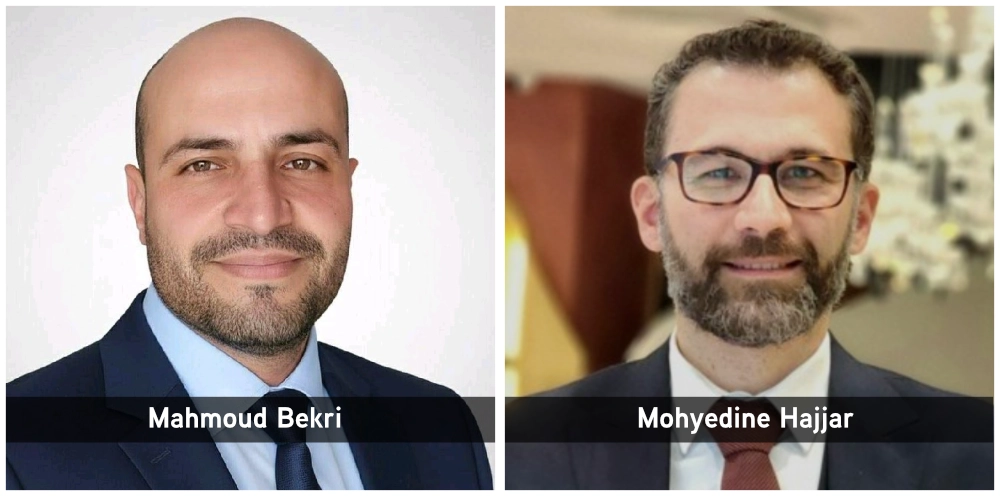
That is why “Reimagining Takaful through AI and Blockchain”, a peer-reviewed paper by Mahmoud Bekri and Mohyedine Hajjar published by the Islamic Development Bank Institute in February 2026, offers some useful insights. It asks whether new technology can solve three persistent problems in Islamic insurance: exclusion, operational opacity and mistrust.
Takaful is built on mutual assistance. Participants contribute to a shared fund that supports members who suffer covered losses. In principle, this differs from a conventional commercial transaction because the fund expresses cooperation, shared responsibility and care. In practice, however, paper-heavy administration, slow claims, unclear fund management and suspected fraud can weaken confidence.
The authors argue that artificial intelligence (AI) and blockchain could help takaful return to its cooperative roots. Their proposal matters because trust is not a decorative value in Islamic finance. Participants need to know that contributions are protected, claims are treated fairly and operators are not using complexity to conceal how money moves.
Making the money trail visible
Blockchain is best understood as a shared digital record. Once a contribution, policy decision or claim is recorded, it becomes extremely difficult to alter secretly. Participants, regulators and Shariah supervisors could therefore examine the same transaction history instead of relying entirely on an operator’s reports.
This could expose duplicate claims, deter manipulation and make the handling of participants’ money more transparent. For an industry founded on amanah, or trust, that visibility has obvious public value. People are more likely to join a takaful scheme if they can verify how the pool operates and how decisions affecting their money are made.
The paper also highlights smart contracts, which are computer instructions that release payment automatically once agreed conditions are verified. A weather-related micro-takaful scheme, for example, could pay farmers when rainfall falls below a defined level. A family takaful benefit could be released after a death is confirmed through an official registry. Automation could reduce paperwork, discretionary delay and opportunities for favouritism.
But an automatic system is only as reliable as the information entering it. An incorrect government record, faulty weather reading or badly written contract could produce an unjust result at digital speed. Blockchain can preserve a record; it cannot guarantee that the original data are true. Consumers will therefore still need accessible appeals, human intervention and clear accountability when the system fails.
AI could improve access or automate discrimination
AI offers a different promise. It can examine large amounts of information to assess risk, detect fraud and process claims faster. Instead of placing everyone into broad pricing categories, an operator could tailor contributions more closely to a person’s circumstances. Multilingual virtual assistants could also explain products and support consumers outside normal office hours.
For low-income households, these efficiencies could be transformative if savings are passed on through lower contributions. Bekri and Hajjar point to mobile insurance initiatives in Africa and Asia as signs of what digital distribution can achieve. Kenya’s Kilimo Salama uses mobile money for weather-indexed cover, while mobile partnerships in Rwanda and aYo services across several African markets have reached people previously excluded from formal insurance.
These examples are important but must be interpreted carefully. They demonstrate the reach of mobile insurance; they do not prove that AI-and-blockchain takaful is already affordable or successful at scale. The paper presents a pathway rather than a completed revolution.
AI can also reproduce the prejudices hidden in its training data. A system may charge more, reject an application or flag a claim because historical information unfairly associates a neighbourhood, income group or demographic profile with higher risk. Personalised pricing may sound fair while becoming intrusive surveillance of driving, health, spending or behaviour.
If consumers cannot understand or challenge an automated decision, old opacity will simply be replaced by algorithmic opacity. The question is not merely whether AI produces an answer quickly, but whether the answer can be explained, audited and corrected.
Who governs the digital fund
The paper’s most radical proposal is that participants could vote digitally on operator appointments, ethical rules and the distribution of any surplus. This could turn contributors from passive customers into active governors of the takaful fund and give technological form to shura, or consultation.
Yet digital voting does not automatically create equality. Token-based systems can concentrate influence among technically skilled or wealthier participants, while those with limited connectivity remain silent. Governance must therefore follow the cooperative principle of equal human worth rather than allowing financial or technological power to buy control.
Shariah supervision must also change. Reviewing product documents will no longer be enough when critical decisions are embedded in software. Scholars will need support from data scientists, consumer advocates and cybersecurity specialists to examine training data, automated decisions and smart-contract code. The Accounting and Auditing Organisation for Islamic Financial Institutions should develop common standards for AI ethics and blockchain governance, as the authors recommend.
You may also want to read


![The market-builder who restrained the market [Part 2]](https://muslimviews.co.za/wp-content/uploads/2026/08/PHOTO-2026-08-25-17-16-32-120x86.jpg)


South Africa and other unequal societies should pay close attention. Digital micro-takaful could extend affordable protection to families, informal workers and small businesses overlooked by mainstream insurers. It could also exclude people without smartphones, affordable data, digital literacy or trusted identity documents.
The real test is therefore not how advanced the technology appears. It is whether claims are paid faster, costs fall, decisions become visible and more vulnerable people receive meaningful protection. AI and blockchain can help restore takaful’s social mission, but only if human dignity, independent oversight and the right to challenge automated power are built into the system from the beginning.