
















![The market-builder who restrained the market [Part 2]](https://muslimviews.co.za/wp-content/uploads/2026/08/PHOTO-2026-08-25-17-16-32-360x180.jpg)
![The merchant preceding the Prophetic mission [Part 1]](https://muslimviews.co.za/wp-content/uploads/2026/08/01-360x180.jpg)






‘From an Islamic perspective, freedom is not simply the removal of shackles. It is the awakening of moral agency. It is the rising of the human spirit to serve with humility, courage and excellence.’
Khutbah delivered at Habibia Soofie Masjid, Rylands, Cape Town on April 25, 2025.
By PROFESSOR ASLAM FATAAR
As South Africans gear up to celebrate Freedom Day, we reflect on its meaning beyond political commemoration.
This day challenges us to ask whether the ideals of dignity and fairness have truly taken root in our society. Our democracy is a precious gift, empowering us with rights and inviting us to shape our lives with purpose, dignity and care.
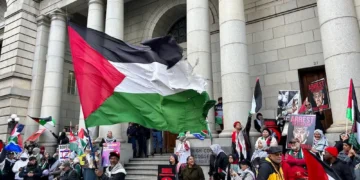
Thirty years after apartheid, our democracy is still working to meet people’s needs. Injustice continues – worldwide on the streets of Khartoum, Goma, Gaza and here at home, in struggling schools, rising inequality and unemployment. The journey to true freedom is far from over.
From an Islamic perspective, freedom is not simply the removal of shackles. It is the awakening of moral agency. It is the rising of the human spirit to serve with humility, courage and excellence.
The Qurʾān calls on believers to ‘stand firmly for justice, as witnesses to God – even if it be against yourselves, your parents, or your close kin’ (Qurʾān 4:135).
Justice is a responsibility to be enacted and demands courage and sacrifice.
The Prophet Muhammad (peace be upon him) extended this vision of ethical living when he said, ‘The most beloved of people to God are those who are most beneficial to others’ (Ṭabarānī). In this way, freedom is not passivity or retreat from the world. It is a call to engagement where service and mercy become the hallmarks of a truly liberated life.
Freedom Day and the responsibility to rise again
While 1994 marked the achievement of political liberation, Freedom Day today must be about moral renewal and societal change. We must ask: What good is freedom if it does not feed the hungry, house people experiencing homelessness, educate the child, or protect the earth?
Freedom demands action across generations. Our first generation fought colonial conquest. The second rose against apartheid’s brutality. Our generation is summoned to rise amid digital alienation, artificial intelligence, ecological crisis and growing inequality and despair. We must rise with integrity, grounded in moral responsibility. The Islamic tradition offers us the tools: action anchored in worship, mercy infused with justice and service carried out with iḥsān – doing what is beautiful and excellent for others.
Amānah: The trust of the elders, the responsibility of today
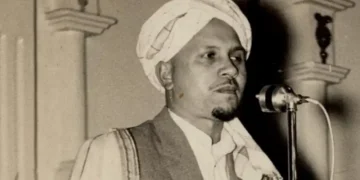
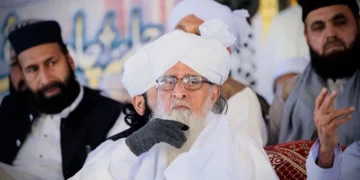
Our mosques, schools and orphanages were built by people who lived Islam as an integrated commitment. People like Shaykh Yusuf, Hazrat Soofie Saheb, Zainunisa ‘Cissie’ Gool, Imam Abdullah Haron, Fatima Meer, Dullah Omar and Imam Gassan Solomon refused to separate worship from struggle, prayer from protest.
The Prophet Muhammad (peace be upon him) taught that ‘each of you is a shepherd and each of you is responsible for his flock’ (Ṣaḥīḥ al-Bukhārī). Our elders were shepherds of moral clarity. They carried Islam into the streets, into courtrooms, building institutions and into the hearts of the people.
We now carry their trust. The question is: have we honoured it? Or have we become dulled by comfort, disconnected from the ethical fire that animated their lives?
To serve this trust requires a revival of prophetic resolve. As Dr Imam Omar Suleiman so powerfully reminded us at the Cape Town International Convention Centre this past Sunday (April 20, 2025), the Qurʾān offers a powerful reminder to the Prophet (SAWS) by explaining the aayah, ‘So be patient (sabr) , as those of strong determination (ʿazm) among the messengers were patient’ (Qurʾān 46:35). This verse points to a particular kind of patience – ṣabr that is rooted in ʿazm, which is a firm and unwavering determination and moral resolve.
The great messengers – Noah, Abraham, Moses, Jesus and Muhammad – were tested through immense trials. Yet, they never surrendered their principles. They stood in the face of rejection with dignity and steadfastness.
In today’s context, ṣabr must be more than passive endurance. It must become active, principled resistance to injustice. It is the way we walk alongside our youth – who struggle to find meaning, feel betrayed by institutions and long for moral companionship. It is not enough to tell them to be patient. We must model moral courage. We must earn their trust by showing them that faith walks hand in hand with justice.
Taqwā and culture as sacred resistance
This active ṣabr we embody must flow into taqwā – an awakened God-consciousness that calls us to moral responsibility and cultural resistance. True taqwā embraces the dignity of our diverse communities.
Taqwā – God-consciousness – is not a private virtue alone. It is a call to ethical solidarity. The Prophet (SAWS) described the ummah as a structure in which ‘each part strengthens the other’ (Ṣaḥīḥ al-Bukhārī, Muslim), like bricks holding up a building. This vision of society demands that we move from judgment to justice, from blame to accompaniment.
You may also want to read


To have taqwā is to share in the burdens of the marginalised. It is to listen before speaking, sit with the grieving and organise not from above but from among.
Cape Muslim culture – its gatherings, rituals and languages – was not born in comfort. It emerged through slavery, exile and struggle. It is not a museum piece but a living inheritance.
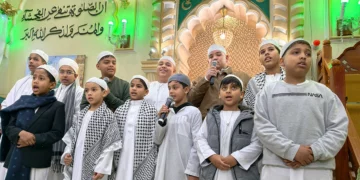
When culture becomes ethical care – when du‘ā circles include the grieving, when Qurʾān recitations reach the forgotten and when nasheed gatherings uplift the young and restless – it becomes sacred resistance.
The Qurʾān says, ‘Among His signs is the creation of the heavens and the earth and the diversity of your languages and your colours. Surely in this are signs for those who know’ (Qurʾān 30:22).
Diversity is not a threat – it is a divine mercy. It invites us to taʿāruf, to come to know one another across differences.
As the Qurʾān reminds us, we must care for ‘the neighbour who is close and the neighbour who is distant’ (Qurʾān 4:36).
The ethics of hospitality (ḍiyāfah) go beyond sharing food – they include sharing presence, listening and creating spaces of dignity and connection.
Altaf Husain Hali beautifully captures this spirit, writing, ‘This is true worship, this is real religion and faith: that one human be of support and service to another in this world.’
This is the Islam our ancestors lived and died for. We are called to carry this ethical tradition forward – not as a display, but as an ethical force.
Choosing proximity to the marginalised
To carry forward this tradition, as Hali urges, we must live it through deliberate closeness to the marginalised. This spirit is captured in the prayer of the Prophet Muḥammad (peace be upon him): ‘O Allah, let me live as a poor person, die as a poor person and be resurrected among the poor’ (Sunan al-Tirmidhī).
This was not a call to self-denial, but a deep alignment with the oppressed, with those who carry the weight of injustice unnoticed. His life reminds us that true faith is not detached, but grounded in the realities of those who suffer.
This Prophetic way invites us to walk with the laid-off worker, the woman in pain, the refugee, the orphan and the elder – not to fix from above, but to accompany with compassion and presence.
A light unfinished, but not lost
Freedom Day remains incomplete. But we are not without direction. We carry the prophetic compass: taqwā to centre our moral vision, sabr and ʿazm to ground our resilience and iḥsān to guide our action.
We offer a final prayer: ‘O Allah, make us among the best of Your creation, strengthen us with truth and be with us in serving the oppressed and the marginalised.’ Āmīn.