






![Does ta’wīl mean interpretation or fulfilment? A Quranic reassessment [+video]](https://muslimviews.co.za/wp-content/uploads/2026/10/Tawil-Kaskas-360x180.webp)











![Why becoming a wealthy Muslim is commendable in Islam [+videos]](https://muslimviews.co.za/wp-content/uploads/2026/09/Muslim-Trade-Business-1-360x180.webp)




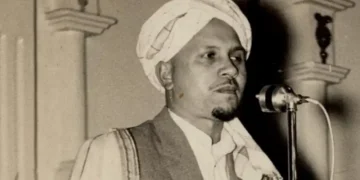
Today, seventy years since his appointment as Imam of al-Jaamia Masjid, Stegman Road, Claremont, in 1955, we reflect not only on the tragedy of his martyrdom but on his enduring legacy of justice and compassion, a legacy that continues to speak with power and urgency.
By IMAM DR A RASHIED OMAR
Allah, Rabb al-Hidayah (the Lord of Guidance), proclaims in the Glorious Qur’an, in Surah al-Baqarah, chapter two, verse 154:
وَلَا تَقُولُوا لِمَن يُقْتَلُ فِي سَبِيلِ ٱللَّهِ أَمْوَاتٌۢ ۚ بَلْ أَحْيَاءٌ وَلَٰكِن لَّا تَشْعُرُونَ
Do not say those who are killed in the Path of God are dead.
Rather, they are alive, though you do not perceive it (Al-Baqarah, 2:154)
The Qur’anic verse reminds us that the shuhada’, the martyrs, those who lay down their lives in the struggle for truth and justice, are never lost to history nor forgotten by Allah, al-Muhyi al-Mumit (the One who gives life, and the One who takes life). Though our eyes cannot behold them and our hearts may ache with grief, in the unseen realm (al- ghayb), the shuhada’, the martyrs, continue to live, sustained by the Rahmah, infinite mercy and compassion, of their Lord.
Martyrdom in Islam must be understood within this framework: not as a narrow reference to dying on the battlefield, but as a broader ethic of moral courage, the willingness to uphold justice, truth, and compassion, even at the cost of one’s life.
In this light, we affirm that Imam Abdullah Haron lives on: alive in the unseen realm (al-ghayb), embraced in the mercy and compassion of his Lord, and alive among us through the witness of his comprehensive message of Islam (shumuliyyat al-Islam). His body was martyred, but Imam Haron remains alive through his enduring message of justice and compassion that continues to inspire our struggle today.
Imam Haron’s enduring message and living legacy
On Saturday, September 27, 2025, we mark the 56th anniversary of Imam Abdullah Haron’s martyrdom.
You may also want to read


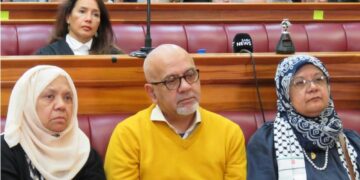
On that day in 1969, his body, bearing the marks of brutal torture, was discovered at the Maitland Police Station after he had been held incommunicado for 123 days. In 2023, a judicial re-inquest confirmed what our community had always known: that Imam Haron was martyred at the hands of the Apartheid security police.
Why did the Apartheid regime fear Imam Haron so deeply? What was it about his message that they found so threatening? It was his bold and uncompromising witness that Islam is a faith which demands social justice and rejects racism and oppression. From the pulpit, Imam Haron proclaimed that racism is a heresy, that to oppress people because of their skin colour is a sin against God, and that Muslims carry a sacred duty to stand in solidarity with the marginalized. Imam Haron’s comprehensive vision of Islam (shumuliyyat al-Islam) empowered the youth, inspired interfaith solidarity, and struck at the very foundations and heart of the racist and oppressive system of Apartheid.
Today, seventy years since his appointment as Imam of al-Jaamia Masjid, Stegman Road, Claremont, in 1955, we reflect not only on the tragedy of his martyrdom but on his enduring legacy of justice and compassion, a legacy that continues to speak with power and urgency.
As we reflect on this enduring message, it is fitting to recall that this year, 2025, marks seventy years since Imam Haron was appointed to lead the al-Jaamia Masjid in Stegman Road, Claremont, in 1955. From the very beginning of his imamat, he cultivated a profound and dynamic relationship with the youth of Claremont. Out of this bond was born the Claremont Muslim Youth Association (CMYA). The partnership between a courageous Imam and a generation of politically conscious young people forged a vision and practice of Islam rooted in bearing witness to social justice.
This comprehensive vision of Islam (shumuliyyat al-Islam) expressed itself most clearly in three dimensions of Imam Haron’s life and work: first, his uncompromising stand against racism; second, his commitment to interfaith solidarity; and third, his deep trust in the transformative power of youth.
- Anti-racism
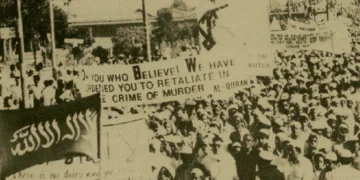
The first and most defining dimension of Imam Haron’s message was his uncompromising stand against racism. Together with the Claremont Muslim Youth Association (CMYA), he denounced Apartheid as a heresy against Islam’s principle of justice. In 1962, they issued The Call of Islam, a manifesto declaring Apartheid to be a direct violation of the ethico-moral teachings of Islam. For Imam Haron, racism was not only a political evil but also a theological affront to the Qur’anic vision of human dignity and equality.
He drew inspiration from the Prophet Muhammad’s Farewell Sermon (al-khutbat al-Wida`), which proclaimed that no person with lighter skin has superiority over one with darker skin, and from the Qur’anic verse in Surah al-Hujurat, chapter 49 verse 13, which proclaims:
يَا أَيُّهَا النَّاسُ إِنَّا خَلَقْنَاكُم مِّن ذَكَرٍ وَأُنثَىٰ
وَجَعَلْنَاكُمْ شُعُوبًا وَقَبَائِلَ لِتَعَارَفُوا
إِنَّ أَكْرَمَكُمْ عِندَ اللَّهِ أَتْقَاكُمْ إِنَّ اللَّهَ عَلِيمٌ خَبِيرٌ
O Humankind! We created you into male and female, and fashioned you into distinct peoples and tribes that you may recognize (and cooperate) with one another in goodness (not that you may despise each other). Truly, the most highly regarded of you in the sight of Allah is the one with the best conduct. And God is all-Knowing, and is Well-aware of all things (Al-Hujurat, 49:13).
Imam Haron’s anti-racism was not an abstract conviction; it was embodied in his Imamat. He was among the first Muslim religious leaders to cross Apartheid’s racial divides, frequently visiting the townships of Langa, Nyanga, and Gugulethu, not with the aim of proselytisation, but to express solidarity with the oppressed and to affirm their shared humanity. His presence in these communities was a bold rejection of the Apartheid state’s attempt to fragment society along racial lines. For proclaiming that Apartheid was a sin against God and humanity, Imam Haron paid the ultimate price. His tortured death in 1969 turned his witness into a living legacy.
- Interfaith solidarity
Another vital dimension of the life and legacy of Imam Abdullah Haron was his deep commitment to interfaith solidarity. He recognized that the struggle against Apartheid transcended religious boundaries and built enduring bonds with Christians, Jews, and people of conscience. Among his many activities, Imam Haron cared for the families of anti-Apartheid activists, often with funds from the Defence and Aid Fund. This Fund, established in London under the leadership of Canon John Collins, became a vital lifeline for political prisoners and their families during the oppressive years of Apartheid. Strongly supported by international Christian churches, it provided legal aid, financial relief, and moral solidarity, an indication of the profound trust that Imam Haron had forged across faith lines.
Imam Haron also worked closely with figures such as Reverend Dan Wessels of the Moravian Church, Eulalie Stott of the Black Sash, and Professor Hoffenberg of the Defence and Aid Fund, and he invited non-Muslim voices to address his congregation at the Al-Jaamia Masjid while also sharing their platforms. Such gestures reflected his conviction in the Qur’anic command proclaimed on Surah al-Ma’idah, chapter 5 verse 2:
, وَتَعَاوَنُوا عَلَى الْبِرِّ وَالتَّقْوَىٰ وَلَا تَعَاوَنُوا عَلَى الْإِثْمِ وَالْعُدْوَانِ
Cooperate with one another in righteousness and piety,
but do not cooperate in sin and transgression (Al-Ma’dah, 5:2)
His life and tragic death inspired unprecedented interfaith tributes: an interfaith memorial service in the crypt of St Paul’s Cathedral in London, where for the first time a Muslim was commemorated and verses of the Qur’an were recited; and later, Reverend Bernard Wrankmore’s 67-day fast at the Signal Hill Kramat in protest at Imam Haron’s death. These powerful acts bear witness to the breadth and depth of his legacy. Imam Haron’s interfaith solidarity was not peripheral to his mission; it was central to his vision of justice. His legacy continues to call us to build bridges across religious divides and to bear witness together for a more humane and compassionate world, a world where justice and compassion prevail over hatred and division.
- Youth empowerment
Last but not least, Imam Haron’s mission was distinguished by his deep commitment to youth empowerment. He believed profoundly in the transformative potential of young people, convinced that any true change in society must begin with the youth. He rekindled their faith through a socially responsive Islam, while at the same time humbly learning from their anti-Apartheid convictions and their vision of a non-racial future. This symbiotic relationship gave birth to the Claremont Muslim Youth Association (CMYA) and inspired similar movements across Cape Town.
Imam Haron also pioneered practices that gave youth a meaningful voice in religious life. As early as 1956, he encouraged young students in his congregation to deliver short post-tarawiḥ talks, nurturing in them skills of research, reflection, and public speaking. For Imam Haron, empowering youth meant more than teaching them, it meant trusting them, learning from them, and walking beside them in the struggle for justice.
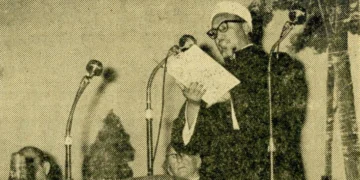
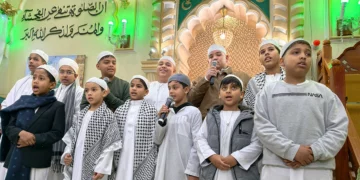
He also had a special place in his heart for children. On Eid day, after the salah and khutbah, he would invite the children, boys and girls, to sit in the front rows of the Stegman Road Masjid. He would hand some of them the microphone to recite the Eid takbir, and the joyful programme would conclude with the children receiving sweets and small gifts. This beautiful tradition reflected Imam Haron’s love for children and his conviction that even the youngest members of the community should feel seen, valued, and embraced as part of the masjid family.
His vision remains a powerful model for building bridges between generations and for nurturing a faith that speaks with courage to the real challenges of the times.
These, then, are the three key dimensions of the enduring message and legacy of al-Shahid Imam Abdullah Haron.

Carrying forward the enduring message and living legacy of Imam Haron
The legacy and comprehensive message of Islam embodied by Imam Haron did not end with his martyrdom. It lives on through his students, through successive generations of social justice activists, and through the organisations and institutions they helped to build.
Naturally, there are many different ways in which Imam Haron’s life and message are remembered by diverse organisations and institutions across South Africa. As with every great historical figure, there will be multiple “Imam Haron’s’ commemorated this year, each reflecting a different facet of his witness.
One such institution that has cherished and advanced Imam Haron’s vision is the Claremont Main Road Masjid (CMRM). In the difficult years following his tragic death, CMRM became a vessel carrying forward this heritage, nurtured by those shaped by Imam Haron and the Claremont Muslim Youth Association (CMYA). Under the leadership of the late Imam Gassan Solomon and successive Boards of Governors, the masjid emerged as a sanctuary of justice, compassion, and interfaith solidarity. CMRM gave institutional form to Imam Haron’s vision of Islam as a living witness to social justice. From the struggle against Apartheid to our present context of economic inequality, rampant crime, and systemic corruption, CMRM has sought not only to remain faithful to Imam Haron’s legacy but to extend and enrich it.
It is important, however, to recognise that while CMRM has been a natural home for the flourishing of Imam Haron’s heritage, it is by no means the only one. Across our city and our country, countless organisations and institutions continue to draw inspiration from his example. In every space where justice is pursued, compassion is practiced, and moral courage is nurtured, Imam Haron’s spirit lives on.
Concluding supplication
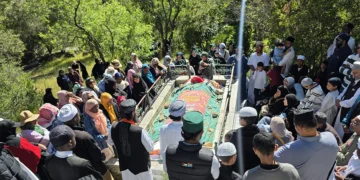
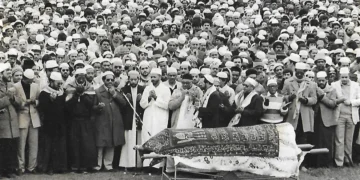
In conclusion, we return the Qur’anic verse with which I began this khutbah and which was recited at Imam Haron’s funeral, on the September 29, 1969, when more than thirty thousand mourners transformed his janazah into a powerful act of defiance against Apartheid:
وَلَا تَقُولُوا لِمَن يُقْتَلُ فِي سَبِيلِ ٱللَّهِ أَمْوَٰتٌۢ ۚ
بَلْ أَحْيَآءٌ وَلَـٰكِن لَّا تَشْعُرُونَ
Do not say those who are killed in the Path of God are dead.
Rather, they are alive, though you do not perceive it (Al-Baqarah, 2:154)
May Allah grant Imam Abdullah Haron the highest station in al-Jannat al-Firdaws al-`Ala.
May Allah reward all those who continue to carry forward Imam Haron’s comprehensive vision of Islam.
And May Allah guide us here at the Claremont Main Road Masjid to remain faithful to this heritage of justice, compassion, and solidarity, so that it may endure for generations to come.
اللَّهُمَّ اغْفِرْ لَهُ وَارْحَمْهُ وَسَكِّنْهُ فِي الْجَنَّةِ
وَاحْشُرْهُ مَعَ النَّبِيِّينَ وَالصِّدِّيقِينَ
وَالشُّهَدَاءِ وَالصَّالِحِينَ ۖ وَحَسُنَ أُولٰئِكَ رَفِيقًا
O Allah, forgive him, have mercy upon him, grant him a home in Paradise, and unite him with the Prophets, the Truthful, the Martyrs, and the Righteous. Truly, they are the most blessed and noble companions to be with!
This is the text of a Khutbah delivered at the Claremont Main Road Mosque on Friday September 26, 2025.