


















![The market-builder who restrained the market [Part 2]](https://muslimviews.co.za/wp-content/uploads/2026/08/PHOTO-2026-08-25-17-16-32-360x180.jpg)
![The merchant preceding the Prophetic mission [Part 1]](https://muslimviews.co.za/wp-content/uploads/2026/08/01-360x180.jpg)








By SHAKIR ACHMAT
HOW can mosques continue to serve as the heartbeat of their communities in a rapidly changing world?
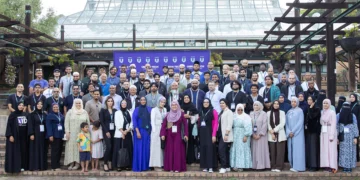
This question took centre stage at a groundbreaking workshop in Cape Town where leadership from mosques and governance experts gathered to tackle the pressing challenges of mosque management and community engagement.
Hosted by the International Peace College of South Africa (IPSA) in collaboration with Imam Foundation (United Kingdom), the Effective Mosque Governance workshop sparked robust discussions and participants shared insights aimed at creating a sustainable, shariah-compliant framework for mosque management.
Led by programme coordinator Aisha Adjiet, the event delved into spiritual guidance, financial accountability and innovative governance strategies, ensuring mosques remain not only places of worship but also pillars of social transformation.
The workshop opened with a heartfelt duah by Shaikh Imraan Achmad, setting a spiritual tone that emphasised governance as an essential religious duty.
Shaikh Mogamat Ighsaan Taliep, Chief Director of Academic Affairs at IPSA, framed the conversation around broader societal responsibilities. Reflecting on the ongoing humanitarian crisis in Palestine, Shaikh Taliep emphasised the critical role mosques can play in fostering community resilience, ethical leadership and social justice. Citing the example of actions of the Prophet Muhammad (SAW) upon arriving in Madinah, where he established the mosque as the heart of the community, Shaikh Taliep emphasised that mosques have historically been the ‘nerve centre’ of social and spiritual transformation.
Dr Mohammed Balaoo, CEO of the Imam Foundation, joined the workshop virtually to further discuss the principles of mosque governance. Dr Belaoo stressed the need for a structured, strategic approach to mosque management that aligns with the shariah while addressing modern needs. He cautioned against neglecting proper planning, warning that such an approach leads to inefficiency and missed opportunities.
The financial aspect of mosque governance was covered in a session led by Nadeera Moosa, a chartered accountant. Moosa introduced the King IV governance framework, initially developed for South African corporations, and explained how its principles could be adapted to non-profit entities like mosques.
The King IV’s principles include:
- Leadership, ethics and corporate citizenship: Encouraging integrity, accountability and transparency in leadership.
- Strategy, performance and reporting: Aligning mosque activities with clear strategic objectives.
- Governing structures and delegation: Ensuring well-defined roles within mosque leadership for efficient management.
- Risk and compliance governance: Managing risks related to financial practices and compliance with regulations.
She emphasised that implementing King IV principles could enhance a mosque’s financial credibility, making it more ethically sound and resilient against risks. Moosa also discussed the benefits of registering mosques as Non-Profit Organisations (NPO) or Public Benefit Organisations (PBO) to access tax exemptions and increase donor confidence.
One of the highlights of the workshop was a presentation by Anwar Omar, a representative from the Mughammaddiyah Masjid in Tennyson Street, Salt River.
He shared the mosque’s historical struggles with governance, detailing two significant periods of the internal conflict that led to lapses in operational oversight.
The first occurred in the 1920s due to racial tensions between Muslims classified Malay and Indian, which led to exclusionary policies. The second took place from the 1980s to the early 2000s when disagreements over Eid observance prevented the mosque from holding Annual General Meetings (AGMs) for nearly two decades.
Omar shared how these internal conflicts hampered the mosque’s ability to serve the community effectively. However, he also spoke about the recent positive changes made by the mosque, including the establishment of a more representative governance structure with a 19-member board.
The involvement of women in executive roles within mosques was another important point that was raised at the workshop.
Participants highlighted the evolving role of women in leadership and the importance of creating inclusive governance structures that allow women to contribute meaningfully to decision-making processes.
You may also want to read


![‘God saved us from God’s chosen people’ [+video]](https://muslimviews.co.za/wp-content/uploads/2024/12/featured-Image-120x86.jpg)
The discussion emphasised that empowering women to take on leadership positions can enhance the effectiveness of mosque governance and ensure that the mosque’s work reflects the diverse contributions of the entire community.
The workshop also focused on shariah-compliant governance practices.

Shaikh Taliep led a session on the importance of aligning mosque operations with Islamic principles.
Using the Maqasid al-Shariah (objectives of Islamic law) approach, mosque leaders can ensure that their governance not only fulfils administrative needs but also meets higher ethical standards.
Shaikh Taliep called for imams and mosque leaders to implement these principles with a string sense of accountability to their communities. He emphasised that mosque governance should reflect Islamic values like justice, transparency and welfare, making it a moral duty for all involved.

Junaid Darries from the Imam Foundation also provided insights into the organisation’s commitment to training mosque leaders in governance, conflict resolution and community engagement.
Darries emphasised the importance of equipping imams with the skills needed to manage and lead effectively. He explained that the Imam Foundation offers various programmes aimed at building the leadership capacities of imams. These programmes include training in project management, legal compliance, public speaking and community outreach, ensuring that imams are equipped to meet both spiritual and practical needs of their congregations.

Attendees had the opportunity to engage in meaningful discussions and share insights about their own experiences in mosque governance.
Zaakier Jacobs, a representative of the Durbanville Islamic Society reflected on his key takeaways from the workshop: ‘I think the session was very informative and pitched at the correct level to make strategic decisions on how a masjid should be managed, given the protocols and procedures shared on the day. The course outline was clear; that we need to focus on the application of shariah when dealing in all matters, especially with that of the masjid. The course also served as a means to collaborative discussions between other masajid committee members, sharing valuable insights on their experiences.’
Ansaar Issack, a representative from the Islamic Society of Ferness Ottery (ISFO), shared a similar sentiment: ‘Alhamdulilah, the workshop was extremely insightful. Much can be said about the importance and need for these workshops, particularly amongst the masjid committees. Other than the actual course content, it was a great opportunity to network with other masajid committee members in identifying challenges and similarities in organisational structures.’
As the workshop concluded, there was a collective sense of optimism regarding the future of mosque governance. The attendees recognised the importance of implementing the lessons learned from the event, particularly in creating more inclusive, transparent and effective governance structures. The discussions and collaborations that took place during the workshop underscored the critical role that mosques play in the broader community, not just as places of worship but as centres of social change and support.
In his closing remarks, Shaikh Shahid Esau, a member of the organising committee of the Effective Mosque Governance workshop, announced plans to roll out monthly workshops aimed at providing continuous training and support for mosque leadership. These workshops will focus on the skills and knowledge needed to address ongoing challenges and implement sustainable governance services.
He said there was a formal memorandum of understanding between IPSA and the Imam Foundation (UK) with respect to mosque governance. The latter’s international network would offer valuable insights to guide mosque leadership across South Africa and beyond in their efforts to create governance structures that are both compliant with shariah and responsive to the needs of their communities.