




Muslim Views
No Result
View All Result
  • News
    • All
    • Local
    • National
    • World
    Muslim Views Zamzam investigation wins national Story of the Year award

    Muslim Views Zamzam investigation wins national Story of the Year award

    Voting glitches trigger extension for Mowbray Cemetery elections

    Voting glitches trigger extension for Mowbray Cemetery elections

    Mowbray Cemetery elections: Competing narratives and an unverified candidate list

    Mowbray Cemetery elections: Competing narratives and an unverified candidate list

    New judge takes Mowbray Cemetery case as 53 nominees cleared for ballot

    New judge takes Mowbray Cemetery case as 53 nominees cleared for ballot

    Beyond charity: Rethinking the economic potential of waqf in South Africa

    Beyond charity: Rethinking the economic potential of waqf in South Africa

    Read our Moulood-un-Nabi edition online

    Read our Moulood-un-Nabi edition online

    Primary school nasheed competition rewards dedication

    Primary school nasheed competition rewards dedication

    Cape Town art exhibition explores untold histories through art and archives

    Cape Town art exhibition explores untold histories through art and archives

    Operation Ubuntu march calls for arrests and action against xenophobia

    Operation Ubuntu march calls for arrests and action against xenophobia

    Honouring our Huffadh as Cape Town celebrates guardians of the Qur’an

    Honouring our Huffadh as Cape Town celebrates guardians of the Qur’an

    • National
    • World
    • Local
  • Opinion
    • All
    • Columnists
    • Discussions with Dangor
    • Editorial
    • Guest Writer
    Why Gaza’s kites demand urgent global solidarity

    Why Gaza’s kites demand urgent global solidarity

    Another hatchet job on Choritz — but is this fair and balanced journalism?

    Another hatchet job on Choritz — but is this fair and balanced journalism?

    Reading the Prophet: knowing the sīrah, reading ourselves

    Reading the Prophet: knowing the sīrah, reading ourselves

    The immigration debate: class, race and South Africa’s unresolved crisis

    The immigration debate: class, race and South Africa’s unresolved crisis

    Moulood – When love stands

    Moulood – When love stands

    SADC’s “old wine in new bottles” model unlikely to transform political economy

    SADC’s “old wine in new bottles” model unlikely to transform political economy

    Independence interrupted: Pakistan’s unfinished passage from colony to country

    Independence interrupted: Pakistan’s unfinished passage from colony to country

    Keep your eyes on the victims of genocide, Mr President

    Keep your eyes on the victims of genocide, Mr President

    President Ramaphosa meeting IDF soldier’s family raises crucial questions

    President Ramaphosa meeting IDF soldier’s family raises crucial questions

    Mecca pact signals move against fading US security order

    Mecca pact signals move against fading US security order

  • Features
    • All
    • 1500 Years of Prophetic Legacy
    • AWQAF SA
    • General Features
    • Imam Haron
    • Tributes
    Reading the Prophet: knowing the sīrah, reading ourselves

    Reading the Prophet: knowing the sīrah, reading ourselves

    The living heritage of Moulood traditions at Zandvliet

    The living heritage of Moulood traditions at Zandvliet

    Ummah bids farewell to global luminary Pir Sayed Hasin ud Deen Shah (RA)

    Ummah bids farewell to global luminary Pir Sayed Hasin ud Deen Shah (RA)

    Marking 140 years since the closure of the Tana Baru

    Marking 140 years since the closure of the Tana Baru

    Abbas Rumaney remembered for his faith, wisdom, humour and generosity

    Abbas Rumaney remembered for his faith, wisdom, humour and generosity

    Grappling with Apartheid labels

    Grappling with Apartheid labels

    The scholar who refused to turn Islam into an enemy: The legacy of John Esposito

    The scholar who refused to turn Islam into an enemy: The legacy of John Esposito

    The greatest monuments are not in stone, but in lives transformed

    The greatest monuments are not in stone, but in lives transformed

    Legacy of educator Haji Mogamat Rashad Jedaar lives on

    Legacy of educator Haji Mogamat Rashad Jedaar lives on

    Reclaiming agency: From ritual to action Part 3

    Reclaiming agency: From ritual to action Part 3

    June 16, the Call of Islam, and the many rivers of liberation

    June 16, the Call of Islam, and the many rivers of liberation

    Reclaiming agency: From ritual to action Part 2

    Reclaiming agency: From ritual to action Part 2

    Reclaiming agency: From ritual to action Part 1

    Reclaiming agency: From ritual to action Part 1

    Goolam Hoosain Abed: The last of the famous sporting family departs

    Goolam Hoosain Abed: The last of the famous sporting family departs

    Abdullah Ibrahim crafted a magnificent new culture for South Africa

    Abdullah Ibrahim crafted a magnificent new culture for South Africa

  • Lifestyle
    • All
    • Arts
    • Books
    • Education
    • Food
    • Health
    • Motoring
    • Sport
    • Technology
    Reading the Prophet: knowing the sīrah, reading ourselves

    Reading the Prophet: knowing the sīrah, reading ourselves

    Cape Town art exhibition explores untold histories through art and archives

    Cape Town art exhibition explores untold histories through art and archives

    Choritz captures a fierce new dystopia in The Sound of Ice

    Choritz captures a fierce new dystopia in The Sound of Ice

    Languages of Care: Extending worship through art

    Languages of Care: Extending worship through art

    Cape Town musicians rally behind displaced Palestinian composer

    Cape Town musicians rally behind displaced Palestinian composer

    More than a game, or the Clash of Titans

    More than a game, or the Clash of Titans

    Help Ruqaya Ismail represent SA at the Commonwealth Fencing Championship

    Help Ruqaya Ismail represent SA at the Commonwealth Fencing Championship

    Goolam Hoosain Abed: The last of the famous sporting family departs

    Goolam Hoosain Abed: The last of the famous sporting family departs

    Abdeyah da Costa and the dihlīz of Dorp Street

    Abdeyah da Costa and the dihlīz of Dorp Street

    A mother’s taweez and the Cape’s interfaith traditions [+ video]

    A mother’s taweez and the Cape’s interfaith traditions [+ video]

  • Finance
    • All
    • Islamic Finance
    Beyond charity: Rethinking the economic potential of waqf in South Africa

    Beyond charity: Rethinking the economic potential of waqf in South Africa

    Islamic banking in South Africa: why interest-free finance matters

    Islamic banking in South Africa: why interest-free finance matters

    When AI becomes your financial adviser, who protects the vulnerable?

    When AI becomes your financial adviser, who protects the vulnerable?

    Why a professionally drafted will can better protect your family and legacy

    Why a professionally drafted will can better protect your family and legacy

    When the halal investment label becomes a weapon for financial deception

    When the halal investment label becomes a weapon for financial deception

    Don’t leave your family with your janazah and a legacy of problems

    Don’t leave your family with your janazah and a legacy of problems

    When Shariah-compliant investments finance oppression and injustice today

    When Shariah-compliant investments finance oppression and injustice today

    How Islamic finance is rebuilding Africa’s economic grid

    How Islamic finance is rebuilding Africa’s economic grid

    Islamic finance’s green promise for a sustainable future

    Islamic finance’s green promise for a sustainable future

    First Abu Dhabi Bank’s African opportunity could reshape Islamic finance

    First Abu Dhabi Bank’s African opportunity could reshape Islamic finance

  • Islam
    • All
    • Eid
    • Faith and Practice
    • Family
    • Hajj and Umrah
    • Moulood
    • Quran
    • Ramadaan
    Reading the Prophet: knowing the sīrah, reading ourselves

    Reading the Prophet: knowing the sīrah, reading ourselves

    The living heritage of Moulood traditions at Zandvliet

    The living heritage of Moulood traditions at Zandvliet

    Moulood – When love stands

    Moulood – When love stands

    Moulood-un-Nabi: A beacon of mercy, love and unyielding courage

    Moulood-un-Nabi: A beacon of mercy, love and unyielding courage

    When Sipho asked me to make duʿa

    When Sipho asked me to make duʿa

    A sound heart in a world of strangers

    A sound heart in a world of strangers

    Can our mosques become the heart of the Ummah?

    Can our mosques become the heart of the Ummah?

    Karbala – between obligation and inability

    Karbala – between obligation and inability

    16 June 1976: Qibla’s call to conscience

    Reclaiming our future – drawing lessons from Karbala and Soweto 1976

    Karbala, Gaza and xenophobia: Why history still matters today

    Karbala, Gaza and xenophobia: Why history still matters today

  • Archives
  • Donate
Muslim Views
  • News
    • All
    • Local
    • National
    • World
    Muslim Views Zamzam investigation wins national Story of the Year award

    Muslim Views Zamzam investigation wins national Story of the Year award

    Voting glitches trigger extension for Mowbray Cemetery elections

    Voting glitches trigger extension for Mowbray Cemetery elections

    Mowbray Cemetery elections: Competing narratives and an unverified candidate list

    Mowbray Cemetery elections: Competing narratives and an unverified candidate list

    New judge takes Mowbray Cemetery case as 53 nominees cleared for ballot

    New judge takes Mowbray Cemetery case as 53 nominees cleared for ballot

    Beyond charity: Rethinking the economic potential of waqf in South Africa

    Beyond charity: Rethinking the economic potential of waqf in South Africa

    Read our Moulood-un-Nabi edition online

    Read our Moulood-un-Nabi edition online

    Primary school nasheed competition rewards dedication

    Primary school nasheed competition rewards dedication

    Cape Town art exhibition explores untold histories through art and archives

    Cape Town art exhibition explores untold histories through art and archives

    Operation Ubuntu march calls for arrests and action against xenophobia

    Operation Ubuntu march calls for arrests and action against xenophobia

    Honouring our Huffadh as Cape Town celebrates guardians of the Qur’an

    Honouring our Huffadh as Cape Town celebrates guardians of the Qur’an

    • National
    • World
    • Local
  • Opinion
    • All
    • Columnists
    • Discussions with Dangor
    • Editorial
    • Guest Writer
    Why Gaza’s kites demand urgent global solidarity

    Why Gaza’s kites demand urgent global solidarity

    Another hatchet job on Choritz — but is this fair and balanced journalism?

    Another hatchet job on Choritz — but is this fair and balanced journalism?

    Reading the Prophet: knowing the sīrah, reading ourselves

    Reading the Prophet: knowing the sīrah, reading ourselves

    The immigration debate: class, race and South Africa’s unresolved crisis

    The immigration debate: class, race and South Africa’s unresolved crisis

    Moulood – When love stands

    Moulood – When love stands

    SADC’s “old wine in new bottles” model unlikely to transform political economy

    SADC’s “old wine in new bottles” model unlikely to transform political economy

    Independence interrupted: Pakistan’s unfinished passage from colony to country

    Independence interrupted: Pakistan’s unfinished passage from colony to country

    Keep your eyes on the victims of genocide, Mr President

    Keep your eyes on the victims of genocide, Mr President

    President Ramaphosa meeting IDF soldier’s family raises crucial questions

    President Ramaphosa meeting IDF soldier’s family raises crucial questions

    Mecca pact signals move against fading US security order

    Mecca pact signals move against fading US security order

  • Features
    • All
    • 1500 Years of Prophetic Legacy
    • AWQAF SA
    • General Features
    • Imam Haron
    • Tributes
    Reading the Prophet: knowing the sīrah, reading ourselves

    Reading the Prophet: knowing the sīrah, reading ourselves

    The living heritage of Moulood traditions at Zandvliet

    The living heritage of Moulood traditions at Zandvliet

    Ummah bids farewell to global luminary Pir Sayed Hasin ud Deen Shah (RA)

    Ummah bids farewell to global luminary Pir Sayed Hasin ud Deen Shah (RA)

    Marking 140 years since the closure of the Tana Baru

    Marking 140 years since the closure of the Tana Baru

    Abbas Rumaney remembered for his faith, wisdom, humour and generosity

    Abbas Rumaney remembered for his faith, wisdom, humour and generosity

    Grappling with Apartheid labels

    Grappling with Apartheid labels

    The scholar who refused to turn Islam into an enemy: The legacy of John Esposito

    The scholar who refused to turn Islam into an enemy: The legacy of John Esposito

    The greatest monuments are not in stone, but in lives transformed

    The greatest monuments are not in stone, but in lives transformed

    Legacy of educator Haji Mogamat Rashad Jedaar lives on

    Legacy of educator Haji Mogamat Rashad Jedaar lives on

    Reclaiming agency: From ritual to action Part 3

    Reclaiming agency: From ritual to action Part 3

    June 16, the Call of Islam, and the many rivers of liberation

    June 16, the Call of Islam, and the many rivers of liberation

    Reclaiming agency: From ritual to action Part 2

    Reclaiming agency: From ritual to action Part 2

    Reclaiming agency: From ritual to action Part 1

    Reclaiming agency: From ritual to action Part 1

    Goolam Hoosain Abed: The last of the famous sporting family departs

    Goolam Hoosain Abed: The last of the famous sporting family departs

    Abdullah Ibrahim crafted a magnificent new culture for South Africa

    Abdullah Ibrahim crafted a magnificent new culture for South Africa

  • Lifestyle
    • All
    • Arts
    • Books
    • Education
    • Food
    • Health
    • Motoring
    • Sport
    • Technology
    Reading the Prophet: knowing the sīrah, reading ourselves

    Reading the Prophet: knowing the sīrah, reading ourselves

    Cape Town art exhibition explores untold histories through art and archives

    Cape Town art exhibition explores untold histories through art and archives

    Choritz captures a fierce new dystopia in The Sound of Ice

    Choritz captures a fierce new dystopia in The Sound of Ice

    Languages of Care: Extending worship through art

    Languages of Care: Extending worship through art

    Cape Town musicians rally behind displaced Palestinian composer

    Cape Town musicians rally behind displaced Palestinian composer

    More than a game, or the Clash of Titans

    More than a game, or the Clash of Titans

    Help Ruqaya Ismail represent SA at the Commonwealth Fencing Championship

    Help Ruqaya Ismail represent SA at the Commonwealth Fencing Championship

    Goolam Hoosain Abed: The last of the famous sporting family departs

    Goolam Hoosain Abed: The last of the famous sporting family departs

    Abdeyah da Costa and the dihlīz of Dorp Street

    Abdeyah da Costa and the dihlīz of Dorp Street

    A mother’s taweez and the Cape’s interfaith traditions [+ video]

    A mother’s taweez and the Cape’s interfaith traditions [+ video]

  • Finance
    • All
    • Islamic Finance
    Beyond charity: Rethinking the economic potential of waqf in South Africa

    Beyond charity: Rethinking the economic potential of waqf in South Africa

    Islamic banking in South Africa: why interest-free finance matters

    Islamic banking in South Africa: why interest-free finance matters

    When AI becomes your financial adviser, who protects the vulnerable?

    When AI becomes your financial adviser, who protects the vulnerable?

    Why a professionally drafted will can better protect your family and legacy

    Why a professionally drafted will can better protect your family and legacy

    When the halal investment label becomes a weapon for financial deception

    When the halal investment label becomes a weapon for financial deception

    Don’t leave your family with your janazah and a legacy of problems

    Don’t leave your family with your janazah and a legacy of problems

    When Shariah-compliant investments finance oppression and injustice today

    When Shariah-compliant investments finance oppression and injustice today

    How Islamic finance is rebuilding Africa’s economic grid

    How Islamic finance is rebuilding Africa’s economic grid

    Islamic finance’s green promise for a sustainable future

    Islamic finance’s green promise for a sustainable future

    First Abu Dhabi Bank’s African opportunity could reshape Islamic finance

    First Abu Dhabi Bank’s African opportunity could reshape Islamic finance

  • Islam
    • All
    • Eid
    • Faith and Practice
    • Family
    • Hajj and Umrah
    • Moulood
    • Quran
    • Ramadaan
    Reading the Prophet: knowing the sīrah, reading ourselves

    Reading the Prophet: knowing the sīrah, reading ourselves

    The living heritage of Moulood traditions at Zandvliet

    The living heritage of Moulood traditions at Zandvliet

    Moulood – When love stands

    Moulood – When love stands

    Moulood-un-Nabi: A beacon of mercy, love and unyielding courage

    Moulood-un-Nabi: A beacon of mercy, love and unyielding courage

    When Sipho asked me to make duʿa

    When Sipho asked me to make duʿa

    A sound heart in a world of strangers

    A sound heart in a world of strangers

    Can our mosques become the heart of the Ummah?

    Can our mosques become the heart of the Ummah?

    Karbala – between obligation and inability

    Karbala – between obligation and inability

    16 June 1976: Qibla’s call to conscience

    Reclaiming our future – drawing lessons from Karbala and Soweto 1976

    Karbala, Gaza and xenophobia: Why history still matters today

    Karbala, Gaza and xenophobia: Why history still matters today

  • Archives
  • Donate
Muslim Views
Advertisement

Why the custodians of Al-Aqsa have stood aside

29 October 2025
in OPINION
Reading Time: 6 mins read
A A
Why the custodians of Al-Aqsa have stood aside

The writer declares that for many Muslims the defence of Masjid al-Aqsa, its environs and the Palestinian residents of Jerusalem is a test of moral credibility for Muslim leadership. (Photo: Shutterstock)

Share on TwitterShare on FacebookShare on Whatsapp

A critical read on Saudi, UAE, Egypt, Jordan and why Indonesia, Pakistan and Malaysia mostly limit themselves to words

By SHABODIEN ROOMANAY

Jerusalem, and in particular al-Masjid al-Aqsa, is not an abstract diplomatic talking point for billions of Muslims. It is named in the Qur’an as a place of blessing and sacred history and it has for generations been at the centre of Muslim political, religious and moral anchor.

‘Glory be to the One who took His Servant (Muhammad) by night from the Sacred Mosque (al-Masjid al-Haram) to the Farthest Mosque (al-Masjid al-Aqsa) whose surroundings We have blessed…’ (Al-Isra, 17:1).

The Qur’an also asks plainly: ‘And why should you not fight in the cause of Allah and of those who, being weak, are ill-treated (and oppressed)? – Men, women, and children, who cry is: “Our Lord! Rescue us from this town, whose people are oppressors…’ (An-Nisa, 4:75).

The Prophet SAW said: ‘Help your brother, whether he is an oppressor or he is an oppressed one… (and) prevent him from oppressing others’ (Sahih al-Bukhari).

These moral injunctions sharpen the question that many Muslims are asking today: why have several Muslim majority governments, especially Saudi Arabia, the United Arab Emirates (UAE), Egypt and Jordan, failed to mount effective state-level pressure or tangible support for the Palestinian residents of Gaza and the West Bank, beyond inconsequential public statements?

This piece does three things: (1) summarises the realpolitik that explains why those four governments have acted (or failed to act) as they have; (2) outlines the forms and scale of cooperation, normalisation and practical constraints that have limited their moves; and (3) explains why populous Muslim states such as Indonesia, Pakistan and Malaysia have mostly offered condemnation, limited diplomacy and humanitarian help rather than direct intervention.

When considering the politics of proximity, the question of why Riyadh, Abu Dhabi, Cairo and Amman have been cautious is critical.

Saudi Arabia is the region’s pre-eminent security heavyweight and the formal, self-appointed guardian of Islam’s two holiest sites in Makkah and Madinah. Since the 2010s Riyadh has pursued a cautious, transactional foreign policy: it seeks advanced security guarantees (notably from the United States), wants mainly to limit Iranian influence, and is protecting major economic transformation programmes, such as Vision 2030. Washington’s role and Saudi dependence on US security support, and weapons transfers, shapes Riyadh’s options. In 2025 alone, a $142bn arms deal with the USA was signed off by the Saudi rulers.

Why this matters? When a state’s prime diplomatic goal is to secure weapons, technology and security guarantees from the USA, antagonising this partner, or creating a major regional split, will become a costly proposition.

The UAE normalised with Israel by signing the Abraham Accords in September 2020 and has since pursued deep economic, technological and security links with Israel. Normalisation has opened trade, investment and intelligence sharing. The Accords and follow-on cooperation make it politically costly for Abu Dhabi to take measures that would materially undermine Israeli security or logistics in a way that might destabilise those relationships.

In short: ‘normalisation’ has built mutual dependencies that limit Abu Dhabi’s room for manoeuvre when Israel acts militarily. Typically, the sponsor sets the agenda.

Egypt’s position is even more complex and frequently paradoxical. Cairo, it has to be remembered, is the ‘guardian’ of the Rafah crossing, and the 1979 Camp David framework shapes what it can and cannot do.

Egypt has repeatedly expressed ‘alarm’ at large-scale displacement of Palestinians from Gaza and has called for humanitarian access; yet it has also cooperated with Israel on security matters in Sinai and on border control. Importantly, since May 2024 significant restrictions on Rafah, and Israel’s seizure of buffer areas, have left hundreds of thousands cut off from aid, with the United Nations and Reuters documenting closures and the severe humanitarian consequences of tightened border access. Egypt has protested in words and sometimes tactical acts; but it has avoided steps that would bring direct military confrontation with Israel or destabilise its own fragile internal security environment.

Egypt’s Camp David peace treaty with Israel, signed in 1979, was the foundation of its relationship with Washington. In exchange for ending hostilities and recognising Israel, Egypt received annual US military aid of about US$1.3 billion, a guarantee of continued US political and diplomatic protection, and preferential status with international lenders and Western allies. This ‘peace-for-aid’ formula locked Egypt into a structural alignment with Israeli and US regional interests. Since then, every Egyptian president, from Mubarak to Sisi, has carefully preserved this dependency to ensure regime continuity.

You may also want to read

From reformer to living martyr: The legend of Imran Khan

From reformer to living martyr: The legend of Imran Khan

2 December 2025
From the Kabah to Kufa: the success of Sayyiduna Ali (RA)

From the Kabah to Kufa: the success of Sayyiduna Ali (RA)

19 December 2025

Student protests in the US & freedom of expression

4 June 2024
How colonial capital is using the DA to keep South Africa managed

How colonial capital is using the DA to keep South Africa managed

3 July 2026
President Ramaphosa meeting IDF soldier’s family raises crucial questions

President Ramaphosa meeting IDF soldier’s family raises crucial questions

12 August 2026 - Updated on 13 August 2026
BRICS 2026: Can India lead the Global South amid Trump’s trade wars and UN crisis?

BRICS 2026: Can India lead the Global South amid Trump’s trade wars and UN crisis?

16 January 2026

Jordan’s 1994 peace treaty with Israel, its large Palestinian population (many Jordanians are of Palestinian origin), and the Hashemite custodianship of Jerusalem’s holy sites produce intense domestic pressure. Yet Amman also depends on US security cooperation and has strong, ongoing intelligence and border-security coordination with Israel. Analysts note that Jordan continues quiet security cooperation even during public diplomatic tensions, because the kingdom treats border stability as a core national concern. The result is a repeated pattern: strong public rhetoric and limited diplomatic steps, but restrained action when military escalation is on the table.

Support to Israel has come in the form of cooperation, normalisation and practical facilitation.
What is now in place is security and intelligence cooperation. Numerous policy studies and reports have documented ongoing security and intelligence coordination between Israel and regional states (including Jordan and, in different forms, Egypt and the Gulf), driven by shared concerns about Iran and transnational militancy. This cooperation constrains how forcefully partners can publicly or covertly counter Israel’s military actions.

Airspace and economic overflights

Normalised diplomatic relations and commercial aviation routes reduce the political cost of cooperation with Israel and make fast logistical cooperation (overflight, civil aviation, port access) technically possible. While direct transfers of lethal material from these states to Israeli forces are not part of the established public record in the way some social media claims have suggested, the structural and economic ties make meaningful pressure costly.

Bottom line: the record is one of interdependence and security alignment that limits the political options of these governments. That interdependence is precisely why mass public outrage in many of these states clashes with cautious government behaviour.

Now the question arises, why do Muslim majority nations such as Indonesia, Pakistan and Malaysia mostly stay at the level of condemnation and diplomacy in spite of being populous Muslim-majority states with deep popular sympathy for the Palestinians? They have mostly responded with diplomatic condemnation, humanitarian aid, UN activism and domestic protests rather than direct military aid or intervention.

There are several concrete reasons explain to explain the inaction of these Muslim-majority countries. There is, for example, no room for diplomatic posturing as Indonesia and Malaysia do not have official ties with Israel. This limits direct state-to-state levers other than campaigning in international fora, offering humanitarian assistance and supporting UN resolutions.

Pakistan and Malaysia have to weigh domestic political currents, extremist spoilers, and internal security when formulating their position. Violent protests and domestic instability can follow any perceived misstep; both governments therefore often prefer to signal strongly in words while avoiding actions that could trigger violent escalation, economic sanctions, or foreign intelligence repercussions. Recent coverage shows large street protests in Pakistan and vocal government condemnations, but those statements have to be balanced against economic and strategic ties with the Gulf states and the US that Pakistan, for example, relies upon.

Stating moral and religious arguments in what the Qur’an and the Sunnah demand sharpen the Islamic and moral question. The Qur’an ties Jerusalem directly into prophetic memory (Surah Al-Isra, 17:1), making it symbolic and sacred. It also frames action for the oppressed as an obligation: ‘And why should you not fight in the cause of Allah and of those who, being weak, are ill-treated (and oppressed)? – Men, women, and children, who cry is: “Our Lord! Rescue us from this town, whose people are oppressors…’ (An-Nisa, 4:75). The teaching of the Prophet (SAW): ‘Help your brother, whether he is an oppressor or he is an oppressed one… [by preventing oppression]’ (Sahih al-Bukhari) requires Muslims to act to prevent oppression. These texts argue for more than formal statements of condemnation; they demand practical support for the vulnerable and active opposition to injustice.

The religious case is not only spiritual; it is political. For many Muslims the defence of al-Aqsa and the Palestinian residents of Jerusalem is a test of moral credibility for Muslim leadership. Words, clearly, are not enough. The moral scriptures call for concrete help for the oppressed, while the present geopolitics has produced caution instead. The result is tragic: people resident in Gaza, and those in the West Bank, feel abandoned by governments whose religious and rhetorical commitment to al-Aqsa and the Palestinian cause is clear, but whose national interest calculations, security dependencies and normalising relationships with Israel limit their practical response.

That contradiction creates a test for Muslim states: can they translate moral standing into diplomatic creativity, coordinated sanctions, genuine humanitarian corridors guaranteed by credible third parties, legal action through international courts, or a sustained multilateral diplomatic campaign, without sacrificing national security? If governments cannot or will not act in ways the Qur’an and the Prophet (SAW) urge – to aid the oppressed and to prevent oppression – then civil society, religious institutions and transnational networks must press for credible, concrete alternatives that reduce civilian suffering and protect sacred sites.

History will judge whether the custodianships and states that claim stewardship of Islamic dignity were capable of converting words into measures that actually protected the residents of Jerusalem and the besieged people of Gaza. For many Muslims, the question is already answered, painfully, in the sight of al-Aqsa itself.

Subscribe to our Newsletters

* indicates required
Choose the newsletters you'd like to receive
Advertisement

You may also want to read

Why Gaza’s kites demand urgent global solidarity
OPINION

Why Gaza’s kites demand urgent global solidarity

24 August 2026
Another hatchet job on Choritz — but is this fair and balanced journalism?
OPINION

Another hatchet job on Choritz — but is this fair and balanced journalism?

21 August 2026
Reading the Prophet: knowing the sīrah, reading ourselves
Books

Reading the Prophet: knowing the sīrah, reading ourselves

21 August 2026
The immigration debate: class, race and South Africa’s unresolved crisis
OPINION

The immigration debate: class, race and South Africa’s unresolved crisis

20 August 2026
Moulood – When love stands
OPINION

Moulood – When love stands

19 August 2026
SADC’s “old wine in new bottles” model unlikely to transform political economy
OPINION

SADC’s “old wine in new bottles” model unlikely to transform political economy

17 August 2026
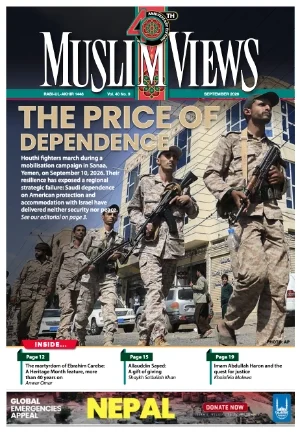
August 2026

August 2026

FILE SIZE : 15 MB
Download
Advertisement

Latest News

Muslim Views Zamzam investigation wins national Story of the Year award

24 August 2026

Why Gaza’s kites demand urgent global solidarity

24 August 2026

Voting glitches trigger extension for Mowbray Cemetery elections

24 August 2026

Another hatchet job on Choritz — but is this fair and balanced journalism?

21 August 2026

Mowbray Cemetery elections: Competing narratives and an unverified candidate list

21 August 2026

Reading the Prophet: knowing the sīrah, reading ourselves

21 August 2026
Advertisement
Advertisement
Next Post
We must shape an African zakah-waqf model

We must shape an African zakah-waqf model

Teaching for justice and depth in the age of AI

Teaching for justice and depth in the age of AI

The fire that fled: Fatima Bhutto and the fear of home

The fire that fled: Fatima Bhutto and the fear of home

Tracing the Kara family through memory and archive

Tracing the Kara family through memory and archive

ABOUT MUSLIM VIEWS
About Us
Archives
Terms & Conditions
Privacy Policy
Contact Us
Donate to Muslim Views
NEWS
Local
National
World
OPINION
Columnists
Discussion with Dangor
Editorial
Guest Writers
FEATURES
AWQAF SA
Imam Haroon
Tributes
FINANCE
Islamic Finance
ISLAM
Eid
Faith and Practice
Family
Hajj and Umrah
Moulood
Quraan
Ramadaan
FEATURES
Arts
Books
Education
Food
Health
Motoring
Sport
Technology

© Muslim Views 2026. All Rights Reserved

Design by: theimagehouse

Loading...
No Result
View All Result
  • NEWS
    • Local
    • National
    • World
  • OPINION
    • Columnists
    • Discussions with Dangor
    • Editorial
    • Guest Writer
  • FEATURES
    • AWQAF SA
    • Imam Haron
    • Tributes
    • 1500 Years of Prophetic Legacy
  • LIFESTYLE
    • Arts
    • Books
    • Education
    • Food
    • Health
    • Motoring
    • Sport
    • Technology
  • FINANCE
    • Islamic Finance
  • ISLAM
    • Eid
    • Faith and Practice
    • Family
    • Hajj and Umrah
    • Moulood
    • Quran
    • Ramadaan
  • ARCHIVES
  • DONATE