


























![The market-builder who restrained the market [Part 2]](https://muslimviews.co.za/wp-content/uploads/2026/08/PHOTO-2026-08-25-17-16-32-360x180.jpg)
![The merchant preceding the Prophetic mission [Part 1]](https://muslimviews.co.za/wp-content/uploads/2026/08/01-360x180.jpg)








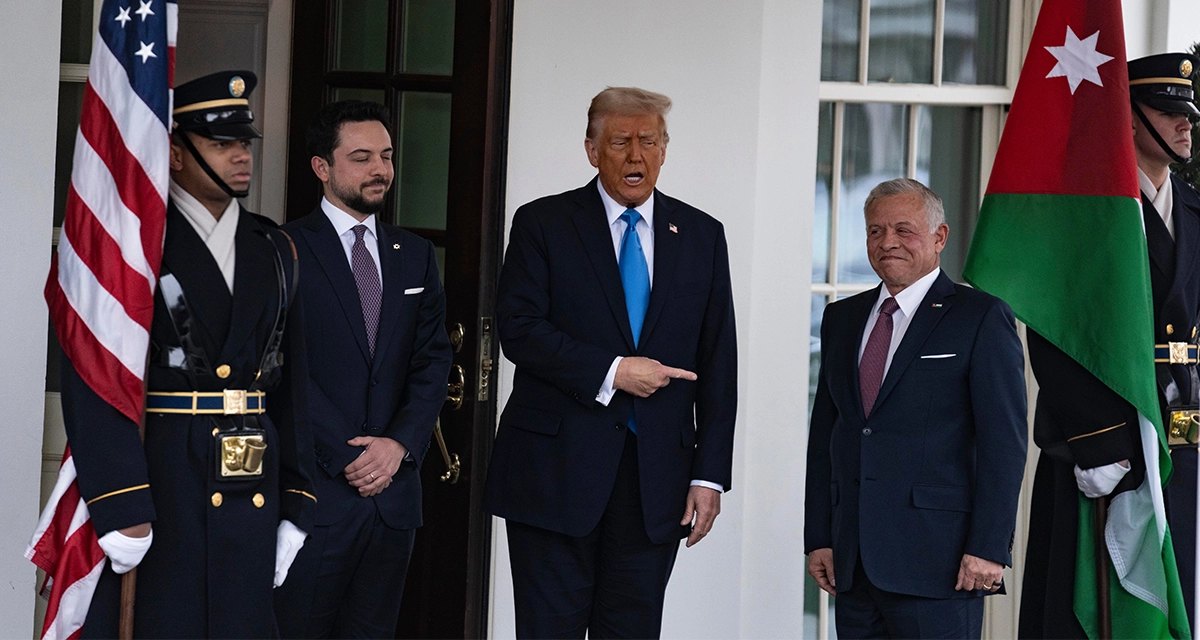

As Gaza faces unrelenting devastation, Muslim world leaders continue to offer symbolic outrage while aligning with global power interests. This analysis explores how political subservience, US influence and regional authoritarianism shape the silence surrounding Palestinian liberation.
By PROFESSOR JUNAID S AHMAD
One might have hoped that, in the face of yet another imperial reshuffling of Palestinian fate – this time under the sanctimonious glow of an American-engineered UN resolution – the Muslim world’s leaders would rise above their usual script. Perhaps a flicker of moral courage, a whisper of strategic independence, or simply the barest hint that sovereignty is more than a decorative word on their letterheads.
Instead, we witnessed something far more predictable: the latest performance of the Muslim world’s political class auditioning – yet again – for the role of the region’s dutiful political auxiliary.
At centre stage stood Pakistan, a state whose ruling elites have made a sport of confusing subservience with statesmanship. In recent years, Pakistan has fashioned itself into the de facto ‘political affairs bureau of the Muslim world’, a kind of supra-administrative liaison whose job is not to challenge global power asymmetries but to manage Muslim frustration so it never threatens them. And as Washington unveils yet another diplomatic fig leaf for its unwavering support of Israeli impunity, Pakistan’s political elite dutifully applaud, taking their cues not only from the United States but – more significantly – from the Arab regimes to whom they have tethered their foreign policy and economic survival.
This is the tragedy of the Muslim world’s comprador leadership:
their reflexive instinct is not to defend the dispossessed but to anticipate the preferences of their patrons
Consider, for example, the recent visit of the Jordanian monarch to Pakistan. In any rational world, such a meeting in the midst of the ongoing devastation in Gaza would signal coordinated outrage or, at the very least, a synchronised objection to the latest neo-colonial manoeuvre dressed up as “peacekeeping”. Instead, the optics were as hollow as the politics behind them. One might have been forgiven for expecting a symbolic show of Muslim unity – an anodyne gesture, a joint statement, a token refusal to rubber-stamp Washington’s choreography. But no. The only unity on display was a kind of managerial discipline: the unity of political elites committed to ensuring that no meaningful challenge to the American-crafted narrative escapes their well-polished corridors.
This is the tragedy of the Muslim world’s comprador leadership: their reflexive instinct is not to defend the dispossessed but to anticipate the preferences of their patrons. And in this hierarchy of deference, Pakistan’s rulers have become particularly adept. They denounce Israeli brutality just loudly enough to pacify domestic sentiment – never loudly enough to inconvenience foreign benefactors. They posture as champions of the Palestinian cause while treating the Palestinians themselves as a diplomatic talking point to be deployed, not a people to be defended.
You may also want to read

![The Prophet’s legacy beyond nostalgia and ritual [+ videos]](https://muslimviews.co.za/wp-content/uploads/2026/05/awqaf-photo-120x86.webp)



In this, Pakistan is hardly alone. Across the Arab world, ruling elites have elevated political dependency into a governing philosophy. Arab regimes have mastered the art of parroting outrage while quietly aligning themselves with Washington’s strategic imperatives. Their concern is not with Palestinian liberation but with ensuring that no tremor of resistance from Palestine reverberates into their own palaces. It is a politics of prophylaxis, not solidarity – containment masquerading as concern.
Thus, when Washington marched its latest UN resolution into global consciousness – another exercise aimed at cementing geopolitical control while feigning humanitarian virtue – Muslim capitals performed their well-rehearsed roles. The script is familiar: express ‘deep concern’, gesture towards ‘regional stability’, and then, in practice, facilitate whatever the architects of the resolution intended from the start. Everyone gets to pretend they are doing something meaningful. Everyone gets to keep their alliances intact. And Palestine gets another round of international back-patting while the occupation entrenches itself further.
The bitter irony is that these governments treat the Palestinian question not as a moral obligation or political priority but as an administrative nuisance – something to be managed, not resolved. They behave as if the primary danger facing the region is not occupation and dispossession but the possibility that the Palestinian struggle might inspire a challenge to their own authority. In that sense, their alignment with Washington is perfectly logical. Both share an interest in neutralising any politics – Palestinian or otherwise – that refuses to accept subordination as destiny.
Pakistan’s political leadership, for its part, appears eager to demonstrate that it can serve as the PA of the Muslim world – not the Palestinian Authority, but the ‘political auxiliary’, the external equivalent of an internal enforcer ensuring that nothing genuinely disruptive ever emerges from the Muslim world’s fractured landscape. They manage dissent, massage expectations, and transform righteous fury into diplomatic small talk. It is governance as gatekeeping.
But here is the fundamental truth: the more these regimes collaborate in managing the region’s crises rather than confronting their causes, the more they reveal the limits of their own legitimacy. The more they outsource their political imagination to Washington, the more they expose their inability to envision a world not circumscribed by American preferences. And the more they treat Palestine as a prop rather than a cause, the more they remind their own populations that liberation – whether Palestinian or domestic – will never be delivered from above.
In the end, the tragedy is not only that Washington continues to dictate the geopolitical architecture of the Middle East, nor that the UN continues to function as an arena where power masquerades as principle. The deeper tragedy is that the region’s own rulers play their assigned roles with such enthusiasm. They have become custodians of a political order that perpetuates their own impotence.
But such performances cannot last forever. A region cannot indefinitely suppress its own conscience. Sooner or later, the people will recognise that their rulers’ deference is not diplomacy but dereliction. And when that recognition crystallises, the era of political auxiliaries – whether in Islamabad, Amman or elsewhere – may finally give way to something far more dangerous for Washington, and far more promising for Palestine: a politics that refuses to be managed.
Professor Junaid S Ahmad teaches Law, Religion and Global Politics, and is the Director of the Centre for the Study of Islam and Decolonisation (CSID), Islamabad, Pakistan. He is a member of the International Movement for a Just World (JUST), the Movement for Liberation from Nakba (MLN), and Saving Humanity and Planet Earth (SHAPE).