


























![The market-builder who restrained the market [Part 2]](https://muslimviews.co.za/wp-content/uploads/2026/08/PHOTO-2026-08-25-17-16-32-360x180.jpg)
![The merchant preceding the Prophetic mission [Part 1]](https://muslimviews.co.za/wp-content/uploads/2026/08/01-360x180.jpg)









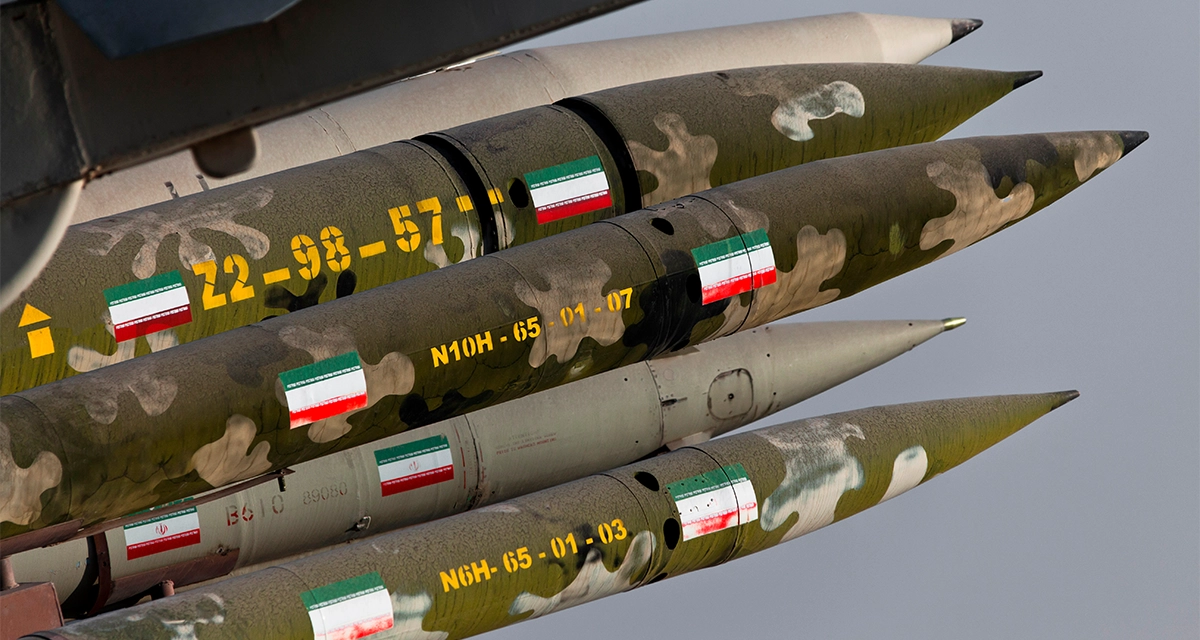

Following the US–Israel attack on Iran, the writer explores how the cost of missiles, interceptor shortages, and the petrodollar system could influence the future of global power.
By FASEEG MANIE
I AM sure that you will agree with me that much of what is happening in the conflict between the United States, Israel, and Iran is not fully explained in mainstream discussions.
Having examined a range of alternative news sources, I have come to the view that the key to understanding the situation lies in two connected realities: the mathematics of the war itself and the economic system that underpins American global power.
It is quite clear that the United States and Israel believe that rapid and overwhelming military force will break Iran’s resistance. The strategy focuses on decapitating Iran’s leadership and destroying key military infrastructure. More than 2 000 air strikes were reportedly launched against Iranian targets in the first few days of the conflict, including facilities linked to the Islamic Revolutionary Guard Corps (IRGC). The Americans and Israelis believed that such pressure would force Iran to capitulate within days.
Iran’s strategy, however, has been very different. Iran does not need to defeat the United States and Israel in a conventional military sense. Iran only needs to survive long enough to win a war of attrition.
This is where the mathematics becomes important.


Iranian ballistic missiles cost roughly $100 000 to produce. By contrast, the defensive systems used to intercept them are vastly more expensive. Israel’s Arrow system interceptors cost between $2 million and $4 million, while American THAAD interceptors cost between $12 million and $13 million per unit.
The interceptor maths does not lie: a missile that costs around $100 000 may require an interceptor costing over $12 million to destroy it. In simple terms, millions of dollars are being spent to stop weapons that cost only a fraction of that amount.
Production capacity makes the equation even more difficult. Iran is believed to be producing over 100 ballistic missiles each month, while the United States and Israel together produce only about seven interceptors per month. Over time, this imbalance becomes extremely costly.
The situation is not theoretical. During the 12-day conflict with Iran last year, the United States reportedly used between 20 and 25 per cent of its entire THAAD interceptor stockpile in less than two weeks. If a conflict were to continue for several weeks or months, those stockpiles will be depleted.
The Gulf States are already feeling the pressure. Many are running low on interceptors and urgently requesting resupply. Israel may soon need to ration its Arrow interceptors, as the system faces increasing strain. If this happens, Israel’s vulnerability increases significantly, because even a small number of missiles penetrating its air-defence system could strike densely populated cities and essential facilities. In just the first two days, Iranian missile strikes have caused devastation in central, northern, and southern parts of Israel, including the Tel Aviv metropolitan area, Haifa in the north, and Beersheba in the south.
If interceptors begin to run out, the consequences will be severe. Iranian missiles will then start reaching their targets in greater numbers. Instead of striking empty military installations, they will hit essential infrastructure across the region — airports, ports, oil facilities, and major urban centres.
Such strikes would not simply be military operations. They would be economic warfare, aimed at damaging the foundations of Gulf economies as well as Israel.
Iran’s strategy appears designed around this reality. It is not trying to defeat the United States militarily. Instead, it is trying to make the defence of the Gulf States economically unbearable. The longer the conflict continues, the more expensive it becomes for those attempting to defend the region.
This creates a difficult dilemma for America. One option is to continue defending the Gulf States by supplying enormous numbers of interceptors. But these weapons are extremely expensive and cannot be produced quickly enough. The industrial base required to sustain such a defence simply does not exist at the necessary scale.
The other option is withdrawal — declaring that the main objectives of the campaign have been achieved and gradually reducing military involvement.
Iran understands this dynamic. Even if individual leaders are killed, the IRGC remains intact, missile production continues, and the ideological foundations of the Iranian state — built over more than 40 years — remain in place. Iran has spent decades studying American military doctrine and learning from the wars in Iraq, Libya, and Afghanistan. One lesson stood out clearly: survival requires military capabilities that do not rely on conventional strength and cannot be easily destroyed by air power alone, including dispersed and underground missile production facilities.
Meanwhile, the Gulf States themselves are facing growing pressure. Missile attacks, damaged infrastructure, closed airspace, and economic uncertainty are already affecting investor confidence. If the conflict continues, foreign capital may begin leaving the region, and economic disruption could spread.
This brings us to the second major issue: the global financial system known as the petrodollar.
For decades, most international oil sales have been conducted in US dollars. Countries such as Saudi Arabia sell oil to the world and receive payment in dollars. Those dollars are then reinvested in the United States — in treasury bonds, stock markets, banks, and property. This recycling of oil revenues helps sustain strong global demand for the dollar and supports relatively low borrowing costs for the United States.
The stability of the Gulf region has therefore been central to the functioning of this system.
But if Gulf oil facilities are under constant missile threat, the foundations of that stability begin to weaken. If refineries burn, ports operate under danger, and airspace closes repeatedly, investors and governments will begin to question whether the existing security system can still protect the region’s economic lifeline.
At that point, Gulf states may ask a difficult question: who can guarantee their security?
If the United States cannot provide that guarantee, they may begin exploring other partnerships. Some may deepen relationships with Russia or China. Others may begin conducting more trade in currencies other than the dollar.
If such shifts become large enough, the global demand for dollars could weaken. Over time, the financial advantages the United States has enjoyed for decades could begin to erode.
Seen in this broader perspective, the conflict is not only about missiles and military strategy. It also raises questions about the long-term structure of global economic power.
Iran’s strategy appears based on a simple principle: you do not defeat a stronger power by matching it weapon for weapon. Instead, you make victory economically impossible.
If the cost of defending the Gulf becomes too high, alliances begin to weaken, and the political will to continue the war may disappear.
In that sense, the decisive factor may not be military strength alone.
It may be the mathematics of the conflict — and the economic system that lies behind it.
Faseeg Manie is a retired education leader with over 40 years of experience transforming underperforming schools in economically disadvantaged areas of the Western Cape. After retiring in 2019, Manie was invited to serve as Curator Principal at Silikamva High School in Hout Bay and later at Hout Bay High School. He is the author of Echoes of Freedom: The Story of Imam Gassan Solomon, a contributor to Scrumming Against All Odds, and is in the final stages of completing a new book on Abdeyah da Costa, an iconic figure of the Bo-Kaap.
- This article was first published in the March 13, 2026 print edition of Muslim Views.