


![Does ta’wīl mean interpretation or fulfilment? A Quranic reassessment [+video]](https://muslimviews.co.za/wp-content/uploads/2026/10/Tawil-Kaskas-360x180.webp)







![Why becoming a wealthy Muslim is commendable in Islam [+videos]](https://muslimviews.co.za/wp-content/uploads/2026/09/Muslim-Trade-Business-1-360x180.webp)



![There are “no free people without a free press” [+ video]](https://muslimviews.co.za/wp-content/uploads/2026/05/Al-Jazeera-Emmy-Award-1.webp)

MAHMOOD SANGLAY
On May 27, Al Jazeera won the News and Documentary Emmy Award for its coverage of Gaza. The recognition was a reminder that independent journalism remains one of the few institutions capable of confronting power with truth.
The significance of the award was captured in the acceptance speech of former US Marine and Al Jazeera journalist Josh Rushing. Standing in the United States, Israel’s principal military and diplomatic supporter, Rushing highlighted the profound irony of receiving an award for reporting on a genocide in a country that has helped enable it.
Rushing dedicated the award for Kids Under Fire to the Al Jazeera journalists killed in Gaza and to the hundreds of Palestinian journalists who have lost their lives since October 2023. Yet his most important message was directed to journalists everywhere. Acknowledging that “these are dark days for journalism”, he warned of financial collapse, political pressure and oligarchic ownership that seek to shape and control public narratives. Nevertheless, he urged journalists to “keep up the good fight” for truth and humanity because “there is no free people without a free press.”
Rushing’s appeal is consistent with a growing body of academic research examining how information, images and narratives have become central battlegrounds in the Gaza genocide. He also invokes a powerful metaphor paying tribute to the doctors in Gaza who became part of the “broad sword of the truth and bearing witness” in the documentary, which may be “stronger than the scalpel that they bring to the battlefield.”
Rebecca Stein, in How to unsee Gaza: Israel’s visual politics in a time of genocide, argues that Israel and its allies have developed sophisticated strategies to neutralise the impact of Palestinian testimony. As Palestinians documented events in real time through smartphones and social media, Israel’s traditional dominance over wartime storytelling began to erode.
Stein argues that this led to an organised effort to “unsee Gaza” by delegitimising Palestinian evidence and reshaping international perceptions. Images of starving children were dismissed as fabricated. Civilian suffering was reduced to propaganda. Palestinian journalists were portrayed as unreliable or even complicit in terrorism. Through these techniques, Israel sought not only to wage war on Gaza but also to manage how the world understood that war.
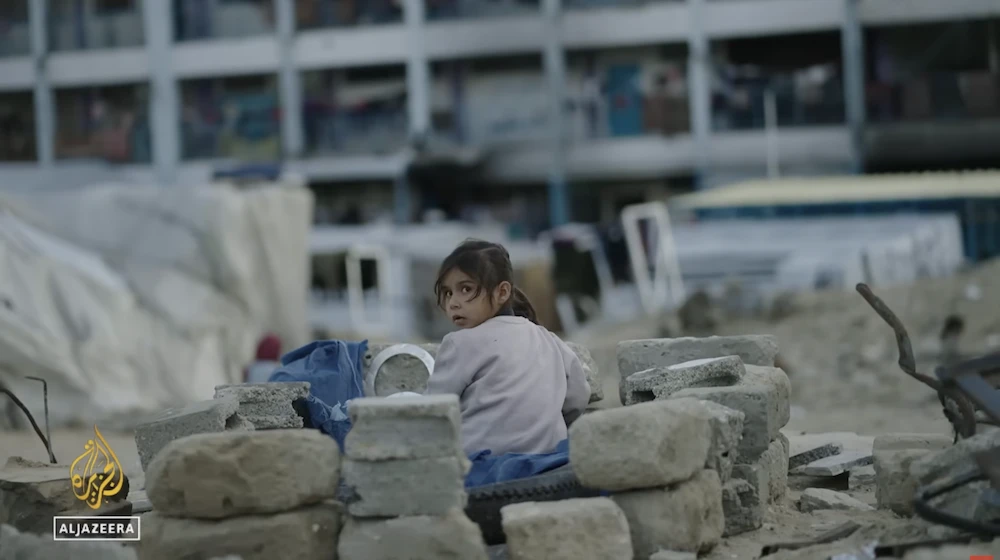
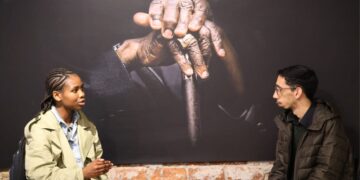
Photo Screenshot “Kids Under Fire”
These findings are significant because they expose the importance of independent journalism in resisting organised disinformation. Public support for independent media is therefore support for the public’s right to know.
Stein’s analysis also points to a broader reality. The events in Gaza cannot be understood outside the context of a colonial project that has sought for decades to remove Palestinians from the centre of their own story. Understanding Israel as a settler-colonial and apartheid system is essential to understanding why the battle over images, language and memory is so intense.


The work of Omar Al-Ghazzi further demonstrates how dominant Western media institutions have contributed to this distortion. In Witnessing undone: silence, noise and the enabling of genocide in Gaza, Al-Ghazzi argues that many Western outlets have relied on a politics of “silence and noise” that amplifies state narratives while marginalising Palestinian voices.
According to the research he cites, coverage frequently foregrounded the events of October 7 while excluding the broader context of occupation, blockade, dispossession and apartheid. Gaza was stripped of history and presented primarily through the language of terrorism.
The consequence was the normalisation of a false framework in which Israel’s actions appeared as a legitimate “war on terror” rather than as part of a broader system of colonial domination and racialised control.
Al-Ghazzi also documents how the language needed to describe events became contested. Journalists and commentators who used the term “genocide” were challenged or silenced even as international legal scholars, human rights organisations and genocide researchers increasingly concluded that the term accurately described events on the ground.
Perhaps most alarming was the way Palestinian journalists themselves became targets. As reporters were labelled “terrorists with media vests on”, attacks on journalists became easier to justify and easier to ignore.
Yet despite these efforts, the truth continued to emerge.
Martin Shaw, in The Genocide that Changed the World, argues that Gaza has fundamentally altered global political consciousness. Despite Israel’s efforts to seal off Gaza from international scrutiny, Palestinians themselves transformed global understanding through digital witnessing.
Using mobile phones and social media platforms, ordinary citizens documented events in real time and transmitted them to the world. The result was an unprecedented flow of evidence that bypassed traditional gatekeepers and challenged official narratives.
Shaw argues that this helped generate a worldwide mobilisation in streets, campuses and social media platforms where millions demanded accountability and an end to the genocide. In this sense, Gaza has become a defining struggle over truth, memory and public knowledge in the digital age.
This is why the recognition of work like that of Al Jazeera team matters. The award affirms that independent journalism remains indispensable in defending truth against propaganda and in giving voice to those whom powerful interests seek to silence. It honours journalists who continued reporting while displaced, bereaved and under bombardment. It recognises the courage of those who bear witness when governments and powerful media institutions fail to do so.
Most importantly, it reminds us that journalism itself requires public support. The struggle against misinformation, the exposure of colonial and apartheid structures, and the challenge to the misleading “war on terror” narrative cannot be left to journalists alone.
Rushing reminds his audience that these are dark days for journalism. Yet they are also days that demand courage, solidarity and commitment to truth.