

















![The market-builder who restrained the market [Part 2]](https://muslimviews.co.za/wp-content/uploads/2026/08/PHOTO-2026-08-25-17-16-32-360x180.jpg)
![The merchant preceding the Prophetic mission [Part 1]](https://muslimviews.co.za/wp-content/uploads/2026/08/01-360x180.jpg)





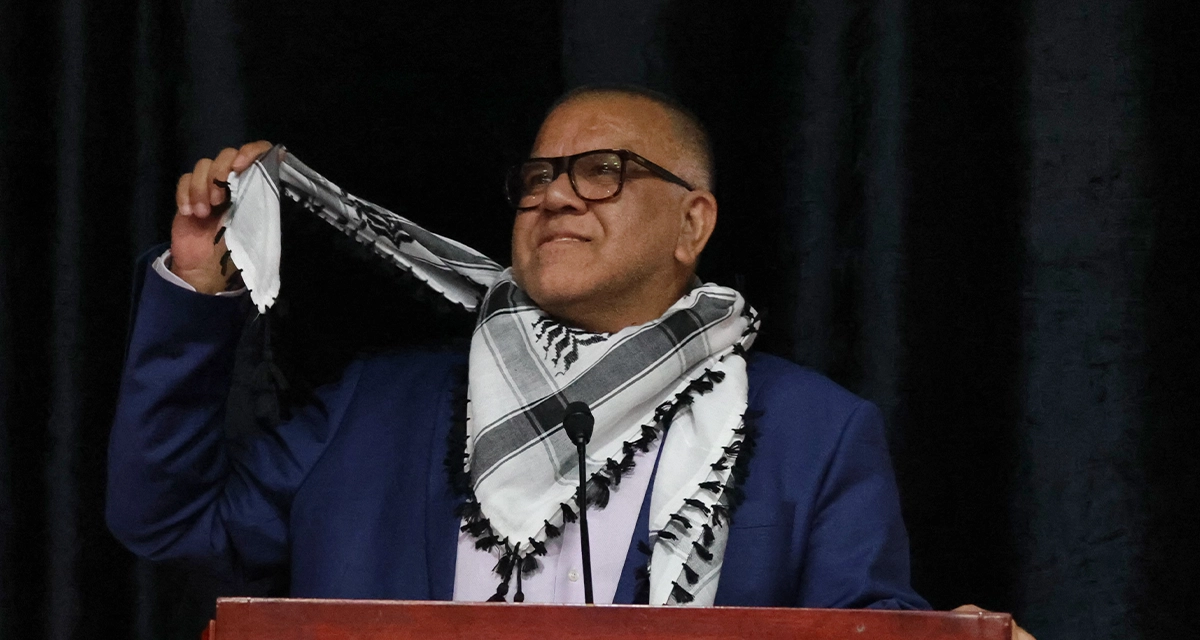

A sold-out Cape Town screening of The Voice of Hind Rajab raised funds to rebuild Gaza’s Khaled bin Waleed School. Speakers honoured Hind’s memory, highlighted the humanitarian crisis and urged sustained action for Palestine and Gaza.
By ANWAR OMAR
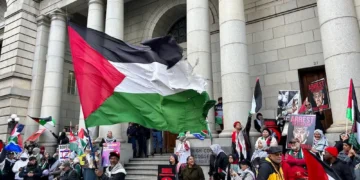
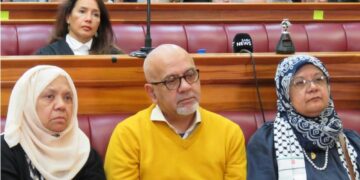
Cape Town residents gathered at the Islamia Auditorium on Saturday, August 1, for a sold-out fundraising screening of The Voice of Hind Rajab, an Oscar-nominated documentary that has become one of the most widely discussed films to emerge from the war on Gaza.
Organised by the Sharing Hope Foundation in collaboration with the Essa & Fatima Moosa Foundation, the screening was set to raise funds in aid of the reconstruction of the Khaled bin Waleed School in Gaza.
The documentary
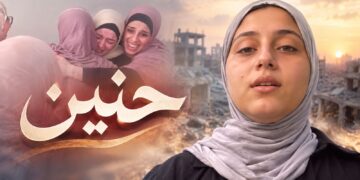
Directed by Tunisian filmmaker Kaouther Ben Hania, The Voice of Hind Rajab reconstructs the final hours of five-year-old Hind Rajab, trapped in a car under Israeli fire in Gaza City on January 29, 2024, alongside relatives who did not survive. For several hours, she stayed on the phone with Palestine Red Crescent Society volunteers, pleading for help as her ambulance was repeatedly delayed. The paramedics eventually sent to reach her were killed before arriving, and Hind was later found dead.
The film uses Hind’s real voice, taken from the recorded emergency calls, alongside a dramatic reconstruction of the call centre staff who tried to coordinate her rescue. It won the Silver Lion Grand Jury Prize at the 2025 Venice Film Festival and was Tunisia’s official submission for Best International Feature Film at the 2026 Academy Awards.
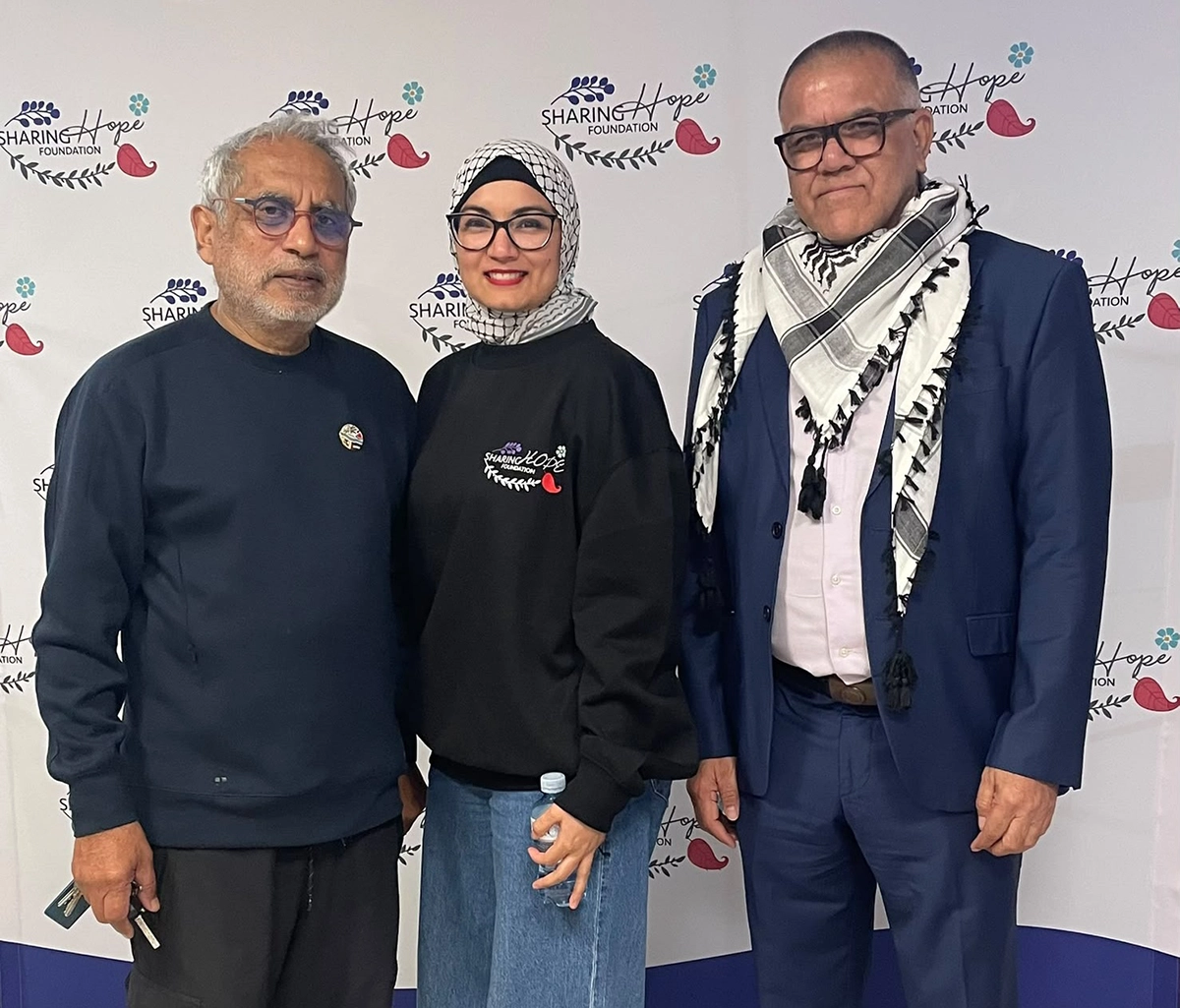
The Sharing Hope Foundation
The evening was hosted by Fatima Khan-Wise, founder and chairperson of the Sharing Hope Foundation and granddaughter of the late Fatima Moosa, wife of the late Judge Essa Moosa and matriarch of the Essa & Fatima Moosa Foundation. Khan-Wise, who shares a birthday with her late grandmother, served as MC.
Saturday’s screening raised funds towards rebuilding the Khaled bin Waleed School, one of many educational institutions in Gaza damaged or destroyed during the war. Khan-Wise shared the stories of three of its pupils: Jamilah Mokhemar (grade seven), whose school performance has declined since losing her extended family; Rahaf Nafeth al-Natour (grade five), whose father and sister were killed in a bombardment; and Mohammed Nasrallah Hamdan (grade five), orphaned by the war.
She also read out the names of five Khaled bin Waleed pupils who did not survive the war, including Mohammed Yahya al-Halaq, Sama Yahya al-Halaq, Ahmed Yahya al-Halaq, Hur Yasir Abu Sabha and Hayyan Yasir Abu Sabha, asking the audience to remember them by name before closing with a direct request: “Don’t leave Hind Rajab behind, and allow her voice to stay with you. Let it guide the choices that you make … Let her voice remind us that remembrance without action is not enough.”
The event was presented in collaboration with the Essa & Fatima Moosa Foundation, which carries the legacy of the late Judge Essa Moosa, one of South Africa’s most prominent anti-apartheid human rights lawyers, who spent decades defending political detainees under apartheid and later served as a judge of the Western Cape High Court. The foundation, now chaired by his son, Ambassador Faizel Moosa, who participated in the Global Flotilla earlier this year, has been active in organising Palestinian-related solidarity events in Cape Town.
The event
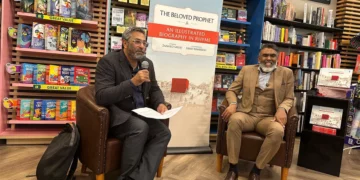
Ambassador Moosa opened his presentation with a tribute to his mother, the matriarch of the Moosa family, who stood behind his father throughout his anti-apartheid legal career. Moosa recalled growing up on Belgravia Road and Thornton Road, where his mother would drive “this little green Toyota Corolla, as they were burning the tyres and throwing the stones”, and, with the police closing in, “she would drive us out of the danger zone”.
He remembered her as a woman who opened the family home to political fugitives fleeing the apartheid system, among them Trevor Manuel and Cheryl Carolus, recalling that many who passed through the house could still recite its old phone number by heart.
You may also want to read


From that legacy, Moosa turned to what he called a direct call to action to boycott Coca-Cola. He told the audience that when people ask him what they, as individuals, can do, his answer is always the same: “Stop drinking the Coke, stop buying the Coke, because there are alternatives.” He urged attendees leaving the screening to make that choice, saying that, in his view, every purchase of Coke is inseparable from the bullets that killed Hind Rajab. The call reflects the broader Boycott, Divestment and Sanctions (BDS) campaign against companies accused of supporting Israel’s war effort, a strategy widely embraced within South Africa’s pro-Palestinian solidarity movement.
Professor Chikte, coordinator of the Palestine Solidarity Campaign (PSC), spoke on the broader humanitarian and political context facing Gaza. Referring to Auschwitz, Chikte drew a direct comparison between what Germany did to Jewish people during the Holocaust and what he characterised as Israel’s actions against Palestinians in Gaza today.
He said: “That which the Germans did against the Europeans, including the Jews, is now what the Zionists and those who claim to be Jews are doing against the Palestinians.” He described how, in “the concentration camp of Gaza, water has been blocked, the sanitation is not working, and the rats are biting children”.
He explained that “every accusation the Zionist makes is a confession of their own war crimes that they are committing” and said: “So let us not push Gaza and Palestine off the centre stage of our news.”
Given the emotionally charged subject matter of the film, focusing on the final hours of Hind Rajab and told largely in her own voice, the screening was, by all accounts, both an act of bearing witness and a fundraiser. Attendees were encouraged to follow the Sharing Hope Foundation’s social media platforms for updates on rebuilding the Khaled bin Waleed School and on further projects to contribute to initiatives that will continue beyond this screening.