
































![The market-builder who restrained the market [Part 2]](https://muslimviews.co.za/wp-content/uploads/2026/08/PHOTO-2026-08-25-17-16-32-360x180.jpg)
![The merchant preceding the Prophetic mission [Part 1]](https://muslimviews.co.za/wp-content/uploads/2026/08/01-360x180.jpg)












From Epping to Wale Street and Salt River, this on-the-ground report documents how Cape Town responded to the March and March deadline through repatriation, protest, interfaith witness and anti-xenophobia activism.
By ANWAR OMAR
By June 30, 2026, the human consequences of the ‘March and March’ movement’s deadline were no longer a matter of risk assessments and open letters; they were visible across Cape Town, from the processing facility in Epping, where Zimbabwean families queued with single bags, to a tense but largely peaceful standoff outside the Provincial Legislature, to a quiet line of clergy on a nearby pavement, to a small, determined human chain holding its ground against passing traffic in Salt River.
Epping: Leaving with a single bag
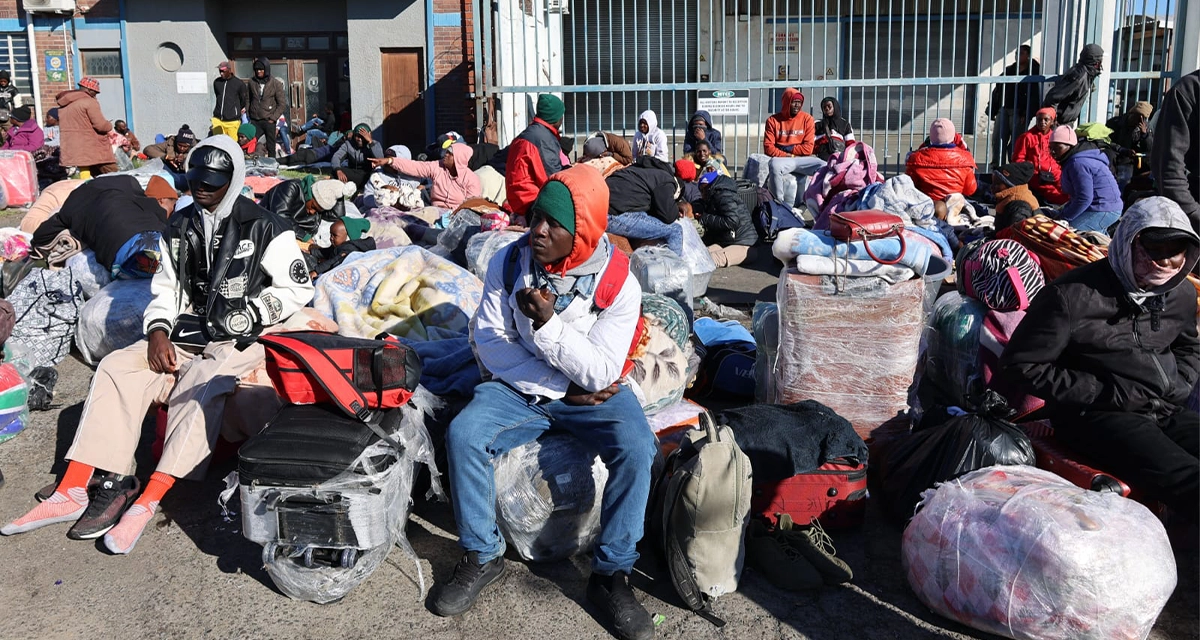
The day began in Epping, at the Department of Home Affairs processing facility, where several thousand Zimbabwean nationals were gathered awaiting repatriation. According to those present, several thousand more had already departed from the same site over the preceding days as the June 30 deadline approached. The conditions of departure were stark. Those leaving were permitted to take only one bag each, resulting in possessions accumulated over several years of life in South Africa, in many cases, having to be abandoned at the facility.
One Zimbabwean man, speaking at the scene, said he had chosen to leave rather than risk his safety. He described having been threatened multiple times in the lead-up to the deadline, and said departure, despite its cost, felt safer than remaining. His account put a face to the crisis that, until then, had largely been described in terms of organisational statements, risk maps and projected flashpoints. At Epping, it was a queue of people and the contents of one bag each.
Demonstration outside the Provincial Legislature on Wale Street
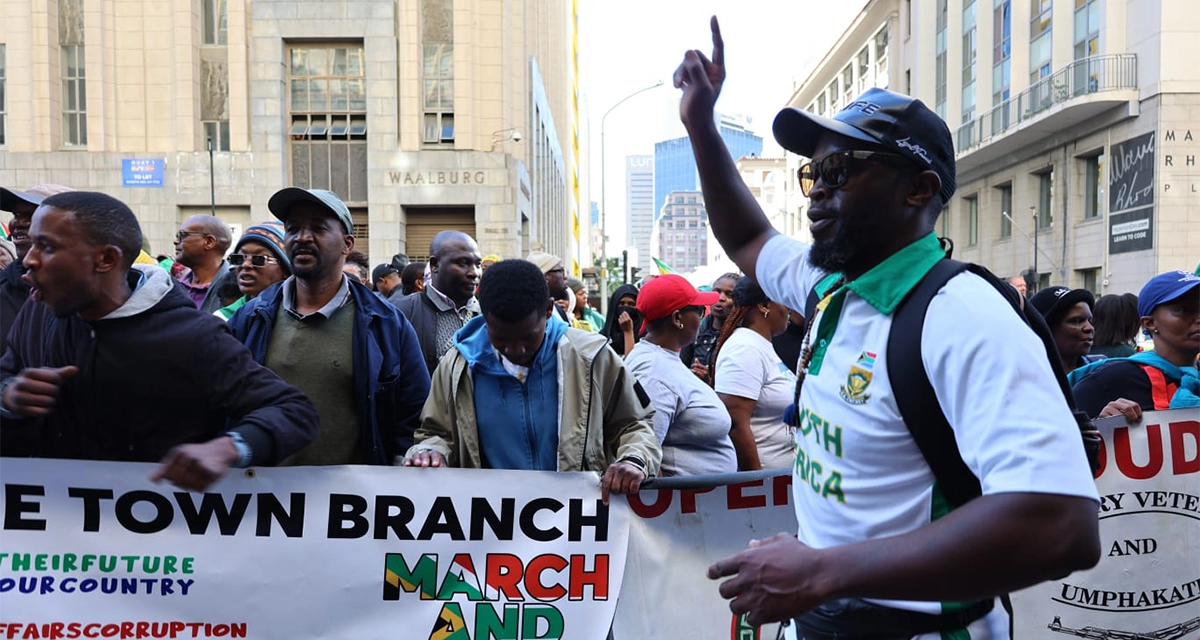
By early afternoon, more than 500 protesters had gathered outside the Provincial Legislature on Wale Street, carrying anti-immigration placards and banners as part of the broader March and March demonstrations. A large police contingent was deployed at the scene, and the demonstration proceeded in relative peace, without the violence that had been flagged as a risk in pre-event assessments. The size and visibility of the gathering, directly outside one of the Western Cape’s key seats of government, underscored the movement’s capacity to mobilise significant numbers in the heart of the city.
One protester at the scene said the demonstration was linked to a memorandum the group had previously submitted to the Provincial Legislature, outlining grievances over what they termed illegal foreigners and demanding a response within four days. According to the protester, that deadline had since passed without any reply from the Legislature, and the crowd gathered on Wale Street was, in part, waiting for an official response that had yet to materialise.
You may also want to read





Fifty metres away: A silent vigil
Barely 50 metres from the Provincial Legislature steps, a markedly different scene unfolded.
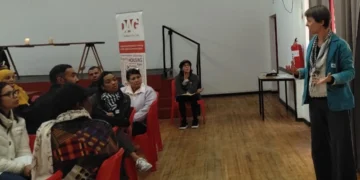
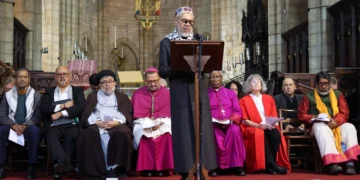
Religious leaders from multiple faith traditions stood in a silent vigil, calling for peace and tolerance, a public expression of the interfaith commitment made the previous evening at Masjid al-Quds in Gatesville and consistent with the call for a silent vigil on the Freedom Steps at St George’s Cathedral.
The physical proximity of the two gatherings – a 500-strong demonstration on one side, a quiet line of clergy on the other – offered one of the day’s starkest images: two fundamentally different responses to the same national crisis, separated by less than the length of a city block.

Salt River Circle: A small stand against xenophobia
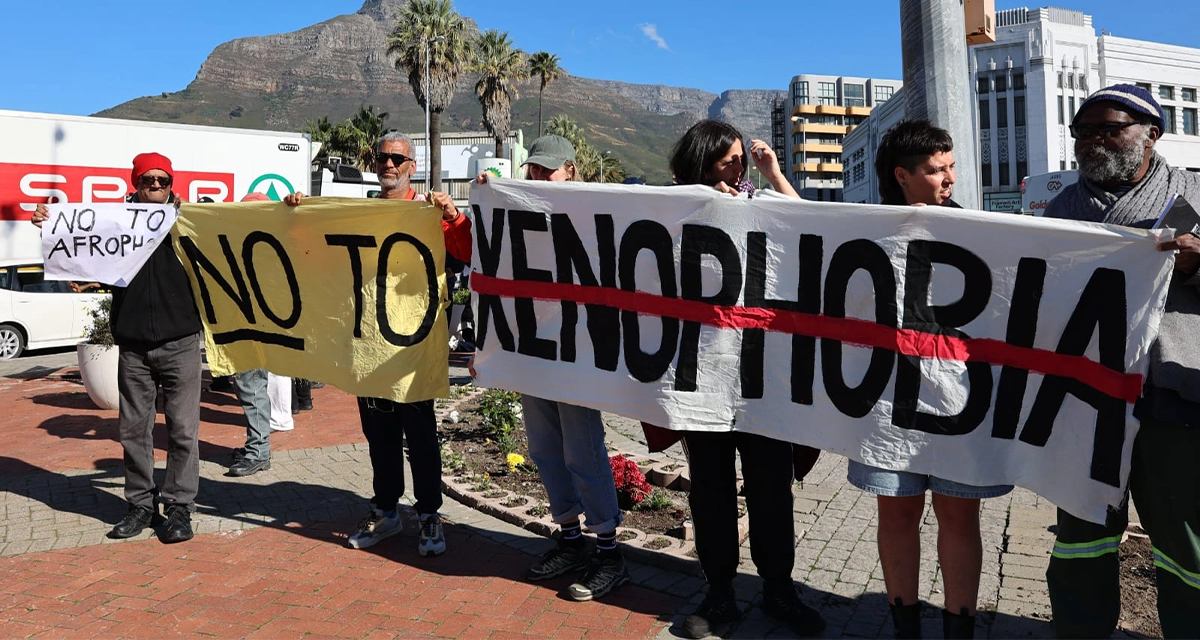
At Salt River Circle, roughly 60 protesters gathered for the previously announced human chain and placard demonstration against xenophobia, organised by Community House and a coalition of allied organisations under the banner ‘Workers of Africa Unite – Immigrants Welcome’.
The demonstration unfolded under unusual circumstances. Traffic around the circle was already moving slowly due to an earlier accident on Sir Lowry Road affecting the route into the CBD, with protesters standing their ground as a steady, congested stream of vehicles navigated around them. The turnout of around 60 was notably smaller than the more than 500 gathered outside the Legislature, illustrating the asymmetry in scale between the day’s pro- and anti-March and March demonstrations in central Cape Town.
A city in contrast
Taken together, the day’s events trace a single city responding to one crisis through markedly different registers: the bureaucratic and human reality of departure at Epping; a large, police-managed demonstration at the seat of provincial government; a small, silent religious witness barely metres away; and a modest but committed human chain holding a traffic circle on the city’s edge.
No major violence was reported at any of the four sites visited. Whether that remains the case as events continue, and whether the departures from Epping mark the end of this chapter or merely a pause, remains to be seen.


