










![Does ta’wīl mean interpretation or fulfilment? A Quranic reassessment [+video]](https://muslimviews.co.za/wp-content/uploads/2026/10/Tawil-Kaskas-360x180.webp)












![Why becoming a wealthy Muslim is commendable in Islam [+videos]](https://muslimviews.co.za/wp-content/uploads/2026/09/Muslim-Trade-Business-1-360x180.webp)





True transformation requires action that is collective, ethically grounded, and dedicated to service and justice…
By ABU KAROLIA
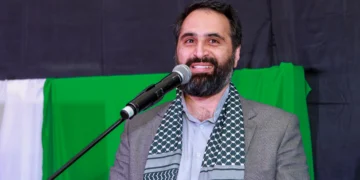
Ambassador Ebrahim Rasool and Professor Yusef Waghid raised critical issues facing Muslim communities and society at large. The former in his address at the Inaugural Lecture of The Muslim Thinker and the latter in his response to Rasool.
These interventions have led to a vibrant discourse on the Muslim Views website (www.muslimviews.co.za), with Professor Aslam Fataar also adding his voice. I welcome this opportunity to offer my perspective.
Rasool identified the constraints placed on ijtihad or independent reasoning in Islamic thought, the disengagement from democracy and human rights, and the lack of moral courage to confront injustice.
Waghid reflected on these challenges through ethical and pedagogical perspectives, emphasising that intellectual reflection cannot be separated from moral responsibility and civic action.
These insights are important, but reflection alone is insufficient. True transformation requires action that is collective, ethically grounded, and dedicated to service and justice as espoused in the principles of the Movement for a United South Africa (MUSA).
Independent reasoning and ijtihād
Independent reasoning in faith has too often been constrained. Ritual practice frequently replaces critical engagement, separating belief from responsibility and the well-being of communities.
Worship without reflection cannot sustain justice, and knowledge without action leaves society vulnerable. The Qur’an in Surah Al-Asr emphasises faith (iman) joined with righteous deeds (amal-e-saleh), showing that belief and action are inseparable in the pursuit of justice.
True ijtihād must go beyond scholarly debate or private contemplation. It must inspire righteous deeds that serve society, advance justice, and promote ethical action. Knowledge alone is insufficient; reasoning must translate into practical steps that strengthen communities, foster civic responsibility, and cultivate collective moral courage.
You may also want to read


Civic engagement and democracy
To address disengagement from democracy and human rights is equally pressing.
Private devotion cannot justify public silence in the face of injustice. Democracy requires active participation to sustain justice, protect human dignity, and challenge inequality and abuse.
Faith must motivate civic engagement. Ritual alone cannot advance justice. Ethical reflection and active participation in society are essential. All citizens, including business leaders, faith-based communities, tribal communities, and other sectors of society must act collectively to uphold human rights and the common good, translating knowledge and belief into effective civic action.
The Civic Covenant
I propose the creation of a binding Civic Covenant developed through inclusive dialogue, consultation, and participation across communities.
This covenant must unite Muslims and citizens of conscience around shared ethical commitments and ensures that the values of the South African Constitution, including dignity, equality, and freedom, are realised in daily life. The Civic Covenant should provide a framework for collective responsibility, moral courage, and civic engagement, embracing diversity across language, gender, geography, and social background.
Moral courage and ethical action
Moral courage is essential. Courage without ethical grounding is empty, and ethics without courage is ineffective.
Communities must confront injustice wherever it exists. Silence in the face of corruption, inequality, or abuse constitutes complicity.
Moral courage is realised through intervention, speaking truth to power, and creating systems that uphold justice and human dignity. Ethical action, courage, and civic responsibility must operate together to sustain justice in society.
Deliberation and collective responsibility
To put these principles into practice, I advocate deliberative forums in which independent reasoning is exercised collectively. These forums create spaces for dialogue, critical thinking, and respectful engagement across differences.
Youth, women, scholars, marginalised groups, business leaders, faith-based communities, tribal communities, and other sectors of society must participate fully to ensure that ethical solutions reflect society’s full diversity and that all citizens act collectively to uphold human rights and the common good.
Educational programmes and mentorship initiatives must cultivate civic literacy, critical reasoning, ethical reflection, and social justice awareness.
Scholarship, faith, and public responsibility must be linked to translate reflection into principled civic action.
Community initiatives should embed righteous deeds and moral courage into everyday life, addressing corruption, inequality, education, local development, and public health.
Outcomes must be publicly monitored, evaluated, and reported to ensure transparency, accountability, and tangible progress toward justice.
Sustaining the Civic Covenant
The Civic Covenant must be sustainable and linked to governmental, civic, and educational structures to embed ethical engagement in the broader social and political system.
Continuous reflection, adaptive learning, and accountability allow communities to align intellectual reflection, moral responsibility, and practical action over time.
Call to citizens of conscience
I call on Muslims, scholars, professionals, youth, women, and all citizens of conscience to rise to this ethical awakening.
To think critically, act courageously, and serve faithfully is to live the promise of Islam and to make South Africa’s constitutional values real and tangible.
Reasoning becomes righteous, courage becomes civic, faith becomes transformative, and justice becomes the organising principle of society. This framework is collaborative, solution driven, and actionable, enabling communities to participate meaningfully in building a just, equitable, and thriving nation.
These principles extend globally, showing that wherever ethical reflection meets courageous action, ethics, civic engagement, and justice can be inseparable forces shaping daily life.
Ethical consciousness and renewal
Ethical consciousness must permeate daily life and civic participation.
Justice is not merely a virtue but the foundation of moral life. It anchors faith to society and links knowledge to service.
Awakening from anti-intellectualism requires living differently. Moral reasoning must become social transformation, courage must have ethical purpose, and justice must be an act of service. Through independent reasoning that questions, righteous deeds that serve, and civic courage that confronts oppression, communities can renew the moral contract that binds humanity.
MUSA’s principles bring this renewal to life through dialogue, consultation, and a shared civil process that transforms the aspirations of the Constitution into lived realities. Faith and citizenship meet in service of the common good, and justice becomes not only a goal but a daily lived reality.
Abu Karolia holds an MA from the University of Johannesburg and is a long-standing community activist, civic thinker, and faith-based organiser. He is a founder member of the Movement for a United South Africa (MUSA), a transformative consciousness movement dedicated to socio-economic and political justice, ethical governance, and collective national renewal.
The YouTube recording of Ebrahim Rasool’s address at The Muslim Thinker inaugural address can be viewed here.
You can read Emeritus Professor Yusef Waghid’s response to Ebrahim Rasool’s lecture here.
Professor Aslam Fataar’s perspective can be read here.