






![Does ta’wīl mean interpretation or fulfilment? A Quranic reassessment [+video]](https://muslimviews.co.za/wp-content/uploads/2026/10/Tawil-Kaskas-360x180.webp)










![Why becoming a wealthy Muslim is commendable in Islam [+videos]](https://muslimviews.co.za/wp-content/uploads/2026/09/Muslim-Trade-Business-1-360x180.webp)

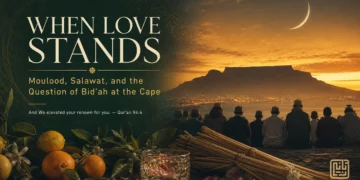


Laylatul Qadr, the Night of Power, is a time of deep spiritual renewal, reminding us that true strength lies in faith, compassion and everyday acts of care and, as the writer reminds us, ‘the work of worship and ethical living continues’ beyond the ‘27th night’.
By PROFESSOR ASLAM FATAAR
A night that returns us to ourselves
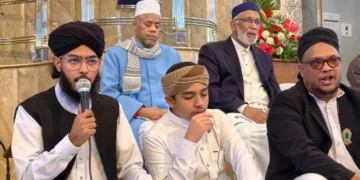
On one of the last ten nights of Ramadan, I found myself once again at the Al-Azhar Masjid in District Six, a family masjid that has long held me within its quiet rhythms of faith, memory, and belonging.
There is a particular quality to this space, as with all other masjid spaces during these last ten nights. The tarāwīḥ unfolds at a gentle, unhurried pace. There is no strain or display.
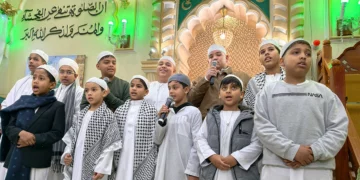
Between the rakaʿāts, the poedjies rise full-throated and melodious, carrying the cadence of a living tradition. The nasiha of Shaykh Ismail Keraan is steady and grounded, and the musallīs gather with a warmth that is both familiar and dignified.
To sit in this masjid space is to reconnect with a way of being shaped by place, memory, and faith. Having been born in the vicinity of this masjid, I carry within me the layered histories of District Six – histories of displacement, continuity, and endurance.
On these nights, time seems to gather. The presence of parents and elders is felt in memory. Ancestry moves quietly through practice. Futures are imagined in the act of standing, reciting, and listening together.
It is within such ordinary spaces of communion that Laylatul Qadr takes on its deepest meaning – not as an abstract idea, but as a lived experience of faith carried across generations.
Rethinking power in troubled times
Laylatul Qadr, the Night of Power, returns each Ramadan as an invitation to rethink what power means. The Qur’an reminds us that revelation came down on this night, that it is better than a thousand months, and that peace stretches until dawn. Allah says: ‘Indeed, We sent it down during the Night of Decree… Peace it is until the emergence of dawn.’ (Sura Al Qadr, 97:1–5)
These verses point to a world shaped by divine measure, meaning, and moral purpose.
Yet the world we inhabit often reflects a different reality. War continues to devastate societies. Powerful states and institutions organise economic and security systems in ways that deepen inequality.
Closer to home, corruption weakens institutions, public resources are misused, and leadership can appear distant from the needs of ordinary people. These conditions erode trust and leave many feeling that public life has lost its ethical direction. It is easy to feel overwhelmed, but Laylatul Qadr invites us to look again.
Alongside these troubling realities, another form of power continues to operate quietly. In everyday spaces, acts of care sustain society. Neighbours check on one another. Food is shared at the iftar table. Teachers stay late to support struggling students. Parents work tirelessly for their children. Volunteers serve, visit, and uplift.
These acts rarely attract attention, yet they carry deep moral weight. They remind us that power is not only located in institutions; it is also present in the everyday practices through which people care for one another.
You may also want to read



Listening, renewal, and moral responsibility
What becomes clear in the masjid, especially on nights like these, is that revelation is not something to be rushed. It settles into the heart through attentive listening. It requires restraint, receptivity, and trust.
The Divine Word is received with care, allowed to gather within, and then lived. Moral power begins here – not in assertion, but in stillness before guidance.
This is how the Prophet Muhammad ﷺ was formed: receiving the message with attentiveness, internalising it, and then embodying it in his dealings with others. His leadership was expressed through everyday acts of care. He visited the sick, shared food with the hungry, listened deeply, and cultivated a community rooted in mutual responsibility.
This Prophetic example continues to shape Muslim life. Through prayer, we orient ourselves towards remembrance. Through charity, we nurture generosity. Through fasting, we deepen empathy. Through gathering, we strengthen bonds of care.
These practices train us to attend to Allah and to one another.
Laylatul Qadr calls us into this attentiveness. It culminates in an image of peace that stretches until the break of dawn.
The dawn carries its own meaning. After a night of prayer, we return to our daily lives – to work, family, and society. But we return differently. The heart has been renewed, and the day calls for action. As Shaykh Muhammad Moerat reminds us, we do not let up after the twenty-seventh night. The work of worship and ethical living continues.
We step back into the world aware of our responsibilities, yet sustained by the knowledge that the One who calls us to account also opens the door of forgiveness. This balance holds the ethical life together: seriousness without despair, accountability within mercy.
Even when larger systems seem overwhelming, everyday life continues to offer opportunities for ethical action. Each act of honesty, care, and responsibility contributes to the moral strength of society.
Laylatul Qadr reminds us that renewal does not begin in grand political moments. It begins in the quiet, steady practices through which people listen deeply, care for one another, and act with integrity.
The night invites reflection. The dawn invites action. And between the two, a different kind of power takes shape – one rooted in moral presence, responsibility, and the enduring possibility of renewal.
Professor Aslam Fataar is a Research and Development Professor in Higher Education Transformation at Stellenbosch University and editor of the forthcoming book, Prophet Muhammad ﷺ at 1500: His Prophetic Legacy, Ethical Vision and Contemporary Resonance, published by the Prophetic Legacy Commission and Awqaf-SA, Cape Town.