











![The market-builder who restrained the market [Part 2]](https://muslimviews.co.za/wp-content/uploads/2026/08/PHOTO-2026-08-25-17-16-32-360x180.jpg)
![The merchant preceding the Prophetic mission [Part 1]](https://muslimviews.co.za/wp-content/uploads/2026/08/01-360x180.jpg)






MAHMOOD SANGLAY
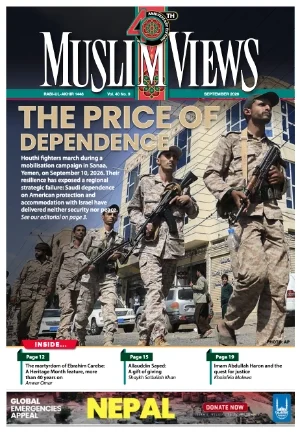
The Muslim Views newsletter in 2025 functioned as far more than a weekly digest of stories. Read as a complete archive, it forms a moral ledger of a turbulent year: a sustained attempt to read events ethically, to interrogate power without deference, and to insist that faith, memory and justice belong at the centre of public life. Across fifty editions of the newsletter in 2025 a coherent editorial worldview emerges—one that refuses fragmentation, challenges selective outrage, and treats journalism itself as an ethical act.
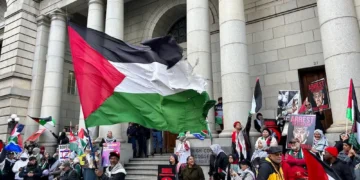
The year’s coverage consistently revolved around a central moral axis: Palestine. Gaza and the West Bank were not episodic concerns but a defining reference point through which global politics, media ethics, and international law were judged. Week after week, the newsletter documented mass civilian suffering, the starvation of children, the targeting of journalists and health workers, and the steady normalisation of atrocity. Just as importantly, it interrogated the narratives that enable genocide: the manipulation of “free speech,” the laundering of propaganda through mainstream media, the intimidation of critics, and the complicity of corporations, lobbies, universities and governments. Palestine thus became both a human tragedy and a diagnostic tool, exposing the collapse of the so-called rules-based order.
We resisted the trap of single-issue journalism. Gaza was repeatedly placed in conversation with other sites of abandonment and violence—most notably Sudan and the Democratic Republic of Congo—highlighting how African suffering is rendered peripheral by global power. This comparative framing challenged readers to confront the hierarchy of human worth embedded in international responses to crisis. The message was unmistakable: selective empathy is itself a form of injustice, and solidarity that stops at borders or identities is morally hollow.

A second, equally strong theme was the critique of power—how it is exercised, concealed and resisted. Throughout 2025, the we examined imperial projects old and new: Western militarism, Zionist ideology, authoritarian regimes in the Muslim world, and the subordination of the Global South through debt, sanctions and dependency. Analyses of Pakistan, the Gulf, Europe, and the United States were never abstract. They were grounded in concrete questions: Who benefits? Who is silenced? Whose suffering is rendered acceptable? By consistently asking these questions, we equipped our readers with a grammar for reading the news beyond official talking points.
This interrogation of global power found a particularly sharp focus in South Africa’s positioning in a shifting world. Coverage of the G20, BRICS, and multilateralism exposed the growing gap between diplomatic rhetoric and lived reality. The year-end reflection on South Africa after the G20 crystallised this concern, warning that talk of a “new global order” risks becoming empty theatre unless it delivers material justice, African agency, and real development. South Africa was framed not as a passive middle power, but as a moral and strategic actor facing difficult choices in an increasingly polarised world. Its stance on Gaza, its treatment by Western capitals, and its internal governance crises were shown to be deeply interconnected.
At home, our focus remained rooted in civic life and everyday injustice. Stories from the Cape Flats, the Grand Parade, heritage sites, and struggling communities revealed how inequality is reproduced through planning decisions, criminal governance, failing transport systems, and the erosion of public accountability. Coverage of gang violence, faith-based responses to crime, and calls for civic renewal underscored a central insight: democracy is not experienced in summit halls, but in streets, classrooms, taxis and clinics. By foregrounding local voices, we reaffirmed that public interest journalism must begin where people actually live.

Journalism itself emerged as one of the year’s most important subjects. Multiple newsletters scrutinised media capture, sponsored narratives, intimidation campaigns, and the corrosion of editorial independence—particularly around Palestine. The exposure of lobby influence, the critique of platform monopolies, and the defence of embattled journalists were not self-referential exercises; they were warnings. Without independent media, injustice becomes normalised and power goes unchallenged. In this sense, the newsletter consistently positioned our platform not merely as an observer of events, but as a participant in a broader struggle for truth.
Running alongside critique was a sustained effort at moral and spiritual grounding. Reflections on Ramadan, Muharram, Rabiʿ al-Awwal and other sacred moments wove devotion into the news cycle, resisting the false separation between worship and public responsibility. Essays on mercy, patience, prophetic leadership and ethical courage presented faith as moral stamina—a discipline that equips believers to confront cruelty without becoming cruel themselves. The repeated drawing of parallels between Karbala and Gaza exemplified this approach, connecting historical memory to contemporary injustice in a way that deepened, rather than diluted, ethical clarity.
You may also want to read



Education, youth and the future formed another persistent thread. Coverage of early childhood education, student politics, reading initiatives, women in technology, and youth-led dialogues highlighted both the structural obstacles facing young people and the possibilities of agency and imagination. Reflections on artificial intelligence—its impact on education, Islamic law, geopolitics and governance—extended this concern into the future, asking how emerging technologies can be shaped by ethics rather than domination. The newsletter’s interest in Ummah Tech and faith-driven innovation reflected a refusal to cede the future to technocratic elites.
Economic justice also threaded quietly but firmly through the year. Articles on zakah, waqf, Islamic finance and ethical investment interrogated whether economic systems serve human dignity or merely repackage inequality. By linking maqāsidi ethics to food security, development finance and governance codes, we insisted that faith-based economic thought must be judged by its contribution to justice, not its compliance with markets.

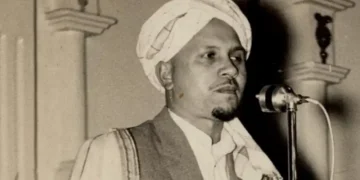
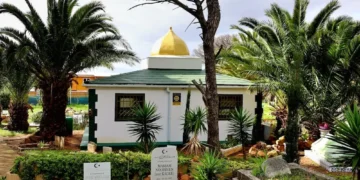
Memory and heritage were treated as sites of struggle rather than nostalgia. Coverage of Imam Abdullah Haron, the Vlakte, Khoi-San alliances, heritage debates, and cultural commemorations affirmed memory as a form of resistance. These stories challenged erasure, reclaimed marginalised histories, and insisted that identity is forged through remembrance and responsibility. Cultural features—on literature, art, performance, cuisine and sport—added texture to the year’s coverage, reminding readers that beauty, creativity and joy persist even in dark times.
Taken together, the 2025 Muslim Views newsletter archive reveals a disciplined editorial vision. It refused the convenience of neutrality in the face of oppression, rejected the spectacle-driven logic of mainstream media, and treated readers as moral agents rather than passive consumers. By consistently linking global injustice to local realities, faith to public ethics, and memory to action, the newsletter offered coherence in a year marked by fragmentation.
As 2026 begins, this review reads not simply as a summary of stories, but as a testament to what principled, community-rooted journalism can still achieve. In an age of manufactured confusion, our newsletter offered clarity; in a time of cruelty, it insisted on conscience; and in a world tempted by despair, it affirmed that truth—patiently told, ethically grounded, and courageously defended—can still organise hope.