















![The market-builder who restrained the market [Part 2]](https://muslimviews.co.za/wp-content/uploads/2026/08/PHOTO-2026-08-25-17-16-32-360x180.jpg)
![The merchant preceding the Prophetic mission [Part 1]](https://muslimviews.co.za/wp-content/uploads/2026/08/01-360x180.jpg)








MAHMOOD SANGLAY
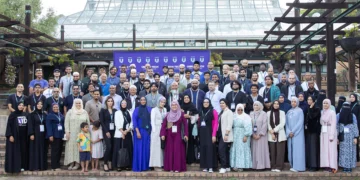
A two-day International Zakah and Waqf Conference was held in Cape Town on October 17-18, 2025, convened by the South African National Zakah Fund (SANZAF) and Awqaf South Africa under the theme From Obligation to Opportunity: Unlocking Zakah and Waqf for Societal Transformation. This is an analysis of Day 1 of the conference.
The event gathered scholars, economists, and practitioners to re-imagine Islamic social finance as a moral and developmental framework. The moral centre of the conference was established by Prof Muhammad Haron in his opening keynote. He framed zakah and waqf not merely as fiscal tools but as moral economies rooted in Qur’anic justice.
In an era of widening inequality, he argued that Muslim societies must recover the prophetic vision of wealth as amanah—a trust to be managed for collective upliftment. These institutions, he said, should function as counter-narratives to capitalist excess and debt-driven growth. Echoing his sentiments, Mickaeel Collier, CEO of Awqaf SA, underscored zakah and waqf as moral and financial blueprints for a balanced civilisation.
Prof Riham Khafagy, a global authority on Islamic social finance, located these institutions within Islam’s civilisational architecture. ‘Waqf and zakah are not charities; they are mechanisms through which societies achieve justice,’ she stated, describing them as ‘a moral economy of sustainability and independence.’ Together, their addresses reframed Islamic philanthropy not as an act of relief, but as an act of resistance against dehumanising economic structures.
Transforming charity into development
The second session exposed the practical tensions between idealism and implementation. Moderator Maulana Ebrahim Mokgabudi candidly reflected on the daily friction faced by institutionns merging faith with economics.
Maulana Muhammad Carr urged a return to the spiritual core of ihsan (excellence), arguing that clashing interests within the zakah ecosystem could only be reconciled through this ethic of beauty and sincerity. His assertion that zakah was legislated in the Makkan period re-positioned it as a foundational, not derivative, element of Islam.
Zeinoul Abedien Cajee, of Awqaf South Africa, concluded by drawing a direct line between historic endowments and modern economic power. He noted that institutions like Harvard built a $50 billion endowment in two centuries, while the Muslim world, with fourteen centuries of waqf heritage, has yet to replicate such scale. His call for professional management, transparency, and integration of waqf into national development plans served as both a rebuke and a roadmap. The session’s critical message was clear: the Muslim world must graduate from distributing charity to designing development.
Measuring material and spiritual impact
The next session shifted from theology to metrics. Prof Irfan Syauqi Beik introduced the Sybes Index, a comprehensive impact-measurement framework that evaluates both material upliftment and spiritual well-being. ‘Without measurement, we cannot improve; without accountability, we lose trust,’ he said, challenging Western poverty indices by recognising taqwa, dignity, and empowerment as legitimate development indicators.
Respondent Amiena Pastor grounded these ideas in South Africa’s realities, arguing that material poverty is often compounded by trauma. ‘Our communities are not only financially poor,’ she said, ‘they are emotionally and spiritually wounded.’ She advocated for integrating psychosocial support and vocational training into zakah programmes.

PHOTO Awqaf SA
Raaiq Pandie, a financial planner, highlighted the critical lack of zakah literacy. ‘We upgrade our cars, but not our zakah knowledge,’ he quipped, contending that financial illiteracy perpetuates dependency. He urged institutions to pair charity with financial education to transform beneficiaries into contributors. Together, these interventions proposed a holistic development model encompassing the material, moral, and intellectual.
Women at the centre of civilisational renewal
The afternoon session became one of the conference’s most galvanising moments. Shaykha Umme Rooman Soofie’s keynote, ‘A Maqasid Approach to Women’s Rights in Islamic Social Finance,’ re-examined Shariah through the lens of purpose and justice. ‘Shariah is not a cage,’ she said, ‘it is a system of mercy and empowerment.’ By revisiting the roles of Khadijah (RA) and Aisha (RA) as financiers and scholars, she reclaimed women’s participation as prophetic precedent.
Activist-practitioners Fayruz Mohamed and Ruwaida Mohammed expanded the discussion from theory to lived experience. Fayruz condemned ‘charity without empowerment’ for trapping families in cycles of aid and called for investment in skills and micro-enterprise. Ruwaida advanced the argument into the digital sphere, advocating for digital zakah ecosystems that ensure transparency and financial inclusion, especially for women.
The session culminated with Prof Riham Khafagy’s powerful reminder that women’s leadership in Waqf is not an innovation but a restoration of a historical norm; their exclusion is a modern aberration. Her appeal for female representation on Waqf boards reframed empowerment as a return to Prophetic design.
Governance as ibadah
You may also want to read



The closing session, ‘Shariah Compliance and Governance in a Modern Regulatory Environment,’ addressed the most urgent challenge: integrity.
Mufti Shafique Jakhura critiqued global capitalism, warning that ‘debt grows faster than wealth’ and calling for a systemic overhaul where finance serves humanity. Qadi Muhammad Philander grounded the conversation in spirituality, stating that ‘Ethics is not a policy document; it is amanah,’ and reminding delegates that every misused rand is a betrayal of divine trust.
Sedick Isaacs presented the takaful model as a living expression of social solidarity in post-apartheid South Africa, a framework for rebuilding trust and leaving no one behind. Closing the day, Advocate Salmaan Fredericks bridged Islamic and constitutional ethics, arguing that governance must be seen as moral stewardship. ‘When done with integrity,’ he said, ‘corporate governance becomes worship.’ His proposal for South Africa to pioneer Shariah-compliant legal frameworks placed the country at the moral frontier of the global South.
From obligation to opportunity
The first day of the conference achieved more than academic reflection; it re-centred the moral purpose of wealth in Islam. It called for an economy of empathy and accountability, for data-driven faith institutions that are transparent, inclusive, and visionary. It demanded that Muslim leadership confront structural inequality, institutionalise women’s agency, and measure spiritual outcomes alongside economic ones.
In Cape Town, scholars and practitioners spoke with a single conviction: Zakah and waqf are not ancient relics but living instruments of civilisation. If reimagined with integrity, they can transform obligation into opportunity—and faith into a force for global justice.