
















![The market-builder who restrained the market [Part 2]](https://muslimviews.co.za/wp-content/uploads/2026/08/PHOTO-2026-08-25-17-16-32-360x180.jpg)
![The merchant preceding the Prophetic mission [Part 1]](https://muslimviews.co.za/wp-content/uploads/2026/08/01-360x180.jpg)







By NONTOBEKO AISHA MKHWANAZI
Throughout the sessions the breadth of scholarship pointed to an integrated vision of life shaped by Prophetic values. Justice, accountability, humility, compassion and solidarity were repeated as guiding principles.
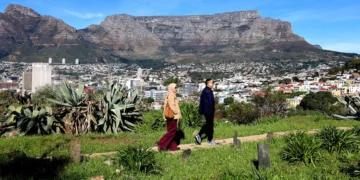
AFRICAN scholars and community leaders, meeting at the southernmost point of the continent, confronted a pressing question: How can the legacy of Prophet Muhammad (SAW) continue to guide Africa as its crises rise daily?
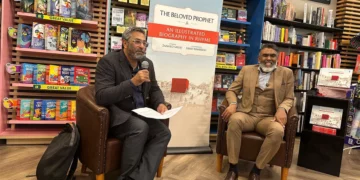
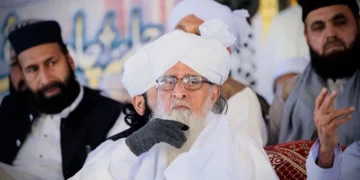
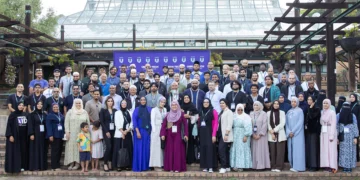
The 4th International Conference on Islamic Civilisation in Southern Africa, held from September 12-14, drew voices from across the continent. The focus was not abstract theology but the representation of the Prophet ﷺ in African scholarship and literature, and how his example continues to shape ethics, governance, education and cultural life.
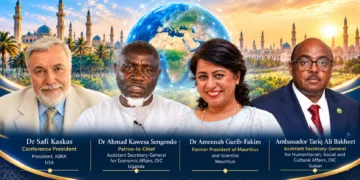
The conference was jointly organised by Awqaf SA, the Organisation of Islamic Cooperation (OIC), Research Centre for Islamic History, Art and Culture (IRCICA), and the organising committee for the Commemoration of the 1500 Years of the Prophetic Legacy.
Over three days participants presented papers on themes that included business ethics, education, oral traditions, governance and migration, which all answered the question on the enduring timeless legacy of Prophet Muhammed ﷺ.
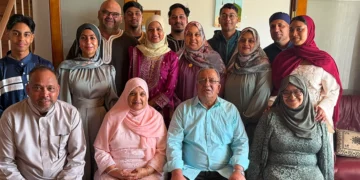
The conference also was marked by exchanges between scholars from across regions, showing the diversity of Africa’s intellectual heritage and its shared concerns about justice, accountability and cultural belonging.
Business ethics emerged as one of the issues which should be using the prophetic model. Speakers noted how corruption, exploitation and inequality continue to shape African economies, undermining development and eroding public trust. The Prophet ﷺ was remembered not simply as a successful trader but as an ethical one whose reputation for honesty set standards often absent in today’s markets.
Dr Ashahad Asali argued that the Seerah provides ‘a systematic framework for ethical business conduct, adaptable even within African commercial contexts’.
Quraysha Ismail Sooliman pressed the point further: ‘Prophetic business ethics is a sacred framework for African commerce, where profit is never divorced from justice’.
She also raised the question of consumer responsibility, noting that ethical practice today includes refusing to buy Israeli products in solidarity with Palestine
Education featured prominently in the programme.
Nimmo Osman Elmi and Wambui N Kabage emphasised that ‘incorporating the Sunnah into curricula is not about ritual but about embedding compassion, justice and critical thinking in African classrooms’.
Their intervention stressed education as a moral project.
Aslam Fataar warned of the dangers of detaching education from values: ‘Being ethical in a world on fire demands a pedagogy rooted in Ihsān, excellence inspired by the Prophet ﷺ.’
In addition, Farouk Hoosain argued that curricula needed to be reimagined through a liberatory Quranic praxis, while Hamadou Adama reflected on the challenges of teaching Seerah in Islamic schools.
Together these papers highlighted education as a site where moral formation and social responsibility take shape.
Cultural memory and oral traditions were another focus.
You may also want to read


Samba Diop described oral traditions as ‘the living textbooks of the poor, where the Prophet ﷺ is remembered not in ink but in song’. He underlined how poetry and storytelling carry Prophetic memory across generations.
Alfred Jana Matiki traced the representation of the Prophet ﷺ in Malawian Islamic songs, showing how music becomes a form of teaching.
Lamin Jabbie presented on poetic pedagogy in Senegambia, highlighting how cultural expression becomes a vessel of spiritual knowledge.
Historian Usman Bugaje went further, noting that in the Sokoto Caliphate Prophetic teachings shaped ecology, politics and governance. For him, these traditions show that culture is not peripheral but central to public life.
Governance and political responsibility also received significant attention.
Abdul Hameed Badmas Yusuf described Prophetic governance as ‘a paradigm of accountability and justice; it remains the missing lesson for contemporary leaders in Africa at large’.
Ensa Touray added that ‘the political and administrative legacies of Prophet Muhammad ﷺ had a significant impact on the Muslim revolution in Senegambia’.
Abdur-Razzaq Majal argued that ‘leadership must serve, not dominate, echoing the Prophet’s ﷺ humility’.
Muhammad Kyari presented lessons from the Prophetic tradition for African governance, while Hatice Kavas examined Seerah as political guidance in West Africa through the writings of Abdullah ibn Fodio.
These contributions returned repeatedly to accountability and humility as foundations for African leadership.
The theme of migration and belonging brought further depth.
Fatima Cheikh drew on both Nelson Mandela and the Meccan model of mercy to argue that ‘Ubuntu, like Prophetic guidance, insists on shared humanity. Mandela’s legacy and the Seerah converge in their call for transformative mercy’.
Ibraheem Mikail Abiola compared historical migration in the Prophet’s ﷺ Seerah to present African experiences, concluding that ‘the Hijra transforms exile into resilience and community-building’.
Thulani Zaid Langa reflected on cultural coexistence: ‘The Banu Arfida phenomenon shows that the Prophet’s ﷺ vision for harmony in Seerah has direct implications for how South African Muslims navigate diversity’.
Isa M Maishanu reiterated the significance of Sokoto’s heritage: ‘The Prophet Muhammad ﷺ was the model of Islamic civilisation in the Sokoto Caliphate, shaping both scholarship and literature’.
Throughout the sessions the breadth of scholarship pointed to an integrated vision of life shaped by Prophetic values. Justice, accountability, humility, compassion and solidarity were repeated as guiding principles.
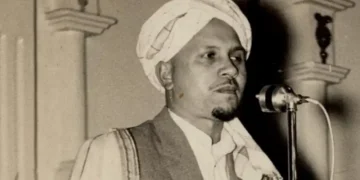
Muhammad Haron drew this together in his reflection on Imam Abdullah Haron: ‘Embodiments of the Prophetic example exist among us; their lives remind Africa that the Seerah is not history, but a living guide’.
The conference ended with the adoption of the Cape Town Declaration and the launch of the African Seerah Research Network. Both initiatives were framed as platforms to carry the work forward rather than closing statements. The declaration emphasised research, teaching and collaboration among African scholars. The network was introduced as a way to connect younger academics with established institutions, ensuring continuity and expansion.
In an interview, Latiefa Mayeza, an Islamic Studies student from Gugulethu who attended the event noted that the life of Prophet Muhammed ﷺ has provided Africa and the world with tools; its time society utilises them for a better future.
‘As the conference reminded us that a better future starts with us incorporating the values of Prophet Muhammed ﷺ. Now the real work starts with each presenter and attendee taking lessons learnt form the conference to bring about change in their communities.’