
















![The market-builder who restrained the market [Part 2]](https://muslimviews.co.za/wp-content/uploads/2026/08/PHOTO-2026-08-25-17-16-32-360x180.jpg)
![The merchant preceding the Prophetic mission [Part 1]](https://muslimviews.co.za/wp-content/uploads/2026/08/01-360x180.jpg)




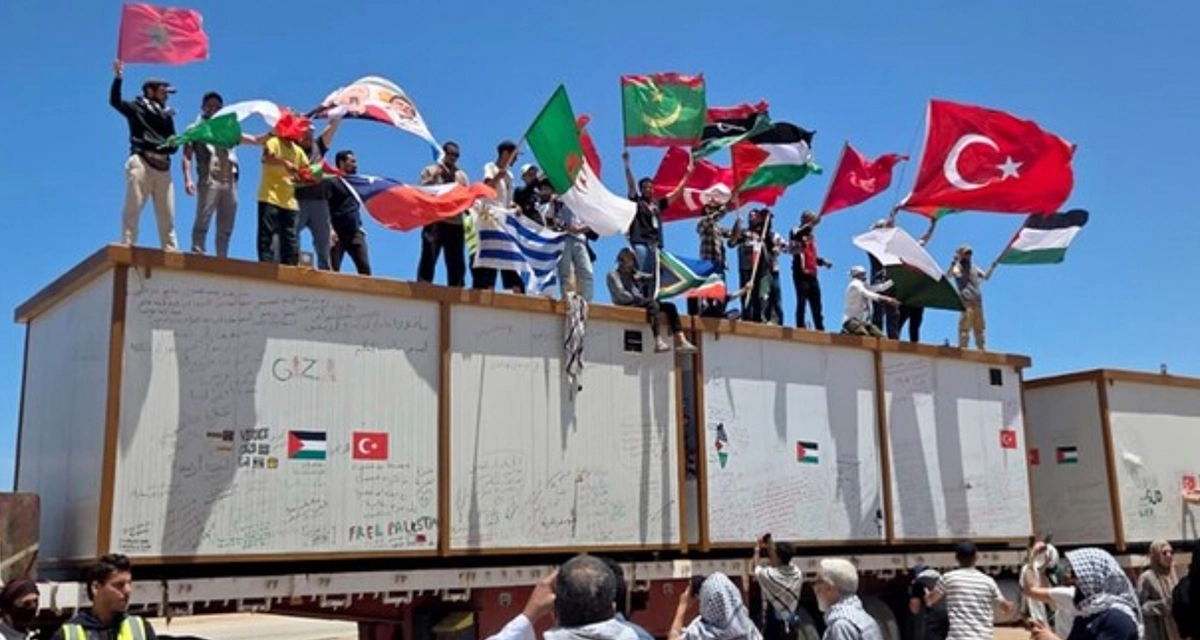

A reflection on solidarity, detention and the criminalisation of humanitarian action against the backdrop of the Global Sumud Land Convoy, which set out from Mauritania, Algeria and Tunisia and was blocked in Libya before it could deliver humanitarian aid to Gaza.
By DR FATIMA HENDRICKS
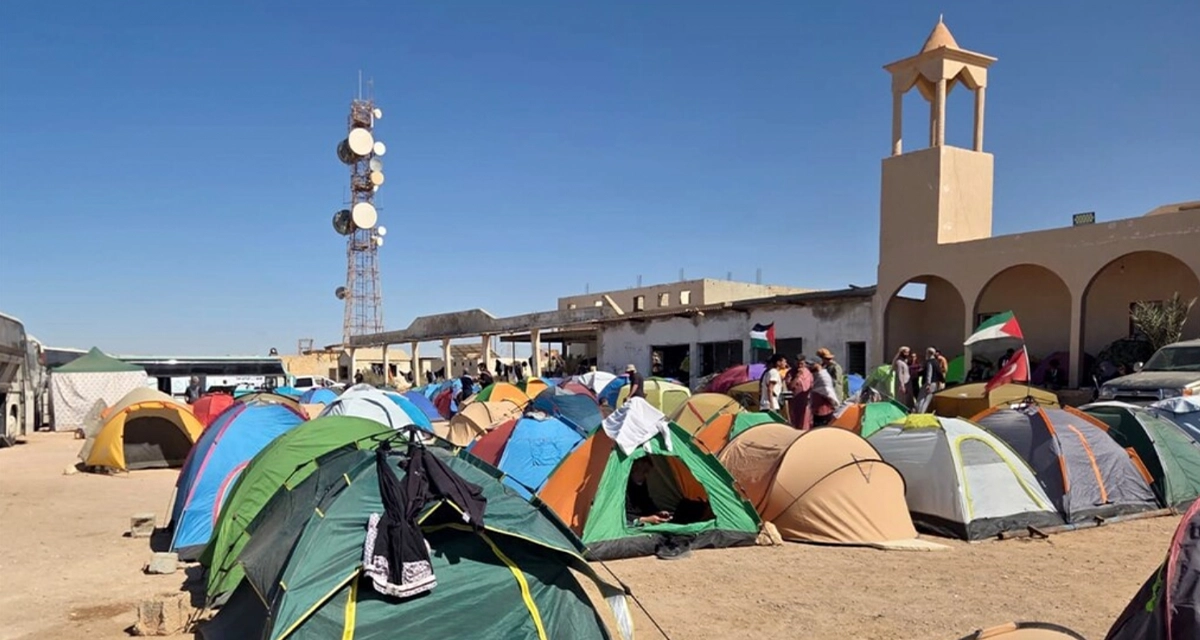
The Global Sumud Land Convoy is a grassroots mobilisation that is a civilian-led transnational solidarity effort gathering over 200 participants from over 20 countries, in an effort to move urgent emergency relief to Gaza. The land convoy travelled from Mauritania, Algeria and Tunisia into Libya, with an intended onward movement to Egypt and into Gaza.
Three South Africans, Muhammad Bulbulia, Jessica Mary Breakey and I, participated in the mission because we hold historical memory of our apartheid past, and are witnesses on our continent to the exploitation, resource extraction and oppression of the peoples of this continent and beyond, from Sudan and Congo to Palestine. We came together as Africans, and peoples of the world, refusing the colonial separations and hierarchies of Arab and non-Arab to stand together across our differences in active solidarity with the Palestinian people.
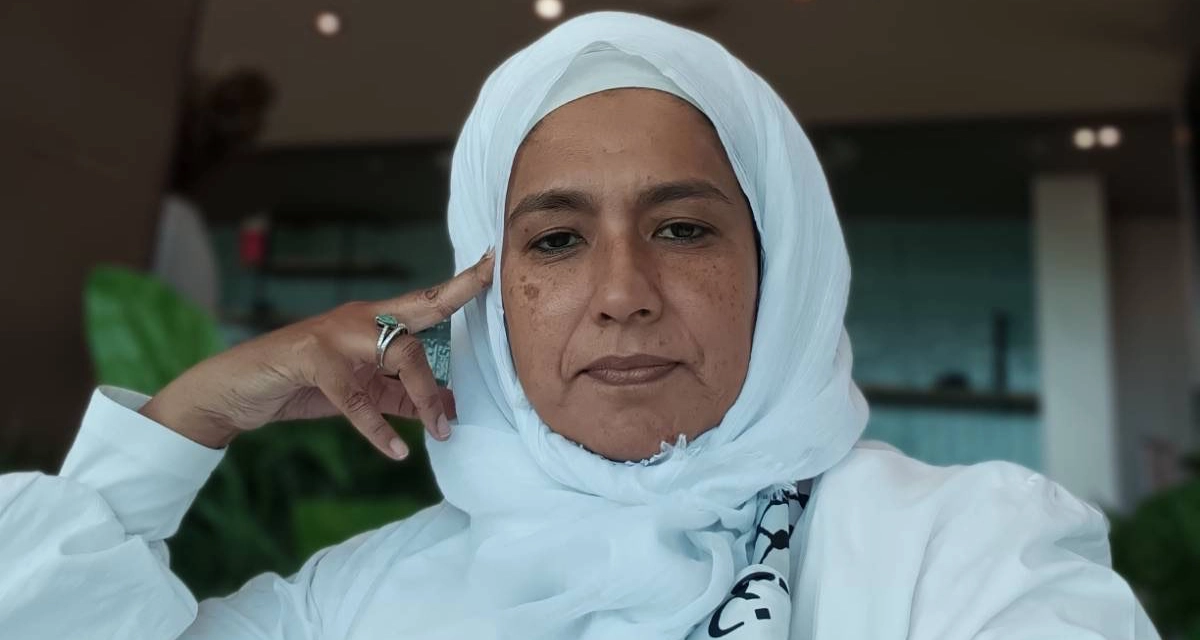
For us as ordinary people in these missions, solidarity is in the doing, in the everyday enactment beyond the boundaries and infrastructures of violence and oppression across borders to break the illegal and immoral siege of Gaza, and deliver emergency relief to Gaza materially and in kind.
However, what we have found and continue to experience in standing in solidarity, in the convoy, is the unveiling, exposing and disruption of complicities blocking our safe passage as the Global Sumud Land Convoy progressed through Libya.
After 23 days travelling through Libya, it begs the question why our land convoy was stopped from moving further and why 11 of our comrades are now being arbitrarily detained. Ten humanitarian volunteers were detained in so-called East Libya and one in so-called West Libya.
We can focus on our fellow humanitarians personally, on the remarkable people that they are, or we can interrogate the bigger question in what they are trying to do. Why were they heading towards the border of East Libya – why did they go in the first place?
They are single-minded in their focus. They are actively standing as part of the transnational solidarity movement for Palestine, with eyes fixed on the genocide in Gaza.
Their detention by the Libyan Arab Armed Forces (LAAF) and eastern Libyan authorities (Government of National Salvation), after crossing the 5+5 line near Sirte on their third attempt to secure the safe passage of the land convoy, is arbitrary detention under international law.
Ten volunteers are still currently abducted and are being held in a black site in East Libya.
In trying to deconstruct what possible threat the land convoy poses in its forward passage of humanitarians and urgent emergency relief, we need to be clear: there is no legal basis for the detention of our fellow humanitarians, and the impeding of the onward passage of the Global Sumud Land Convoy.
To be clear, there is no legal basis for the charges of illegal migration, notably because all ten participants being held by so-called East Libya are known to local authorities and this is the convoy’s third attempt at engagement for safe passage with the relevant authorities.
As representatives from the convoy, our ten humanitarian volunteers did not forcefully try to breach the land border, and travelled in registered vehicles with their passports in order to request a meeting with government officials for the safe passage of the convoy to Benghazi and then to Sollum, where the emergency relief could be transferred onwards for safe passage.
Importantly, as Africans, we reiterate that the African Charter on Human and Peoples’ Rights assures convoy participants of safe passage, more so to uphold our moral duty as Africans to ‘eliminate colonialism, neo-colonialism, apartheid, zionism and to dismantle aggressive foreign military bases and all forms of discrimination, language, religion or political opinions’ in accordance with the preamble of the African Charter.
Libya cannot rely on sovereignty to justify arbitrary or disproportionate obstruction of humanitarian aid where such obstruction would contribute to the denial of the fundamental rights the Charter seeks to safeguard.
In terms of the Geneva Conventions, pursuant to Common Article 1, Libya must respect the fundamental rights of convoy participants, including freedom of movement, freedom of expression, freedom of assembly and freedom from arbitrary arrest.
In this legal context and situatedness, our fellow humanitarians being detained have spoken in active solidarity with both moral clarity and courage, to mobilise with Palestinians for the right to life, the right to live freely, and the right to live in dignity.
The struggle for social justice, for which our fellow humanitarians are being detained, is mobilising for the unimpeded flow of people and goods into and out of Palestine.
You may also want to read


These are fundamental human rights, which now too our fellow humanitarians are being denied as they are arbitrarily held.
As people of conscience, we will not stand by silent, nor complicit.
As humanitarians on the Global Sumud Land Convoy, we stand firmly opposed to impeding relief efforts for a people living through a genocide, and to the ongoing and increasing militarisation against civilian-led humanitarian missions.
There needs to be international pushback against the criminalisation of solidarity with Palestine and the criminalisation of humanitarian action.
We witness how counter-terrorism laws are invoked, describing flotilla activists on sea or land as having links to so-called terror groups or accusations of providing material support to terrorists.
We also see migration and border policies invoked in relation to the land convoy, accusing the volunteers of illegal entry and espionage excursions.
Hostile political narratives, smear campaigns against participants and the tainting of our missions as publicity stunts, together with fake news and hasbara, frame civilian relief as acts that interfere with and threaten state security.
The arbitrary detention of land convoy participants by the Libyan Arab Armed Forces (LAAF) and the eastern Libyan authorities, known as the Government of National Salvation, is likely being employed as a calculated tool for strategic, political and legal leverage.
By detaining the humanitarian volunteers without due process, these forces may shape the narrative to portray themselves as maintaining law and order, thereby strengthening their claim to legitimacy both domestically and on the international stage.
Such actions may present a facade of authority that may bolster their negotiating power in political dialogues, shape perceptions, assert dominance, and secure broader recognition from the global community.
Hence, the Global Sumud Land Convoy’s journey through Libya exposes the complex realities of a nation grappling with deep institutional fragmentation and competing administrations that undermine cohesive governance.
This fragmentation is further complicated by militia-patronage politics and the pluralisation of the security sector, which have entrenched divisions and perpetuated instability across the country.
Adding to these challenges is pervasive foreign interference and proxy balancing, as external actors vie for influence, exacerbating tensions and complicating efforts towards national unity.
Moreover, Libya’s oil and economic governance serve as both a lifeline and a source of conflict, with control over resources fuelling disputes amidst imperialist interferences and agendas.
The convoy’s passage through this volatile landscape highlights the critical importance of coordinated efforts to ensure safe humanitarian passage through countries.
Given the realities on the ground, uncoordinated movements pose significant risks to both humanitarian workers and the physical aid being carried.
This urgency is precisely why land convoy representatives made three determined attempts to reach the 5+5 line, repeatedly seeking dialogue and agreement on safe-passage protocols.
The convoy’s persistent efforts underscore the recognition that only through collaboration and communication among all parties involved can this humanitarian mission navigate safe passage.
Without such coordination, the delivery of essential supplies remains at constant risk, jeopardising the lives of those in desperate need.
Therefore, establishing a reliable framework for safe passage is not just a logistical necessity but a moral imperative for the protection of humanitarian providers and Palestinians alike.
However, what we have found is hindrance and criminalisation of the actions of the land convoy mission.
The ten participants voluntarily entered the 5+5 security zone with the clear and urgent purpose of negotiating safe passage for the humanitarian mission, demonstrating their commitment despite the security uncertainty of what would happen next.
Their final communication at 3:22pm on May 24 confirmed that they were being transferred into three white vans.
Back-channel reports suggest that eastern Libyan authorities claim the delegates entered the zone without proper authorisation.
However, given our participants’ voluntary and transparent intentions, these allegations are untrue.
It is imperative to advocate for their immediate and unhindered release to ensure the continuation of vital humanitarian aid and uphold the principles of cooperation and respect for human rights and international law in humanitarian missions, by land and by sea.
We call for the immediate release of Alicia Armesto Nuñez (Spain), Laura Kwoczała (Poland), Jenelle Jones (USA), Maria Paula Giménez (Argentina), Dr Lucas Ezequiel Aguilera (Argentina), Matias Alvarez Rodriguez (Uruguay), Ana Margarida França Santana Baptista (Portugal), Ashraf Khoja (Tunisia), Domenico Centrone (Italy), and Leonarda Alberizia (Italy), who are being held in East Libya.
Mehdi bin Fouad Bouzguenda, who was detained in West Libya, has subsequently been released.
Like the over 9 600 Palestinians being held in the Zionist entity’s prisons, we call for the immediate release of all Palestinian prisoners held in breach of international law.
Uphold the law – justice must prevail.
Dr Fatima Hendricks is an occupational therapist, author and educator. A mother of two and cancer survivor, she advocates for justice through non-violent action and global solidarity. Her work highlights the devastating impact of oppression on health, education and family life, while inspiring awareness of the Palestinian right to live freely and peacefully.