















![The market-builder who restrained the market [Part 2]](https://muslimviews.co.za/wp-content/uploads/2026/08/PHOTO-2026-08-25-17-16-32-360x180.jpg)
![The merchant preceding the Prophetic mission [Part 1]](https://muslimviews.co.za/wp-content/uploads/2026/08/01-360x180.jpg)




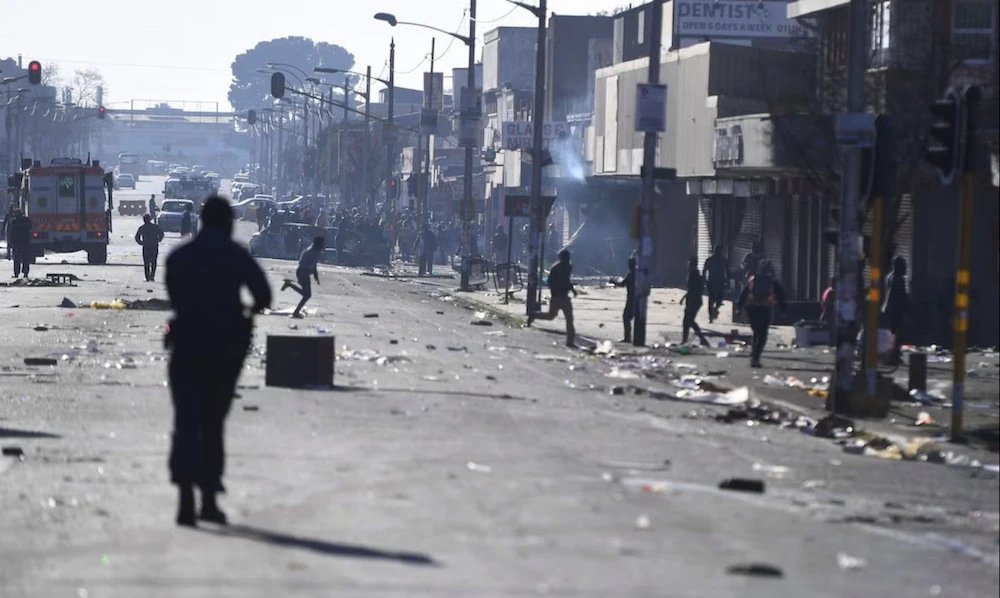

As anti-migrant violence and Afrophobia intensifies, Abdulhakim Nsobya examines South Africa’s liberation legacy, African solidarity, and the moral duty to protect migrants.
By ABDULHAKIM NSOBYA
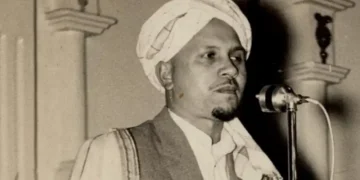
South Africa has long occupied a special place in the moral imagination of the world. It is the country of Nelson Mandela, Winnie Madikizela-Mandela, Desmond Tutu, Ahmed Kathrada, Imam Abdullah Haron, the imam who paid with his life for resisting apartheid after dying in police detention in 1969. It is a nation whose liberation struggle inspired millions across the globe. Whose transition to democracy demonstrated the possibility of justice after profound injustice.
South Africans know, perhaps better than most, what it means to be dehumanised, excluded, and denied dignity. It is precisely because of this history that the recent attacks on African migrants are so deeply troubling.
In recent months, anti-immigrant protests linked to Operation Dudula have intensified. In Mossel Bay, Western Cape, five Mozambican nationals reportedly lost their lives amid the violence. Some died after their shacks were set alight, while others lost their lives while attempting to flee back to Mozambique. These are not merely statistics. They were fathers, mothers, sons, daughters, and breadwinners pursing the same aspirations most of us hold dear: safety, dignity, and the opportunity to provide for their families.
The explanations offered by those involved in the violence are familiar. Migrants are accused of taking jobs, increasing crime, and burdening public services. Similar narratives can be heard in Europe, North America, and elsewhere. Yet they often obscure a more complex reality.
Many migrants in South Africa work in sectors avoided by others or establish small business that contribute to local economies. Others seek refuge from conflict and instability in neighbouring countries. They are not invaders; they are human beings navigating difficult circumstances. More importantly, they are individuals who should be judged by their actions, not condemned because of where they happened to be born.
There is another uncomfortable truth that South Africans must confront: the democratic South Africa we celebrate today was not build by South Africans alone.
You may also want to read


During apartheid, when South Africa’s liberation movements were banned and activists persecuted, many found sanctuary across the continent. Tanzania hosted liberation movements and training camps. Zambia became a diplomatic and operational hub for the anti-apartheid struggle. Uganda, Zimbabwe, Mozambique, and many others welcomed South African exiles, students, and freedom fighters when much of the world remained indifferent or actively supported the apartheid state. Mozambique itself paid a devastating price. The apartheid regime repeatedly bombed Maputo, accusing it of sheltering “terrorists” who were, in reality, men and women fighting for their dignity and political rights.
It is therefore tragic that Mozambicans, whose country once stood in solidarity with South Africa’s liberation struggles, now find themselves targeted in post-apartheid South Africa.
The debt owed to Africa is not merely historical; it continues in the present. South African businesses operate freely across the continent. Companies such as Shoprite, Pick n Pay, Woolworths, and MTN, among others, have established a presence in cities throughout Africa. South African managers, professionals, and entrepreneurs live and work in countries from Nigeria to Uganda, from Zambia to Mozambique, often enjoying hospitality and opportunities unavailable at home. Rarely are they told they do not belong. Rarely are their homes burned because they are foreign. The movement of people, ideas, skills, and capital has enriched South Africa and the continent alike.
This reality does not dimmish South Africa’s sovereign right to regulate immigration or address unemployment. Grievances about poverty, inequality, and the state’s failures are real and deserve serious attention. But frustration must never become an excuse for violence against vulnerable people. The question is not whether South Africa can protect its boarders; it is whether it can do so without forgetting the solidarity that sustained its own liberation struggle and the humanity that binds Africans together.
Yet this is not a political failure; it is also a moral and religious one.
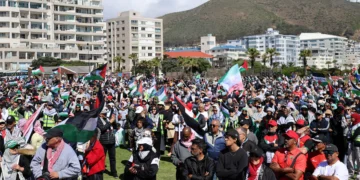
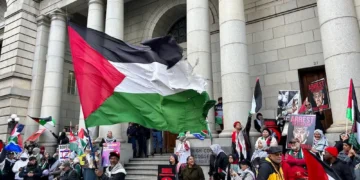
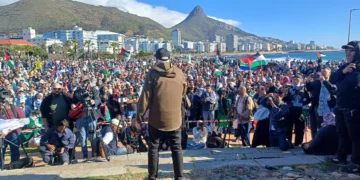
South Africa is known for its vibrant civil society and faith communities. Churches, mosques, and religious organisations have been at the forefront of struggles for justice. South African Muslims, particularly in the Western Cape, have demonstrated an extraordinary capacity for mobilisation when confronted with injustice abroad. Thousands have gathered at the Sea Point beach to show solidarity with Palestinians. Community organisations have arranged marches, awareness campaigns, and fundraising initiatives. Radio stations such as Radio 786 and Voice of the Cape have played instrumental roles in educating communities and rallying public support on issues ranging from genocide in Gaza to conflicts in Lebanon and elsewhere. Muslims organisations have organised races and public events to express solidarity with distant suffering.
South Africa itself has taken the extraordinary step of bringing a case before the International Court of Justice accusing Israel of committing genocide in Gaza. Whether in the streets, the courts, or the media, South Africans have shown that they understand the importance of standing publicly against injustice.
Why, then, is there no comparable mobilisation when Africa migrants are attacked within our own communities?
Where are the thousands marching through the streets of Cape Town demanding protection for Mozambican families whose homes have been burned? Where are the peaceful demonstrations organised by mosque committees and faith leaders declaring that the lives of African migrants matter? Where are the sustained media campaigns reminding people that Islam forbids oppression regardless of religion or nationality?
For far too long, Afro-phobic violence has been dismissed as the work of a few misguided individuals. Yet the persistence and scale of these attacks suggest something far more troubling. The normalisation of anti-immigrant rhetoric has reached a point where politicians who build careers on Afro-phobic narratives are rewarded with public offices and government influence. Hatred that once existed on the fringes increasingly finds expression in mainstream political discourse.
Silence in such circumstances risks becoming complicity.
For Muslims, the Qur’an leaves little room for ambiguity: “O you who believe! Stand firmly for justice, as witnesses to Allah, even if it be against yourselves…” (Qur’an 4:135). Justice is not selective. Compassion cannot be reserved only for those who share our religion, nationality or ethnicity. If we march for the oppressed in distant lands, we must also stand with those facing violence in our own neighbourhoods.
Words of condemnation are necessary but are no longer sufficient.
Imams, mosque committees, interfaith leaders, and community organisations must actively promote social cohesion and challenge narratives that dehumanise migrants. They should organise educational programmes, inter-community dialogues, and peaceful demonstrations affirming the dignity of every human being. The same moral energy that mobilises communities around global injustices should be directed towards injustices unfolding at our own doorstep.
The situation is especially urgent given the reports that migrants have been issued ultimatums to leave by the end of June. We cannot allow vigilante groups to assume the role of the courts, the police, or the state.
The Prophet Muhammad (peace be upon him) reminded us: “None of you truly believes until he loves his brother what he loves for himself.” If we desire safety for our own families, we must desire safety for others. If we seek dignity, we must defend the dignity of those around us.
South Africa once taught the world that another future was possible. It demonstrated that systems built on exclusion and hatred could be dismantled through courage, solidarity, and moral conviction.
Today, it faces another test.
Will it succumb to fear and division, turning against fellow Africans in moments of economic hardship? Or will it draw upon its deepest traditions of ubuntu, justice, and shared humanity?
History will remember how apartheid was never merely about changing who held power. It was about affirming the equal worth of every human being.
That principle must not stop at the border.
Dr Abdulhakim Nsobya, a Ugandan-born Research Fellow at Queen’s University Belfast, studied in Tanzania and South Africa. His research covers religion, media, identity, and political violence in Africa, drawing on personal experience to address migration, belonging, social justice, and faith communities’ ethical duties during crises.