

















![The market-builder who restrained the market [Part 2]](https://muslimviews.co.za/wp-content/uploads/2026/08/PHOTO-2026-08-25-17-16-32-360x180.jpg)
![The merchant preceding the Prophetic mission [Part 1]](https://muslimviews.co.za/wp-content/uploads/2026/08/01-360x180.jpg)






Mamdani is not perfect. No political figure is. But he is principled, generous, and visionary. He is a politician who puts people before profit, who speaks with clarity and conviction, and who does not shy away from complexity. He reminds us that it is possible to do politics differently, rooted in ethics, guided by compassion, and aimed at justice.
By ASLAM FATAAR
In a world struggling under the weight of injustice, poverty, gender-based violence, corporate greed, and environmental harm, figures like Zohran Kwame Mamdani offer a rare glimmer of hope.
Mamdani, a young politician from New York City, recently secured a resounding victory in the Democratic Party primary for mayor, running on a bold democratic socialist platform centred on affordability, justice, and grassroots mobilisation.
His campaign called for a politics that centres the affordability of everyday life, including housing, healthcare, transport, and education, particularly for working-class and marginalised communities.
Mamdani’s victory is especially significant because he stood against an opponent who had not only voiced staunch support for the Israeli state in its brutal war on Gaza but also carried the baggage of serious allegations of gender-based violence, leading to his disgraceful resignation from a former post as Governor of New York.
In contrast, Mamdani’s campaign was powered by small donations, passionate grassroots organising, and the creative and consistent use of social media. It was a campaign against corporate control and for the reclaiming of politics by ordinary people.
Mamdani is articulate, clear-headed, and politically brave. He never hesitates to speak truth to power. His support for Palestinian liberation is firm and unwavering, earning him admiration not only from Muslims and pro-justice communities globally but also from a growing number of young Jewish New Yorkers who are increasingly questioning the oppressive policies of the Israeli government.
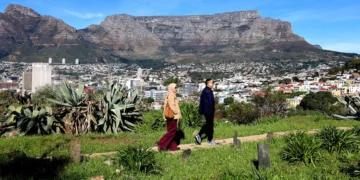
As South Africans, and especially as Capetonians, Mamdani’s story matters to us; we have a sense of warm recognition, even a form of cultural affection, for this young politician who spent a few of his childhood years in Cape Town. He attended St George’s Grammar School and the Claremont Main Road Mosque’s Saturday morning religious school for children.
This brief yet essential part of his upbringing provides us with a connection that transcends geography and politics. It allows us to see ourselves in him, and him in us. We celebrate this connection, however modest, as it reminds us that our struggles are intertwined across oceans.
Zohran’s story also carries a personal resonance. Once active in the rap scene, drawing on a cultural energy not unlike Cape Town’s YounstaCPT, he later transitioned into politics, bringing with him a sharp cultural awareness and a deep commitment to justice.
Born in Uganda to a Muslim father of Indian heritage and a Hindu mother, renowned filmmaker Mira Nair, Zohran openly embraces the complexity of his layered identity. Nair’s work, rich in cultural nuance and emotional depth, similarly resists being confined to a single narrative. Together, their lives reflect a politics and art of multiplicity, connection, and fearless self-definition.
Mira Nair, known for influential films such as Salaam Bombay!, Queen of Katwe, Mississippi Masala, and my favourite, The Namesake, is one of the most important yet under-recognised filmmakers of our time. Through her storytelling, she has also contributed to a politics of empathy and inclusion.
Zohran’s father, Professor Mahmood Mamdani, is a significant figure who shaped many of us intellectually. As an academic in African Studies, Prof Mamdani taught at the University of Cape Town in the mid-1990s. His books — Citizen and Subject (1996), Good Muslim, Bad Muslim (2004), and Define and Rule (2012) — have been foundational to our understanding of colonial power, identity, and resistance.
Long before the student uprisings of 2015–2016 in South Africa, we leaned on Prof Mamdani’s work to argue for the decolonisation of the university curriculum. His intellectual legacy is deeply woven into our educational and political histories.
In this context, Zohran Kwame Mamdani represents both continuity and newness. He builds on the legacy of his parents while forging his own political path. His politics speak directly into today’s global crises in a time when right-wing populism, xenophobia, and environmental destruction are gaining ground.
Like those of us who joined anti-apartheid and community struggles in the 1980s, Mamdani roots his politics in an ethical vision of justice and equality. He speaks for those who are made to feel invisible or disposable in a system that prioritises profit over people.
His social media presence is not a mere tool for image management, but a powerful instrument for mobilisation and political education. It enables him to connect with people across racial, religious, gender, class, and national boundaries in a way that few politicians manage to do.
One of the most inspiring aspects of Mamdani’s campaign is how it builds connections across difference without excluding anyone. His approach to politics is genuinely inclusive. He draws on intersectional solidarity, recognising that liberation is a shared project.
His social media presence is not a mere tool for image management, but a powerful instrument for mobilisation and political education. It enables him to connect with people across racial, religious, gender, class, and national boundaries in a way that few politicians manage to do.
This is the kind of politics we need, not just in the United States, but here in South Africa too. A politics that insists on the full dignity of all people. One that rejects narrow nationalism and calls for collective responsibility, seeking to build inclusive institutions, just economies, and sustainable communities. Mamdani’s campaign resonates powerfully with our own historical and present-day struggles in Cape Town and across South Africa.
You may also want to read





In the face of Israeli state violence against Palestinians, Mamdani’s vocal and courageous support for Palestinian rights has brought a new wave of attention and solidarity. He has become a moral compass in a time when many politicians remain silent or complicit in the face of genocide. His voice stands with the oppressed and invites others to do the same.
Mamdani is not perfect. No political figure is. But he is principled, generous, and visionary. He is a politician who puts people before profit, who speaks with clarity and conviction, and who does not shy away from complexity. He reminds us that it is possible to do politics differently, rooted in ethics, guided by compassion, and aimed at justice.
From Cape Town, we salute Zohran Kwame Mamdani, not only because he once walked our streets and sat in our classrooms, but because he reminds us that another world is possible. His politics offer hope, not just for New York, but for all of us working toward a more just, inclusive, and sustainable world.
Professor Aslam Fataar is Research Professor in Higher Education Transformation, based in the Department of Education Policy Studies, Stellenbosch University.