




![Does ta’wīl mean interpretation or fulfilment? A Quranic reassessment [+video]](https://muslimviews.co.za/wp-content/uploads/2026/10/Tawil-Kaskas-360x180.webp)







![Why becoming a wealthy Muslim is commendable in Islam [+videos]](https://muslimviews.co.za/wp-content/uploads/2026/09/Muslim-Trade-Business-1-360x180.webp)




By ASLAM FATAAR
On Saturday, May 23, 2026, family, friends, colleagues, students, community leaders and ordinary people gathered to bid farewell to Prof Imam Noor Davids. ASLAM FATAAR pays tribute to a dear friend, mentor and colleague.
His passing on May 22 brought sadness to many circles across Cape Town and beyond. Yet the gathering that accompanied his final journey reflected a life richly lived in service to faith, community, learning and humanity.
Noor was ten years older than me. He was my friend, mentor, Arabic teacher, travelling companion, scholarly colleague and fellow community-builder. His passing leaves a profound void, but also an enduring legacy.
Born in District Six in 1956, Noor was one of twelve siblings and the son of Imam Yusuf Davids of the Galielor Raghmaan Jamaa Masjid in Ellesmere Street, District Six. He grew up in a household shaped by Islamic learning, books, entrepreneurship, public service and community leadership. These influences cultivated in him a lifelong commitment to education, social responsibility and public engagement.
District Six remained a defining presence in his life. He carried its memory and spirit with him long after forced removals had scattered its people across the Cape Flats. Its history of resilience, cultural richness and communal solidarity informed much of his scholarly and community work.
This commitment found expression in one of his most important writings, A History of Collegians Rugby Club’s Survival: From Apartheid to Democracy. Through the story of Collegians Rugby Club, established by displaced District Six communities in Mitchells Plain, Noor explored the values that animated his own life: community resilience, historical remembrance, youth development, democratic participation and social responsibility.
For Noor, Collegians represented the capacity of ordinary people to build institutions that cultivate dignity, belonging, leadership and hope. His account of the club reflected his enduring belief in community-centred development and the power of civic institutions to sustain people through adversity.
Scholar, teacher and community builder
Noor’s life traversed multiple worlds. He studied Arabic in Riyadh and became a respected Arabic teacher whose influence extended across generations of students in Cape Town. His religious leadership unfolded across several decades of community service. For a period, he served as imam of Masjid al-Munowar on Concert Boulevard in Retreat, where his khutbahs, teaching and pastoral guidance were deeply appreciated.
He also served for a time as imam at the Galielor Raghmaan Jamaa Masjid, following in the footsteps of his father, Imam Yusuf Davids. These roles reflected a lifelong commitment to Islamic learning, community upliftment and ethical leadership.
He served as national president of the Muslim Students Association of South Africa and emerged as a prominent Muslim youth leader during a period of intense political and social change.
He pursued secular studies at the University of the Western Cape and the University of Cape Town. Books, ideas, museums, culture, travel and conversation formed part of the texture of his life.
For many years, we participated in a periodic reading and discussion group together with the late Dr Eghsaan Behardien, the late Nazeem Khan, Dr Faaiz Gierdien and Dr Omar Esau. Noor arrived at these gatherings deeply read, intellectually curious and eager to engage. He loved ideas and relished thoughtful conversation. He approached ideas with seriousness and humility, always seeking understanding rather than intellectual victory.
You may also want to read


I also had the privilege, together with Dr James Lees, of supervising Noor’s doctoral thesis at the University of the Western Cape. From a Foucauldian perspective, his doctoral study examined teachers’ perceptions and attitudes towards HIV/AIDS and the relationship between those perceptions and classroom practice. Conducted during the first decade of the 2000s, when HIV/AIDS remained highly stigmatised, the study addressed difficult questions concerning education, morality, identity, culture and public health. It was an illuminating and courageous contribution to educational research.
The doctorate opened the way for a distinguished academic career. Noor taught in South Korea, at the University of KwaZulu-Natal, at the Cape Peninsula University of Technology and later at the University of South Africa, where he flourished as a scholar, supervisor and academic leader.
His scholarship ranged across educational ethics, history education, Muslim education, decoloniality, university transformation, African educational thought and the sociology of education. He supervised numerous doctoral students and contributed significantly to the development of younger scholars. Among Noor’s final scholarly contributions was a chapter in the volume Prophet Muḥammad at 1500: His Prophetic Legacy, Ethical Vision and Contemporary Resonance (April 2026), which I had the privilege of editing on behalf of the Prophetic Legacy Commission and Awqaf SA.
In that chapter, written during a period marked by renewed Islamophobia, Qurʾān burnings and the devastation unfolding in Gaza, he called for the recovery of the Prophetic voice as a voice of reason, dignity, justice, coexistence and ethical resistance. It stands as one of Noor’s final intellectual gifts to his community and as a testament to his lifelong commitment to Islamic intellectual renewal, resistance to dehumanisation and the affirmation of Islam’s contribution to a shared human future.
Alongside his academic work, Noor excelled as a businessman. Together with his beloved wife, Waheba, he established and managed several Seven-Eleven convenience stores in Cape Town’s southern suburbs.
He was also one of the principal initiators and the first general secretary of the Islamic Coordinating Council of Greater Grassy Park during the late 1980s. The organisation continues to serve local communities today. He was furthermore a founder member of Voice of the Cape radio, helping establish an influential Muslim media institution.
A life shaped by faith, friendship and love
Several years ago, Noor and Waheba travelled with a group of academic friends and me through Iran following a comparative education conference. Those travels revealed much about Noor’s character. He approached people with warmth and curiosity. He delighted in learning. He appreciated beauty, culture, history and human connection. He carried a generosity of spirit that drew people towards him.

He loved his family deeply. He spoke about Waheba with affection and admiration. Their partnership reflected shared commitment, mutual support and collective achievement. His children brought him immense pride and joy. His relationships with his siblings remained strong and enduring.
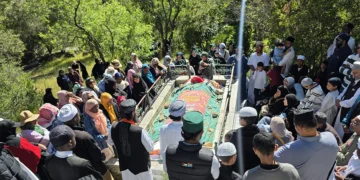
The final farewell reflected the many dimensions of his life. The janāzah gathering at his family home was deeply moving. Friends, family members, colleagues, former students, community leaders and neighbours assembled to honour him before the mayyit departed on his final earthly journey.
His longstanding friend, Shaykh Hashiem Julies, offered a heartfelt duʿā that touched all present. In that atmosphere of remembrance and gratitude, I too offered a short duʿā.
During my brief tribute at the janāzah gathering at his home, following heartfelt reflections by Shaykh Ebrahim Gabriels and Noor’s dear friend Dr Omar Esau, I reflected on the Qurʾānic greeting to those whose lives have been marked by goodness and integrity: “Peace be upon you! Well have you done: enter, then, this [Paradise], herein to abide!” (Sura Az Zumar, 39:73). The verse resonated deeply with the spirit of the occasion and with the way so many people understood Noor’s life of faith, service, learning and community leadership.
From the family home, the congregation proceeded to the renowned Victoria Road Mosque in Grassy Park, where I was immensely honoured to lead the janāzah ṣalāh. Standing before the congregation, one could sense the breadth of Noor’s influence. Academics stood alongside imams, businesspeople alongside former students, community activists alongside family members and lifelong friends.
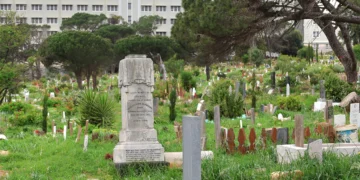
Thereafter, he was laid to rest at Mowbray Cemetery, where family, friends, colleagues and community members committed him to the earth with prayers, tears and gratitude.
Noor Davids belonged to a generation that understood knowledge as a trust, service as a calling and community as a sacred responsibility. He embodied a tradition in which scholarship, faith, entrepreneurship, public engagement and social commitment formed part of a coherent life project.
He built institutions. He nurtured relationships. He encouraged younger people. He connected communities. He opened doors for others. He carried ideas into action and brought people together in common purpose.
His beloved wife, Waheba, his daughter, Tharwah, and son, Umayr, siblings, extended family, friends, students, colleagues and communities across Cape Town now carry forward a rich and enduring legacy.
Prof Imam Noor Davids lived a life of remarkable breadth, depth and consequence. His legacy endures in the institutions he helped build, the students he supervised, the communities he served, the friendships he cultivated and the countless lives he touched along the way.
May Allāh envelop him in His mercy, accept his lifelong service, and grant comfort and strength to all who mourn his passing.
Indeed, we belong to Allāh, and to Him we shall return.