






![Does ta’wīl mean interpretation or fulfilment? A Quranic reassessment [+video]](https://muslimviews.co.za/wp-content/uploads/2026/10/Tawil-Kaskas-360x180.webp)











![Why becoming a wealthy Muslim is commendable in Islam [+videos]](https://muslimviews.co.za/wp-content/uploads/2026/09/Muslim-Trade-Business-1-360x180.webp)





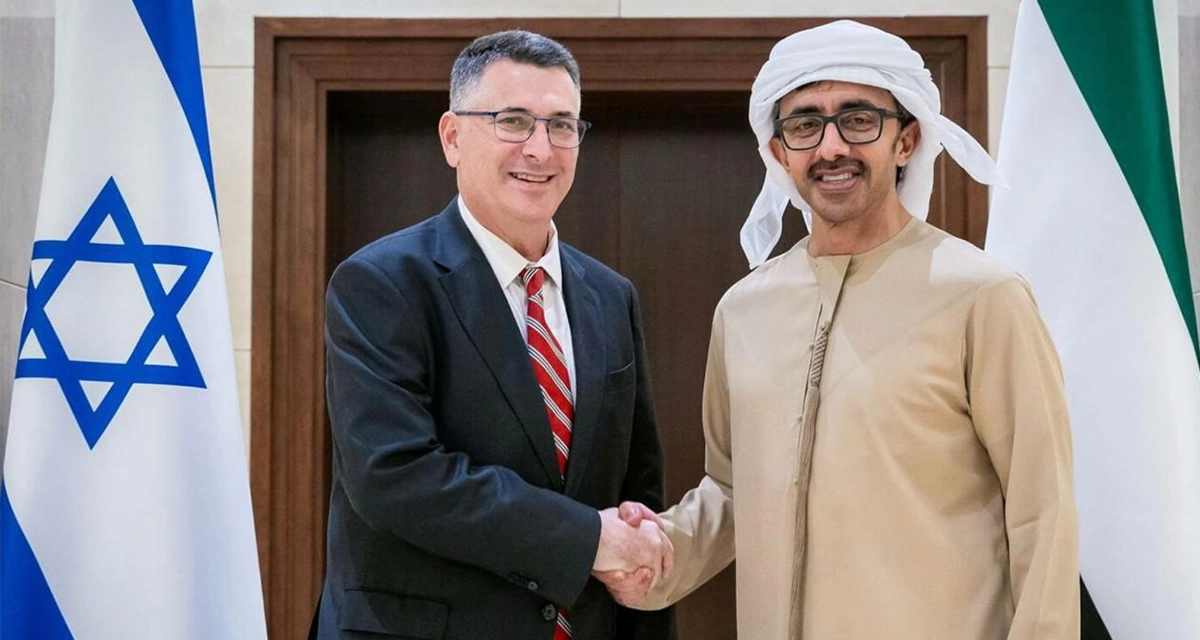

The war on Iran has exposed what PROFESSOR ZIYAD MOTALA describes as the fragile foundations of the UAE model, built on spectacle, external alliances and political illusion.
The defining feature of the UAE model is not strength but illusion. The war on Iran has exposed the fraud at its core: a glass city pretending to be a fortress. Its entire edifice rests on a belief it cannot manufacture, that it is safe, neutral, open and insulated from the wars and mischief it helps enable. That belief is now damaged.
This was always a brittle construct. The rulers built a state around spectacle rather than values, human decency or legitimacy. They substituted towers for institutions, surveillance for citizenship, branding for sovereignty and external protection for strategic depth.
At its core, the UAE is profoundly anti-Islamic and has shown a consistent propensity to align with and sponsor forces that erode stability in Muslim lands or undermine Muslim survival.
That alignment is neither incidental nor episodic. It is structural. Close alignment with Israel, convergence with India’s current Hindutva government and sustained interventionist policies across the Muslim world reveal a pattern of conduct.
From Libya to Yemen to Somalia, the UAE has played a role in fomenting conflict, deepening divisions and weakening already fragile Muslim societies. At the same time, it has pursued an aggressive campaign against Islam, often framed through opposition to the Muslim Brotherhood, as a means of legitimising repression and projecting itself as a partner to external powers hostile to Islamic political expression.
Taken together, these choices project an actor willing to subsidise fragmentation and instability in the Muslim world. The UAE represents the antithesis of principled statecraft.
The war on Iran has laid bare the consequences of this model. Geography, which it sought to transcend through money and spectacle, has reasserted itself. Hormuz, aviation disruption, energy infrastructure risk, insurance costs, investor nervousness and reputational exposure all converge.
The danger is not simply physical vulnerability but the erosion of confidence. Much of the UAE economy is confidence-sensitive: luxury property, airlines, tourism, conferences, finance, expatriate labour and offshore capital. These do not require famine or destruction to unravel. They require doubt. And doubt is now present.
You may also want to read


A prolonged regional war changes the question investors ask. Not ‘Is Dubai glamorous?’ but ‘Is my money safer in Singapore, London, Riyadh, New York, Doha, Mumbai or Istanbul?’ Once that question is answered, the model weakens. Confidence, once shaken, does not easily return.
The war on Iran, therefore, exposes the contradiction at the core of the UAE project. It can function in calm weather, sustained by capital flows, external protection and carefully managed perception. In conditions of conflict, it reveals itself as brittle and vacuous.
The UAE may hobble along in the short term, sustained by the belief that its external patrons, the United States and Israel, will guarantee its security. Dubai may continue to function in an attenuated form. But the aura of invincibility is gone. The murky core is now visible. What was once masked by spectacle and amplification has been revealed.
Make no mistake. The UAE is not a benign regional power. It is a vile, anti-Islamic, despotic and malignant actor. It has benefitted both from its proximity to the United States and Israel and from furthering their agenda, as well as from the positive coverage and puffed-up imagery that relationship generated.
The war on Iran has shown that beyond the smoke and mirrors lies a brittle luxury dependency propped up by illusion and external power.
Professor Ziyad Motala is an authority in international law, constitutional law and comparative constitutional law, and professor at Howard University School of Law in Washington, DC.
- This article was first published by middleeastmonitor.com