

























![The market-builder who restrained the market [Part 2]](https://muslimviews.co.za/wp-content/uploads/2026/08/PHOTO-2026-08-25-17-16-32-360x180.jpg)
![The merchant preceding the Prophetic mission [Part 1]](https://muslimviews.co.za/wp-content/uploads/2026/08/01-360x180.jpg)










Clear examples from the life of the Prophet ﷺ show that Muslims must work with people of other faiths to uphold justice, oppose oppression and serve humanity without compromising belief.
By MUFTI SAYED HAROON AL AZHARI
The Prophetic model teaches that Muslims are not only permitted, but at times required, to work with people of different faiths and theological backgrounds to uphold justice, alleviate oppression, and serve humanity, provided our intentions are rooted in the principles of the Qur’an and Sunnah.
In today’s world, we witness unimaginable atrocities, injustices and Islamophobia perpetrated by tyrants. Muslims are often targeted, yet oppression does not discriminate; people of every background suffer. This shared human suffering demands a response grounded in moral responsibility rather than isolation. As children of Nabi Adam (a.s), we are called to uphold justice, cooperation and human dignity. Working alongside non-Muslims or Muslims of different sects for humanitarian causes, whether defending the oppressed, alleviating poverty, or dismantling systemic racism, is not only permissible in Islam but morally commendable when guided by righteous intentions.
Yet, this cooperation is often misunderstood or misconstrued. Provoking conflict in the name of Sunni Islam by conflating cooperation with endorsement of non-Islamic beliefs is both harmful and un-Islamic. For example, telling a shopkeeper to serve only Muslims because serving others strengthens shirk, or instructing a doctor to withhold care from a Muslim of a different theological background because it aids him in spreading bid’ah and misguidance, contradicts Islamic ethics and reason.
The Qur’an provides clear guidance. Allah says in the Holy Qur’an: ‘Allah does not forbid you from dealing kindly and justly with those who did not fight you because of religion nor drive you out of your homes. Indeed, Allah loves those who act justly.’ (Sura Al Mumtahanah, 60:8). He also commands believers to uphold justice even towards those they disagree with: ‘O you who believe, be persistently standing firm in justice, witnesses for Allah, even if it be against yourselves or parents and relatives.’ (Sura Al Ma’idah, 5:8). Cooperation is not without restriction; acts such as treason, sharing strategic information with enemies, or aiding those at war against Muslims remain strictly forbidden.
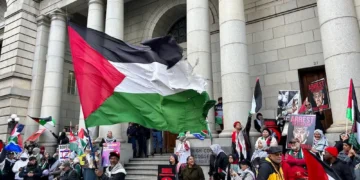
The Imams of fiqh recognised these nuances, permitting cooperation with Muslims of different sects, non-Muslims and even hypocrites when it served the public good, based on the Prophetic Sunnah. A contemporary example is global efforts to oppose oppression, genocide and ethnic cleansing in Gaza. The life of the Prophet ﷺ provides the most authoritative guidance on how to engage in such efforts without compromising faith.
Islam judges people by their intentions, not outward circumstances, alliances or appearances. When Muslims were politically persecuted in Makkah, the Prophet ﷺ sought protection for his companions in Abyssinia under the Christian king al-Najashi. Residing in a non-Muslim land did not weaken their faith; instead, their noble character became a powerful form of daʿwah. So deeply moved was al-Najashi that he accepted Islam, and the Prophet ﷺ later performed his janazah prayer. This demonstrates that cooperation can advance both humanitarian needs and faith.
Similarly, shared action does not guarantee shared intention or divine acceptance. Although the Prophet ﷺ knew who were believers and who were hypocrites, he at times allowed both to fight side by side. Al-Bukhari mentions that a man asked the Messenger of Allah ﷺ: ‘A man fights for pride and haughtiness, another fights for bravery, and another fights for showing off; which of these cases is in Allah’s cause?’ The Prophet ﷺ replied: ‘The one who fights so that Allah’s word should be superior, fights in Allah’s cause.’ (Sahih Bukhari, 7458)
At Khaybar, some companions misjudged bravery for martyrdom, but Nabi ﷺ corrected them and declared one of the casualties a dweller of the Hellfire for stealing a cloak from the booty. (Sahih Muslim, 114) Quzman, praised for fierce fighting, was also declared among the people of Hell. Some companions were in doubt regarding Quzman’s end, but it was confirmed that he committed suicide. (Sahih Muslim, 111) These events show that outward actions alone, even when performed by a Muslim, do not determine divine acceptance.
You may also want to read



Nabi ﷺ reminded us that even though a person may be sinful, they can still benefit the Ummah. He said: ‘Indeed, Allah supports this religion even through a sinful person.’ (Sahih Bukhari, 6606) Thus, association does not automatically equal belief. A Muslim entering a church does not automatically become a Christian, just as a priest entering a masjid does not automatically become Muslim.
In certain circumstances, scholars of fiqh allowed Muslims to perform salaah in a church free of idols. Ibn Abbas from the Prophet’s household (Ahlul Bayt) clarified its permissibility to remove confusion among the laypeople. Likewise, Ibn Qudamah confirms that prayer in clean churches is permissible and notes that the Prophet ﷺ prayed at the Ka’bah despite the presence of idols (Al Mughni, 1/407). However, Ibn Khaldun explains that Umar ibn Al Khattab, the second caliph, avoided performing salaah inside the church to prevent future Muslims from misunderstanding his action and treating it as Sunnah (Tarikh Ibn Khaldun, 2/225). This highlights the importance the Sahabah placed on public understanding and precaution, even where actions were technically permissible.
The Prophet ﷺ also engaged positively with non-Muslims when it served justice and the common good. He allowed Thumamah ibn Uthal to remain in the masjid before embracing Islam, hosted the Christian delegation from Najran in Masjid Al Nabawi, and permitted discussion on shared truths. ‘Say: O People of the Scripture, come to a word that is equitable between us and you.’ (Sura Aal Imran, 3:64) He accepted assistance from non-Muslims when appropriate, hiring Abdullah ibn Urayqit as a guide during the Hijrah, receiving support from Safwan ibn Umayyah at Hunayn, and partnering with Jewish farmers at Khaybar. These examples collectively affirm that Islam evaluates cooperation by intention, justice and benefit, not mere association, location or appearance.
The Prophetic model is both practical and profound, as reflected in the wise and diverse actions of the Sahabah. It teaches Muslims to act with wisdom, uphold righteous intentions and prioritise the public good while serving humanity. By following the example of the Prophet ﷺ and the prudence of the Sahabah and Ahlul Bayt, Muslims can engage with the world confidently and ethically, combating oppression, injustice and ignorance without compromising faith. When guided by justice and principle, cooperation becomes a powerful means to advance both Islam and universal human dignity. Finally, cooperation must never be conflated with endorsing or promoting another person’s beliefs. These are distinct matters, and ultimately every action is judged by intention.