












![Does ta’wīl mean interpretation or fulfilment? A Quranic reassessment [+video]](https://muslimviews.co.za/wp-content/uploads/2026/10/Tawil-Kaskas-360x180.webp)

















![Why becoming a wealthy Muslim is commendable in Islam [+videos]](https://muslimviews.co.za/wp-content/uploads/2026/09/Muslim-Trade-Business-1-360x180.webp)

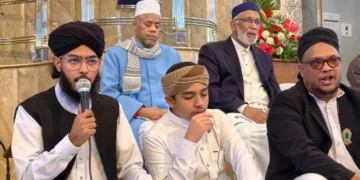

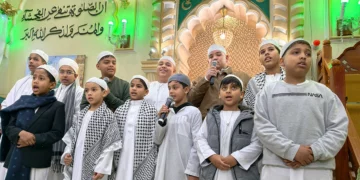



Shaykh Yusuf’s legacy bridges Cape Town and Indonesia, offering timeless lessons on Islamic ethics, knowledge, and spiritual resilience in a modern world.
By PROFESSOR ASLAM FATAAR
An oceanic inheritance and shared histories
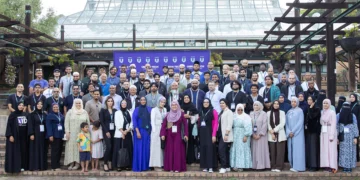
This article draws on a khutbah delivered at the Brawijaya University Masjid in Malang, Indonesia, on April 24, 2026.
The occasion opened a wider reflection across the Indian Ocean world. It brought into view a shared history that links Southeast Asia and the Cape of Good Hope through movement, learning, and ethical formation.
To stand in Malang as a Muslim from Cape Town is to sense a heroic and complex inheritance. Islam at the Cape is tied to Southeast Asian trajectories shaped by travel, scholarship, and at times forced displacement. It is also tied to other geographies including African continental and indigenous circulations, and Indian subcontinental and European human flows.
Among the most significant figures in this transoceanic circulation is Shaykh Yusuf al-Maqassari. Born in 1626 in Indonesia, he travelled in search of knowledge, including to the Hijaz. He was later exiled for his anti-colonial role by the Dutch colonial authorities to Sri Lanka and then to the Cape in 1694.
Shaykh Yusuf’s life stretches across regions and contexts. He carried learning, discipline, and spiritual practices across these spaces. At the Cape he gathered a community around remembrance, study, and ethical conduct.
His presence contributed to the early formation of Islam in South Africa. His life offers a steady orientation for living with faith and integrity during times of disruption.
Knowledge, reflection, and the work of depth
Being here in Indonesia opens a conversation for me about living Islamically in complex settings.
The Qurʾān offers a guiding frame. It speaks of ulū al-albāb, people of depth who recognise signs in the creation of the heavens and the earth and in the rhythm of night and day (Qurʾān 3:190–191). Their reflection leads to recognition, humility, and accountability. Their knowing carries ethical weight.
You may also want to read



This orientation speaks directly to the present. We live within expanding knowledge systems shaped by digital platforms and artificial intelligence. These developments widen access, support new forms of inquiry, and connect distant contexts. They also bring questions about the direction and purpose of knowledge.
The Qurʾān asks, ‘Are those who know equal to those who do not know?’ (Qurʾān 39:9). The question turns our attention to the quality of knowing. It invites reflection on forms of knowledge that elevate the human being and cultivate discernment, responsibility, and care.
Within the Islamic tradition, knowledge carries a formative role. The Prophetic teaching that knowledge grows through learning, and forbearance grows through practice, sets out a dual path. The intellect is shaped through study. The self is shaped through discipline. Knowing and becoming move together. This insight carries particular weight in a time of wide access to information and varied depth of engagement.
Iḥsān, adab, and ethical formation
Contemporary life moves at great speed. Communication flows quickly. Attention shifts rapidly. In this setting, the Qurʾānic call to become ulū al-albāb offers direction. It points to a way of living that brings together remembrance, reflection, and action. It encourages careful thought, measured engagement, and ethical awareness.
Educational institutions carry a vital responsibility within this landscape. They foster inquiry and open pathways for discovery. They also shape habits of thought and dispositions of the self.
Students benefit from wide engagement across fields. They also require the capacity to evaluate, to reflect, and to place knowledge within broader ethical horizons.
At the centre of this formation stand the concepts of iḥsān and adab. Iḥsān refers to beauty, excellence and proficiency grounded in awareness of Allah. It draws the believer toward attentiveness in intention and action.
Iḥsān nurtures an inner steadiness that guides conduct across settings. The Qurʾān speaks of being tested in the quality of one’s deeds (Qurʾān 67:2). This directs attention to the manner and purpose of action.
Adab provides a grammar for living. It shapes how one learns, speaks, and engages with others. It anchors knowledge in humility and care. Classical traditions place adab at the heart of learning. Through adab, knowledge becomes a source of illumination and guidance.
Forming conscience in a changing world
These ideas speak clearly to the present moment. Technologies associated with artificial intelligence process vast amounts of information and support new forms of interaction. Human beings carry responsibility for the use of these tools. Ethical judgment, intention, and accountability remain with the person.
The Prophetic teaching that one does not truly believe until one loves for others what one loves for oneself brings a relational ethic into focus. It draws attention to the dignity and well-being of others. It encourages care, responsibility, and a commitment to justice within everyday life.
The Qurʾān also draws attention to the human capacity to misread situations and to present harm in appealing terms: ‘When it is said to them, do not spread corruption on the earth, they say, we are only reformers’ (Qurʾān 2:11–12). This verse calls for attentiveness and discernment. It invites the cultivation of a conscience that is awake, reflective, and guided by ethical commitment.
Shaykh Yusuf’s life brings these strands together in a lived form. His journey shows how knowledge, discipline, and spiritual depth can be carried across contexts. His example encourages a steady approach to learning and living. It highlights the possibility of nurturing communities shaped by remembrance, study, and ethical practice.
Four hundred years later, his legacy remains a living resource. It invites reflection on how forms of knowledge can deepen, how character can be strengthened, and how faith can be carried with clarity. It encourages engagement with contemporary conditions through grounded principles and thoughtful practice.
The connection between Indonesia and the Cape on the African continent, in complex planetary times, continues as an ongoing conversation. It links past and present through shared histories and ethical commitments. It invites participation through learning, reflection, and action.
To take part in this conversation is to attend to the formation of conscience. It involves care for the inner life and attentiveness to the wider world. It calls for knowledge that guides, shapes, and orients. It opens a path toward living with depth, clarity, and purpose in changing times.
Prof Fataar is a Research Professor at Stellenbosch University. He is an adjunct professor at Brawijaya University. He visited Malang with his wife and daughter. He and his wife, Dr Najwa Norodien-Fataar, delivered addresses at the university’s summer school on education and the Sustainable Development Goals.