




Muslim Views
No Result
View All Result
  • News
    • All
    • Local
    • National
    • World
    Mowbray Cemetery elections: Competing narratives and an unverified candidate list

    Mowbray Cemetery elections: Competing narratives and an unverified candidate list

    New judge takes Mowbray Cemetery case as 53 nominees cleared for ballot

    New judge takes Mowbray Cemetery case as 53 nominees cleared for ballot

    Beyond charity: Rethinking the economic potential of waqf in South Africa

    Beyond charity: Rethinking the economic potential of waqf in South Africa

    Read our Moulood-un-Nabi edition online

    Read our Moulood-un-Nabi edition online

    Primary school nasheed competition rewards dedication

    Primary school nasheed competition rewards dedication

    Cape Town art exhibition explores untold histories through art and archives

    Cape Town art exhibition explores untold histories through art and archives

    Operation Ubuntu march calls for arrests and action against xenophobia

    Operation Ubuntu march calls for arrests and action against xenophobia

    Honouring our Huffadh as Cape Town celebrates guardians of the Qur’an

    Honouring our Huffadh as Cape Town celebrates guardians of the Qur’an

    Moslem Cemetery Board ordered to pay R250 000 after confidential bank review

    Moslem Cemetery Board ordered to pay R250 000 after confidential bank review

    Radio 786 launches inaugural Cape Town High School Quiz

    Radio 786 launches inaugural Cape Town High School Quiz

    • National
    • World
    • Local
  • Opinion
    • All
    • Columnists
    • Discussions with Dangor
    • Editorial
    • Guest Writer
    Another hatchet job on Choritz — but is this fair and balanced journalism?

    Another hatchet job on Choritz — but is this fair and balanced journalism?

    Reading the Prophet: knowing the sīrah, reading ourselves

    Reading the Prophet: knowing the sīrah, reading ourselves

    The immigration debate: class, race and South Africa’s unresolved crisis

    The immigration debate: class, race and South Africa’s unresolved crisis

    Moulood – When love stands

    Moulood – When love stands

    SADC’s “old wine in new bottles” model unlikely to transform political economy

    SADC’s “old wine in new bottles” model unlikely to transform political economy

    Independence interrupted: Pakistan’s unfinished passage from colony to country

    Independence interrupted: Pakistan’s unfinished passage from colony to country

    Keep your eyes on the victims of genocide, Mr President

    Keep your eyes on the victims of genocide, Mr President

    President Ramaphosa meeting IDF soldier’s family raises crucial questions

    President Ramaphosa meeting IDF soldier’s family raises crucial questions

    Mecca pact signals move against fading US security order

    Mecca pact signals move against fading US security order

    Dr Mofokeng goes out on top – despite attempts to distract her

    Dr Mofokeng goes out on top – despite attempts to distract her

  • Features
    • All
    • 1500 Years of Prophetic Legacy
    • AWQAF SA
    • General Features
    • Imam Haron
    • Tributes
    Reading the Prophet: knowing the sīrah, reading ourselves

    Reading the Prophet: knowing the sīrah, reading ourselves

    The living heritage of Moulood traditions at Zandvliet

    The living heritage of Moulood traditions at Zandvliet

    Ummah bids farewell to global luminary Pir Sayed Hasin ud Deen Shah (RA)

    Ummah bids farewell to global luminary Pir Sayed Hasin ud Deen Shah (RA)

    Marking 140 years since the closure of the Tana Baru

    Marking 140 years since the closure of the Tana Baru

    Abbas Rumaney remembered for his faith, wisdom, humour and generosity

    Abbas Rumaney remembered for his faith, wisdom, humour and generosity

    Grappling with Apartheid labels

    Grappling with Apartheid labels

    The scholar who refused to turn Islam into an enemy: The legacy of John Esposito

    The scholar who refused to turn Islam into an enemy: The legacy of John Esposito

    The greatest monuments are not in stone, but in lives transformed

    The greatest monuments are not in stone, but in lives transformed

    Legacy of educator Haji Mogamat Rashad Jedaar lives on

    Legacy of educator Haji Mogamat Rashad Jedaar lives on

    Reclaiming agency: From ritual to action Part 3

    Reclaiming agency: From ritual to action Part 3

    June 16, the Call of Islam, and the many rivers of liberation

    June 16, the Call of Islam, and the many rivers of liberation

    Reclaiming agency: From ritual to action Part 2

    Reclaiming agency: From ritual to action Part 2

    Reclaiming agency: From ritual to action Part 1

    Reclaiming agency: From ritual to action Part 1

    Goolam Hoosain Abed: The last of the famous sporting family departs

    Goolam Hoosain Abed: The last of the famous sporting family departs

    Abdullah Ibrahim crafted a magnificent new culture for South Africa

    Abdullah Ibrahim crafted a magnificent new culture for South Africa

  • Lifestyle
    • All
    • Arts
    • Books
    • Education
    • Food
    • Health
    • Motoring
    • Sport
    • Technology
    Reading the Prophet: knowing the sīrah, reading ourselves

    Reading the Prophet: knowing the sīrah, reading ourselves

    Cape Town art exhibition explores untold histories through art and archives

    Cape Town art exhibition explores untold histories through art and archives

    Choritz captures a fierce new dystopia in The Sound of Ice

    Choritz captures a fierce new dystopia in The Sound of Ice

    Languages of Care: Extending worship through art

    Languages of Care: Extending worship through art

    Cape Town musicians rally behind displaced Palestinian composer

    Cape Town musicians rally behind displaced Palestinian composer

    More than a game, or the Clash of Titans

    More than a game, or the Clash of Titans

    Help Ruqaya Ismail represent SA at the Commonwealth Fencing Championship

    Help Ruqaya Ismail represent SA at the Commonwealth Fencing Championship

    Goolam Hoosain Abed: The last of the famous sporting family departs

    Goolam Hoosain Abed: The last of the famous sporting family departs

    Abdeyah da Costa and the dihlīz of Dorp Street

    Abdeyah da Costa and the dihlīz of Dorp Street

    A mother’s taweez and the Cape’s interfaith traditions [+ video]

    A mother’s taweez and the Cape’s interfaith traditions [+ video]

  • Finance
    • All
    • Islamic Finance
    Beyond charity: Rethinking the economic potential of waqf in South Africa

    Beyond charity: Rethinking the economic potential of waqf in South Africa

    Islamic banking in South Africa: why interest-free finance matters

    Islamic banking in South Africa: why interest-free finance matters

    When AI becomes your financial adviser, who protects the vulnerable?

    When AI becomes your financial adviser, who protects the vulnerable?

    Why a professionally drafted will can better protect your family and legacy

    Why a professionally drafted will can better protect your family and legacy

    When the halal investment label becomes a weapon for financial deception

    When the halal investment label becomes a weapon for financial deception

    Don’t leave your family with your janazah and a legacy of problems

    Don’t leave your family with your janazah and a legacy of problems

    When Shariah-compliant investments finance oppression and injustice today

    When Shariah-compliant investments finance oppression and injustice today

    How Islamic finance is rebuilding Africa’s economic grid

    How Islamic finance is rebuilding Africa’s economic grid

    Islamic finance’s green promise for a sustainable future

    Islamic finance’s green promise for a sustainable future

    First Abu Dhabi Bank’s African opportunity could reshape Islamic finance

    First Abu Dhabi Bank’s African opportunity could reshape Islamic finance

  • Islam
    • All
    • Eid
    • Faith and Practice
    • Family
    • Hajj and Umrah
    • Moulood
    • Quran
    • Ramadaan
    Reading the Prophet: knowing the sīrah, reading ourselves

    Reading the Prophet: knowing the sīrah, reading ourselves

    The living heritage of Moulood traditions at Zandvliet

    The living heritage of Moulood traditions at Zandvliet

    Moulood – When love stands

    Moulood – When love stands

    Moulood-un-Nabi: A beacon of mercy, love and unyielding courage

    Moulood-un-Nabi: A beacon of mercy, love and unyielding courage

    When Sipho asked me to make duʿa

    When Sipho asked me to make duʿa

    A sound heart in a world of strangers

    A sound heart in a world of strangers

    Can our mosques become the heart of the Ummah?

    Can our mosques become the heart of the Ummah?

    Karbala – between obligation and inability

    Karbala – between obligation and inability

    16 June 1976: Qibla’s call to conscience

    Reclaiming our future – drawing lessons from Karbala and Soweto 1976

    Karbala, Gaza and xenophobia: Why history still matters today

    Karbala, Gaza and xenophobia: Why history still matters today

  • Archives
  • Donate
Muslim Views
  • News
    • All
    • Local
    • National
    • World
    Mowbray Cemetery elections: Competing narratives and an unverified candidate list

    Mowbray Cemetery elections: Competing narratives and an unverified candidate list

    New judge takes Mowbray Cemetery case as 53 nominees cleared for ballot

    New judge takes Mowbray Cemetery case as 53 nominees cleared for ballot

    Beyond charity: Rethinking the economic potential of waqf in South Africa

    Beyond charity: Rethinking the economic potential of waqf in South Africa

    Read our Moulood-un-Nabi edition online

    Read our Moulood-un-Nabi edition online

    Primary school nasheed competition rewards dedication

    Primary school nasheed competition rewards dedication

    Cape Town art exhibition explores untold histories through art and archives

    Cape Town art exhibition explores untold histories through art and archives

    Operation Ubuntu march calls for arrests and action against xenophobia

    Operation Ubuntu march calls for arrests and action against xenophobia

    Honouring our Huffadh as Cape Town celebrates guardians of the Qur’an

    Honouring our Huffadh as Cape Town celebrates guardians of the Qur’an

    Moslem Cemetery Board ordered to pay R250 000 after confidential bank review

    Moslem Cemetery Board ordered to pay R250 000 after confidential bank review

    Radio 786 launches inaugural Cape Town High School Quiz

    Radio 786 launches inaugural Cape Town High School Quiz

    • National
    • World
    • Local
  • Opinion
    • All
    • Columnists
    • Discussions with Dangor
    • Editorial
    • Guest Writer
    Another hatchet job on Choritz — but is this fair and balanced journalism?

    Another hatchet job on Choritz — but is this fair and balanced journalism?

    Reading the Prophet: knowing the sīrah, reading ourselves

    Reading the Prophet: knowing the sīrah, reading ourselves

    The immigration debate: class, race and South Africa’s unresolved crisis

    The immigration debate: class, race and South Africa’s unresolved crisis

    Moulood – When love stands

    Moulood – When love stands

    SADC’s “old wine in new bottles” model unlikely to transform political economy

    SADC’s “old wine in new bottles” model unlikely to transform political economy

    Independence interrupted: Pakistan’s unfinished passage from colony to country

    Independence interrupted: Pakistan’s unfinished passage from colony to country

    Keep your eyes on the victims of genocide, Mr President

    Keep your eyes on the victims of genocide, Mr President

    President Ramaphosa meeting IDF soldier’s family raises crucial questions

    President Ramaphosa meeting IDF soldier’s family raises crucial questions

    Mecca pact signals move against fading US security order

    Mecca pact signals move against fading US security order

    Dr Mofokeng goes out on top – despite attempts to distract her

    Dr Mofokeng goes out on top – despite attempts to distract her

  • Features
    • All
    • 1500 Years of Prophetic Legacy
    • AWQAF SA
    • General Features
    • Imam Haron
    • Tributes
    Reading the Prophet: knowing the sīrah, reading ourselves

    Reading the Prophet: knowing the sīrah, reading ourselves

    The living heritage of Moulood traditions at Zandvliet

    The living heritage of Moulood traditions at Zandvliet

    Ummah bids farewell to global luminary Pir Sayed Hasin ud Deen Shah (RA)

    Ummah bids farewell to global luminary Pir Sayed Hasin ud Deen Shah (RA)

    Marking 140 years since the closure of the Tana Baru

    Marking 140 years since the closure of the Tana Baru

    Abbas Rumaney remembered for his faith, wisdom, humour and generosity

    Abbas Rumaney remembered for his faith, wisdom, humour and generosity

    Grappling with Apartheid labels

    Grappling with Apartheid labels

    The scholar who refused to turn Islam into an enemy: The legacy of John Esposito

    The scholar who refused to turn Islam into an enemy: The legacy of John Esposito

    The greatest monuments are not in stone, but in lives transformed

    The greatest monuments are not in stone, but in lives transformed

    Legacy of educator Haji Mogamat Rashad Jedaar lives on

    Legacy of educator Haji Mogamat Rashad Jedaar lives on

    Reclaiming agency: From ritual to action Part 3

    Reclaiming agency: From ritual to action Part 3

    June 16, the Call of Islam, and the many rivers of liberation

    June 16, the Call of Islam, and the many rivers of liberation

    Reclaiming agency: From ritual to action Part 2

    Reclaiming agency: From ritual to action Part 2

    Reclaiming agency: From ritual to action Part 1

    Reclaiming agency: From ritual to action Part 1

    Goolam Hoosain Abed: The last of the famous sporting family departs

    Goolam Hoosain Abed: The last of the famous sporting family departs

    Abdullah Ibrahim crafted a magnificent new culture for South Africa

    Abdullah Ibrahim crafted a magnificent new culture for South Africa

  • Lifestyle
    • All
    • Arts
    • Books
    • Education
    • Food
    • Health
    • Motoring
    • Sport
    • Technology
    Reading the Prophet: knowing the sīrah, reading ourselves

    Reading the Prophet: knowing the sīrah, reading ourselves

    Cape Town art exhibition explores untold histories through art and archives

    Cape Town art exhibition explores untold histories through art and archives

    Choritz captures a fierce new dystopia in The Sound of Ice

    Choritz captures a fierce new dystopia in The Sound of Ice

    Languages of Care: Extending worship through art

    Languages of Care: Extending worship through art

    Cape Town musicians rally behind displaced Palestinian composer

    Cape Town musicians rally behind displaced Palestinian composer

    More than a game, or the Clash of Titans

    More than a game, or the Clash of Titans

    Help Ruqaya Ismail represent SA at the Commonwealth Fencing Championship

    Help Ruqaya Ismail represent SA at the Commonwealth Fencing Championship

    Goolam Hoosain Abed: The last of the famous sporting family departs

    Goolam Hoosain Abed: The last of the famous sporting family departs

    Abdeyah da Costa and the dihlīz of Dorp Street

    Abdeyah da Costa and the dihlīz of Dorp Street

    A mother’s taweez and the Cape’s interfaith traditions [+ video]

    A mother’s taweez and the Cape’s interfaith traditions [+ video]

  • Finance
    • All
    • Islamic Finance
    Beyond charity: Rethinking the economic potential of waqf in South Africa

    Beyond charity: Rethinking the economic potential of waqf in South Africa

    Islamic banking in South Africa: why interest-free finance matters

    Islamic banking in South Africa: why interest-free finance matters

    When AI becomes your financial adviser, who protects the vulnerable?

    When AI becomes your financial adviser, who protects the vulnerable?

    Why a professionally drafted will can better protect your family and legacy

    Why a professionally drafted will can better protect your family and legacy

    When the halal investment label becomes a weapon for financial deception

    When the halal investment label becomes a weapon for financial deception

    Don’t leave your family with your janazah and a legacy of problems

    Don’t leave your family with your janazah and a legacy of problems

    When Shariah-compliant investments finance oppression and injustice today

    When Shariah-compliant investments finance oppression and injustice today

    How Islamic finance is rebuilding Africa’s economic grid

    How Islamic finance is rebuilding Africa’s economic grid

    Islamic finance’s green promise for a sustainable future

    Islamic finance’s green promise for a sustainable future

    First Abu Dhabi Bank’s African opportunity could reshape Islamic finance

    First Abu Dhabi Bank’s African opportunity could reshape Islamic finance

  • Islam
    • All
    • Eid
    • Faith and Practice
    • Family
    • Hajj and Umrah
    • Moulood
    • Quran
    • Ramadaan
    Reading the Prophet: knowing the sīrah, reading ourselves

    Reading the Prophet: knowing the sīrah, reading ourselves

    The living heritage of Moulood traditions at Zandvliet

    The living heritage of Moulood traditions at Zandvliet

    Moulood – When love stands

    Moulood – When love stands

    Moulood-un-Nabi: A beacon of mercy, love and unyielding courage

    Moulood-un-Nabi: A beacon of mercy, love and unyielding courage

    When Sipho asked me to make duʿa

    When Sipho asked me to make duʿa

    A sound heart in a world of strangers

    A sound heart in a world of strangers

    Can our mosques become the heart of the Ummah?

    Can our mosques become the heart of the Ummah?

    Karbala – between obligation and inability

    Karbala – between obligation and inability

    16 June 1976: Qibla’s call to conscience

    Reclaiming our future – drawing lessons from Karbala and Soweto 1976

    Karbala, Gaza and xenophobia: Why history still matters today

    Karbala, Gaza and xenophobia: Why history still matters today

  • Archives
  • Donate
Muslim Views
Advertisement

Tea, smiles, and red lines: The real Iran–Pakistan story

13 August 2025
in OPINION
Reading Time: 6 mins read
A A
Tea, smiles, and red lines: The real Iran–Pakistan story

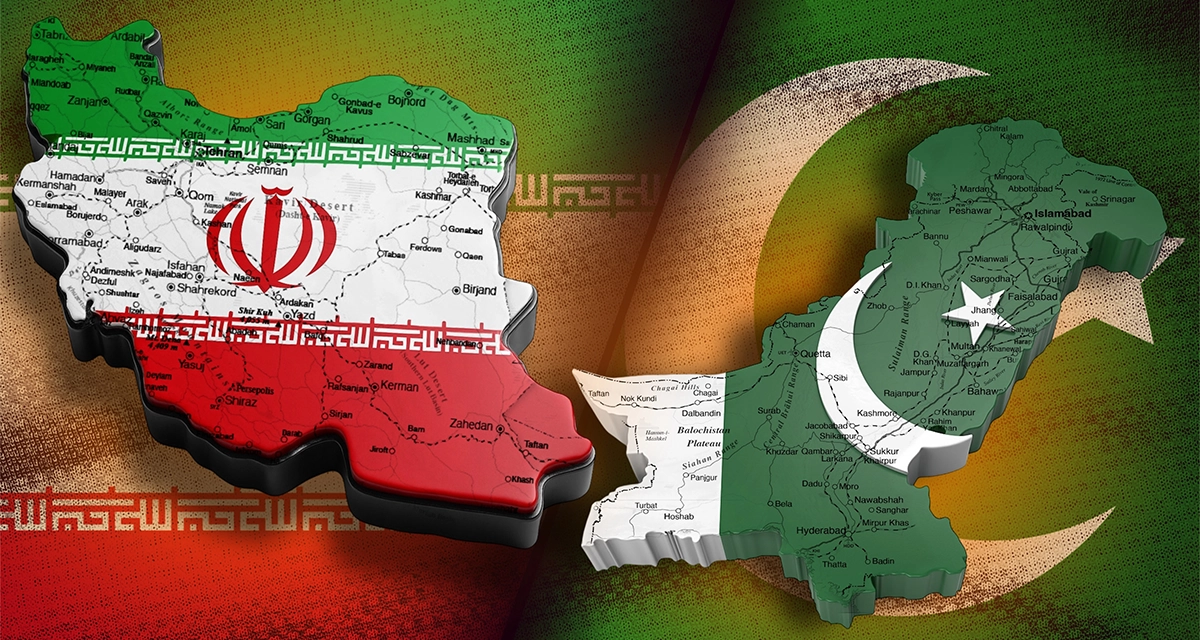
Behind the smiles and handshakes about enhancing trade, the real conversation between Pakistan and Iran is about security. (Photo: Shutterstock)

Share on TwitterShare on FacebookShare on Whatsapp

For all the lofty talk of Muslim unity, the Iran–Pakistan relationship has never been about unshakable brotherhood. It has been about managing proximity. Both sides understand the risks of alienating the other, but neither forgets the history of mistrust.

By JUNAID S. AHMAD

If you ever want to know what two countries really care about, don’t listen to the speeches. Watch what words they never quite say alone.

In the case of Iran and Pakistan, one word keeps showing up as part of a suspiciously inseparable duo: ‘trade and security’. And when ‘security’ is always lurking right behind ‘trade’, it’s a fair bet that commerce is not the real driver.

On paper, the relationship between Tehran and Islamabad should be one of the Muslim world’s great alliances. Two large Muslim nations, sharing a border of nearly 900 kilometres, facing similar economic challenges, and possessing overlapping cultural and religious ties. In reality, their history has been a masterclass in polite distance, occasional suspicion, and the kind of neighbourly ‘cooperation’ that tends to happen only when there’s a common problem to solve — or a common threat to avoid.

Yet, in recent months, observers have noticed something strange: Pakistan’s most pro-Washington military regime in years, led by Chief of Army Staff (COAS) General Asim Munir, has been exchanging warm smiles with the Islamic Republic of Iran. In February, Iran voiced strong solidarity with Pakistan during its border tensions with India. In April, Pakistan loudly condemned Israel’s 12-day military assault on Iran. To the casual observer, this might look like a long-overdue brotherly embrace.

It is not.

A relationship built on sand

To understand why, we have to go back to 1979 — the year that changed the Middle East and South Asia in ways still playing out today. Iran’s Islamic Revolution toppled the Shah, infuriated Washington, and created a Shia theocracy with a revolutionary ideology. Almost immediately, Saudi Arabia — America’s indispensable ally in the Gulf and the self-appointed defender of Sunni Islam — began countering Iran’s influence by funding Sunni religious movements across the Muslim world.

Pakistan, for its part, became one of the key battlegrounds in this Saudi-Iranian rivalry. While Islamabad officially maintained good relations with both Riyadh and Tehran, the reality on the ground was more complicated — and bloodier.

By the early 1990s, Pakistan was suffering from a surge in sectarian violence. Extremist Sunni groups, many with Saudi funding, targeted Shia communities. Iran, in turn, was accused of backing Shia militant groups in Pakistan. The ‘brotherhood’ narrative looked increasingly like a polite fiction masking a dangerous proxy war being fought on Pakistani soil.

The result was thousands of lives lost, an erosion of social trust, and a hardening of sectarian divides that still fester today. Whatever ‘warm’ relations existed between Islamabad and Tehran were almost always transactional — tied to moments when the two countries needed each other for security reasons, not because of some shared vision of Muslim unity.

Then Prime Minister of Pakistan, Imran Khan (left), in a meeting with Iran’s Supreme Leader, Sayyid Ali Khamenei, on April 22, 2019. The writer points out that Imran Khan ‘saw Iran as a crucial partner in that vision, particularly in breaking free from what he viewed as the stifling dominance of Washington and the Gulf monarchies over Pakistan’s foreign policy.’ (Photo: https://farsi.khamenei.ir/ via Wikimedia Commons)

The Imran Khan interlude

When Imran Khan became prime minister in 2018, he made no secret of his desire to uphold the nation’s sovereignty, to advance social justice, the rule of law, and human rights, and to have Pakistan be a part of a Muslim renaissance. He saw Iran as a crucial partner in that vision, particularly in breaking free from what he viewed as the stifling dominance of Washington and the Gulf monarchies over Pakistan’s foreign policy.

But Khan’s tenure coincided with intense regional turbulence: the US withdrawal from the Iran nuclear deal in 2018, the assassination of Iranian General Qassem Soleimani by an American drone in January 2020, and escalating US–Iran tensions in the Persian Gulf. While Khan managed to improve atmospherics with Tehran, his broader regional vision was cut short by his ouster in April 2022 — a move widely seen as a Washington-backed regime change operation orchestrated by Pakistan’s powerful military establishment, which had grown uncomfortable with his independent streak.

You may also want to read

Thank you, Israel, for overplaying the empire’s hand

Thank you, Israel, for overplaying the empire’s hand

25 June 2026
Iran – an Islamic revolution and an Islamic Republic: beyond the ‘regime’ narrative

Iran – an Islamic revolution and an Islamic Republic: beyond the ‘regime’ narrative

15 April 2026
The spectacle of moral hypocrisy: When America condemns South Africa

The spectacle of moral hypocrisy: When America condemns South Africa

28 August 2025
Muslims are rallying around the climate emergency

Muslims are rallying around the climate emergency

30 May 2023 - Updated on 28 August 2024
Will the US use the Hague Invasion Act to rescue Netanyahu and Gallant?

Will the US use the Hague Invasion Act to rescue Netanyahu and Gallant?

20 June 2024 - Updated on 28 August 2024
Remembering the twins Asser and Ayssel

Remembering the twins Asser and Ayssel

19 November 2024 - Updated on 20 November 2024

Enter General Asim Munir, a man far more comfortable in Washington’s orbit, yet — paradoxically — now the one clinking tea cups with Iranian officials.

The real agenda: Security

The smiles, the handshakes, the press conferences about ‘enhancing bilateral trade’ — all make for pleasant optics. But the real conversation is about security, and both sides know it.

Iran’s position is straightforward, and it has been repeated in various forms for decades: stay out of our fights with the US and Israel, keep American and allied military activity off your soil, and don’t let your territory be used for subversive operations against us.

This is not an abstract concern. Tehran remembers very clearly how Washington, particularly in the 2000s, used Pakistan’s Balochistan province as a launchpad for anti-Iranian operations. These included support for Iranian Baloch separatists, covert backing of the Mojahedin-e-Khalq (MEK), and other militant outfits eager to cause trouble inside Iran.

The irony, of course, is that some of these same networks later turned their sights on Pakistan itself. After 9/11, as the US military footprint in Afghanistan expanded, Baloch separatists and other armed groups became useful tools not just for pressuring Iran, but also for destabilising Pakistan when Washington wanted to exert leverage.

Iran has long been aware of the double game. And while Tehran is pragmatic enough to maintain relations with Islamabad even under pro-US leadership, it also has red lines. As one senior Iranian official reportedly told Pakistani counterparts during the recent delegation visit:

‘We want a very good relationship with Pakistan. But if Pakistan restarts cooperation with the US in subversive activities from Balochistan, Iran will make Balochistan a nightmare for Pakistan.’

Balochistan: The powder keg no one Can ignore

Balochistan, which makes up almost half of Pakistan’s landmass but has less than 6% of its population, is a perpetual headache for Islamabad. The province is resource-rich — with vast reserves of natural gas, minerals, and a strategic coastline — yet remains the country’s most underdeveloped and politically alienated region.

Contrary to popular perception, the majority of Balochistan’s population is actually Pashtun, not Baloch. But it is the Baloch nationalist insurgency, fuelled by decades of economic neglect and heavy-handed military operations, that dominates headlines.

From Iran’s perspective, Balochistan is a shared vulnerability. Iran’s own Sistan-Baluchestan province, bordering Pakistani Balochistan, has faced attacks from Sunni militant groups that Tehran accuses of being armed and funded by foreign powers — often via Pakistani territory.

For Pakistan’s military regime, however, the problem is compounded by the fact that they are fighting on multiple fronts: Baloch separatists, the Pakistani Taliban (TTP), and other insurgent or terrorist groups. Yet — in a twist that would be comical if it weren’t so damaging — a staggering portion of the country’s intelligence resources is currently devoted not to counter-insurgency, but to monitoring and suppressing anti-Munir and pro-Imran Khan material on social media. One imagines the Pakistani taxpayer might be slightly irritated when their hard-earned rupees are being spent to monitor comments and ‘likes’ on Facebook and TikTok.

Why now?

The sudden uptick in Iran–Pakistan engagement is not happening in a vacuum. The Middle East is on edge. The Gaza genocide has dragged on, Iran and Israel are trading increasingly direct blows, and the US has repositioned forces across the Gulf. Tehran is making it clear to all regional actors that if war with Israel and the US breaks out, it will not tolerate neighbouring countries — especially those with US military ties — being used as staging grounds.

General Munir’s Pakistan might be happy to nod along to Washington when convenient, but the last thing the military establishment wants is an open conflict with Iran — particularly when the country is already politically unstable, economically strained, and facing internal security crises.

Pakistan, with its long border with Iran and history of serving as a covert corridor for foreign intelligence operations, is high on Tehran’s watch list. General Munir’s Pakistan might be happy to nod along to Washington when convenient, but the last thing the military establishment wants is an open conflict with Iran — particularly when the country is already politically unstable, economically strained, and facing internal security crises.

Thus, the ‘trade talks’ and ‘joint projects’ being announced with such fanfare are less about economic integration than they are about confidence-building — a diplomatic insurance policy to keep Pakistan off Iran’s target list if the region ignites.

The mirage of brotherhood

For all the lofty talk of Muslim unity, the Iran–Pakistan relationship has never been about unshakable brotherhood. It has been about managing proximity. Both sides understand the risks of alienating the other, but neither forgets the history of mistrust. Iran knows Pakistan’s military has deep ties to Washington and Riyadh. Pakistan knows Iran has cultivated networks inside its borders that could cause trouble if unleashed.

And so, we have the carefully choreographed dance: smiling photo-ops, communiqués about trade corridors and energy cooperation, and an unspoken agreement that the real conversation — about red lines, insurgents, and covert operations — stays behind closed doors.

The ending no one will say out loud

Diplomats will keep talking about ‘enhancing bilateral trade’ because it’s the safe script. But beneath the surface, Iran is buying insurance, and Pakistan is trying to avoid opening yet another front in its already sprawling security crisis.

The truth is that in the geopolitics of this region, ‘brotherhood’ is often a mirage shimmering above the desert. Up close, it’s just the harsh terrain of mutual suspicion, historical grievance, and pragmatic calculation.

The Pakistani military regime might think it can balance Washington’s expectations with Tehran’s warnings. But as history has shown — from the sectarian bloodshed of the 1990s to the shadow wars in Balochistan — when you try to serve two ‘mafia dons’ in this part of the world, both will eventually want proof of loyalty.

And when that day comes, ‘trade’ will be the last thing on anyone’s mind.

Professor Junaid S. Ahmad teaches Law, Religion, and Global Politics and is the Director of the Centre for the Study of Islam and Decolonisation (CSID), Islamabad, Pakistan. He is a member of the International Movement for a Just World (JUST – https://just-international.org), Movement for Liberation from Nakba (MLN – https://nakbaliberation.com), and Saving Humanity and Planet Earth (SHAPE –https://www.theshapeproject.com/)

Subscribe to our Newsletters

* indicates required
Choose the newsletters you'd like to receive
Advertisement

You may also want to read

Another hatchet job on Choritz — but is this fair and balanced journalism?
OPINION

Another hatchet job on Choritz — but is this fair and balanced journalism?

21 August 2026
Reading the Prophet: knowing the sīrah, reading ourselves
Books

Reading the Prophet: knowing the sīrah, reading ourselves

21 August 2026
The immigration debate: class, race and South Africa’s unresolved crisis
OPINION

The immigration debate: class, race and South Africa’s unresolved crisis

20 August 2026
Moulood – When love stands
OPINION

Moulood – When love stands

19 August 2026
SADC’s “old wine in new bottles” model unlikely to transform political economy
OPINION

SADC’s “old wine in new bottles” model unlikely to transform political economy

17 August 2026
Independence interrupted: Pakistan’s unfinished passage from colony to country
OPINION

Independence interrupted: Pakistan’s unfinished passage from colony to country

15 August 2026 - Updated on 17 August 2026
August 2026

August 2026

FILE SIZE : 15 MB
Download
Advertisement

Latest News

Another hatchet job on Choritz — but is this fair and balanced journalism?

21 August 2026

Mowbray Cemetery elections: Competing narratives and an unverified candidate list

21 August 2026

Reading the Prophet: knowing the sīrah, reading ourselves

21 August 2026

The living heritage of Moulood traditions at Zandvliet

20 August 2026

The immigration debate: class, race and South Africa’s unresolved crisis

20 August 2026

Moulood – When love stands

19 August 2026
Advertisement
Advertisement
Next Post
Awqaf SA’s maths workshops reaching out to the Cape Flats

Awqaf SA’s maths workshops reaching out to the Cape Flats

Al Jama-ah celebrates ‘heroines of change’ at Bonteheuwel Women’s Day event

Al Jama-ah celebrates ‘heroines of change’ at Bonteheuwel Women’s Day event

The battle for student representation: Winning the ideas and the SRC to transform our campuses

The battle for student representation: Winning the ideas and the SRC to transform our campuses

Anas al-Sharif

Israel’s assault on journalism — and the complicity that enables it

ABOUT MUSLIM VIEWS
About Us
Archives
Terms & Conditions
Privacy Policy
Contact Us
Donate to Muslim Views
NEWS
Local
National
World
OPINION
Columnists
Discussion with Dangor
Editorial
Guest Writers
FEATURES
AWQAF SA
Imam Haroon
Tributes
FINANCE
Islamic Finance
ISLAM
Eid
Faith and Practice
Family
Hajj and Umrah
Moulood
Quraan
Ramadaan
FEATURES
Arts
Books
Education
Food
Health
Motoring
Sport
Technology

© Muslim Views 2026. All Rights Reserved

Design by: theimagehouse

Loading...
No Result
View All Result
  • NEWS
    • Local
    • National
    • World
  • OPINION
    • Columnists
    • Discussions with Dangor
    • Editorial
    • Guest Writer
  • FEATURES
    • AWQAF SA
    • Imam Haron
    • Tributes
    • 1500 Years of Prophetic Legacy
  • LIFESTYLE
    • Arts
    • Books
    • Education
    • Food
    • Health
    • Motoring
    • Sport
    • Technology
  • FINANCE
    • Islamic Finance
  • ISLAM
    • Eid
    • Faith and Practice
    • Family
    • Hajj and Umrah
    • Moulood
    • Quran
    • Ramadaan
  • ARCHIVES
  • DONATE