





















![The market-builder who restrained the market [Part 2]](https://muslimviews.co.za/wp-content/uploads/2026/08/PHOTO-2026-08-25-17-16-32-360x180.jpg)
![The merchant preceding the Prophetic mission [Part 1]](https://muslimviews.co.za/wp-content/uploads/2026/08/01-360x180.jpg)


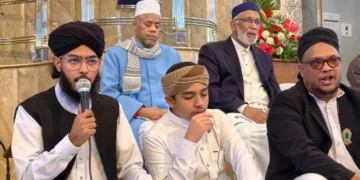
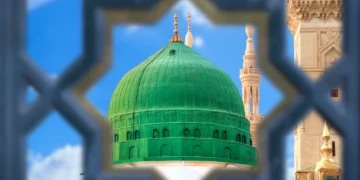
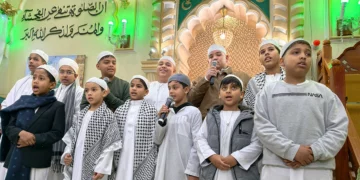




To speak of Prophet Muhammad ﷺ after 1500 years is to describe a caravan of love spanning from time immemorial to eternity… Be instruments of His love and mercy and follow the one Rahmatun lil-alameen.
By MOGAMAT REDERWAAN CRAAYENSTEIN
I am writing a few lines about Allah and the Prophet of Allah ﷺ. I beg the readers to take their time to go through these lines. I read in Muslim Views that there is a planned 1500-year commemoration of the Prophet of Allah ﷺ.
I draw upon a few threads from the Quran and hadith, the sunnah and sirah, and then I try to weave a tapestry of perhaps how to be in the world. I utilise al-Asma al-Husna from the Quran, regular hadith from sahih sources, and the Hadith Qudsi as I construct my argument. The numbers in brackets are the surah and the verse.
I suggest that we take the different elements I present, build a framework, and examine ourselves and the world. Then ask big questions.
To make sense of this, one needs to be in a group discussion and read the text line by line. Open the Quran and hadith (try Quran.com and Sunnah.com) to see the references and read them slowly. Our collective condition is so bad that quick replies in an online chat group are unhelpful. I apologise for sometimes appearing to be technical.
Further preliminary remarks concern the Islamic intellectual tradition. This is generally divided into two areas: naqli (revealed transmitted sciences) and aqli (human, rational sciences). The former includes studies of the Quran, hadith, fiqh, tawhid, hifdh of the Quran, and Quranic Arabic. The latter covers philosophy, logic, astronomy, and mathematics. In the former, taqlid of the ulama is required; in the latter, tahqiq is essential. Tahqiq makes the journey personal; it cannot be delegated to others, not even to ulama. Fatwas, and quotes from books by ulama, are irrelevant in this context. This article utilises naqli materials, but the intellectual journey is tahqiq. Tahqiq relates to our understanding of Allah, the universe, and ourselves.
Threads to mend a broken world
These are ideas for a world that has fallen into chaos. War and hatred are widespread. Two billion Muslims see themselves as the best of people; they are no exception because they do not meet the prerequisites for being the best (Quran, 3:110; 49:13). Enjoining what is right and forbidding what is wrong requires Muslims to care about themselves and the state of the world. One can say that two billion Muslims are almost irrelevant to changing how the world operates. These reflections may serve as a refuge from our brokenness and indifference. Time seems to slow down when we reflect on ourselves in light of the questions posed by Allah and His Messenger. We are born as human beings. To be human is different; it is shaped by the ideas that follow.

Call me Allah or al-Rahman (Quran, 17:110). In this ayah of the Quran, Allah refers to Himself as both Allah and Al-Rahman. In Surah Maryam, He refers to Himself as al-Rahman five times. In Islamic intellectual tradition, Allah is al-Ismu al-jam’u, the name that encompasses all His 99 Names (Quran, 7:180; 20:8; 59:24). There is an interchangeability between Allah and Al-Rahman as names. Being Merciful is fundamental to being Allah. There is no Allah without His being Merciful. How does it feel when one whispers the name of Allah as al-Rahman and al-Rahim? Does this influence how we perceive ourselves?
My Mercy encompasses everything (Quran, 7:156). My mercy precedes my wrath (https://sunnah.com/bukhari:7453; https://sunnah.com/ibnmajah:189; https://sunnah.com/muslim:2751b)
Mercy is not an add-on in the world of beings other than He. It is part of the fabric of the worlds. Without al-Rahman and His Mercy, there is nothing but Him. Even then, Rahma remains standing when all is gone. Only His Face, His Rahma remains (Quran, 28:88).
Allah has prescribed for Himself to be merciful (Quran, 6:12; 6:54). Allah has placed upon Himself a duty to be merciful. In the world, He positions His Mercy between human actions and retribution and justice for those actions. His mercy indeed encompasses everything, especially man in his wretchedness.
‘I was a hidden treasure, and I loved to be recognised. So, I created the creations so that I would be known’ (Hidden Mystery Hadith). This is the Hadith Qudsi, which lacks the traditional sources for verification of hadiths in the six books generally accepted as authentic, such as Bukhari. Muslims recognised Kutub al-Sittah as the genuine books of hadith until Shaykh Albani arrived. I am aware of the criticisms of Ibn Taymiyya and Ibn Hajar regarding hadith al-Qudsi. I am also mindful of critiques and authentic hadith from the Sahaba and Tabi’un (followers). I understand Ilm Riwayat al-hadith (science of hadith narration) and Ilm al-jarh wa’l ta’dil (criticism of reporters). Before we get carried away, it should be noted that the first collection of hadith occurred in the second century, that is, more than 100 years after the death of the Prophet ﷺ. Sayyiduna Abu Bakr destroyed about five hundred hadiths, fearing there might be errors in recording the Prophet’s words. Sayyiduna Umar opposed the collection of hadiths because he feared that hadiths could undermine the authority of the Quran. Therefore, in the first hundred years after the Prophet’s death, hadith collections were forbidden. Shaykh Albani, bless him, was a scholar with whom one can agree or disagree. He shook the foundations of the field of hadith study. He did not just say, ‘This is what the earlier ulama said’; that courage is needed.
The Hidden Mystery Hadith first appeared in Tabaqat al-Sufiyya, a work by Shaykh Abdullah Ansari, a renowned Hanbali scholar of hadith and tafsir with Sufi tendencies. This combination should make many sit up and pay attention.
The earliest written Sufi texts date back approximately 300 years after the Prophet’s death. The earlier Sufis did not author books; instead, they concentrated on living pious lives and guiding their students and followers on how to become salihoon and muttaqoon. Rabia al-Addawiyya and Hasan al-Basri are among this group. Abdullah Ansari, Ayn al-Qudat, and Abdul Qadir Gilanai are among the Sufis from the 5th and 6th centuries AH. In the following century, Ibn Al-Arabi and Moulana Jalal ad-Din Rumi further developed the Sufi path. For all these Sufi teachers, recording a Hanbali hadith and a tafsir scholar’s work on this Hadith of the Hidden Mystery holds great significance.
Dr Moeen Afnani completed a PhD thesis on this very hadith. This means he spent at least three years investigating this single hadith within the classical tradition. I followed the twists and turns of the arguments for and against. Therefore, simply copying and pasting what this or that scholar says (it is all available online) to dismiss the hadith will not suffice. I trust the person who completed the PhD, the world’s expert on this hadith.
We claim He is Most Merciful, yet we who serve Him are often filled with hatred. If we have doubts, just look at Syria, Iraq, Libya, and Afghanistan as failed states. Observe the frontline Arab countries and Turkey. Which of them shows mercy towards Palestinians?
The core message of the prophets in the Quran is that Allah is the greatest. He is above everything that is not Him. What many overlook is His Mercy. We claim He is Most Merciful, yet we who serve Him are often filled with hatred. If we have doubts, just look at Syria, Iraq, Libya, and Afghanistan as failed states. Observe the frontline Arab countries and Turkey. Which of them shows mercy towards Palestinians? Israel is a problem, but it is not the only one. Our apathy towards human suffering and our complicity with those who commit violence reveal where we stand. Every day, Muslim leaders condemn Israel. Yet, behind the scenes, they support Israel. In the Middle East and North Africa (MENA) region, over 500 million people live there, most of whom are Muslims. Worldwide, there are two billion Muslims, yet none of them can prevent Israel.
Mercy exists between action and retribution. His Mercy precedes His righteous anger and encompasses all things. He sent messengers and prophets as examples of His Mercy. Allah cares about His creation. He is slow to punish, quick to forgive sins, and overwhelmingly Merciful. Allah cares about His creations, and the only creation for which He uses the word love is man. Why are we unable to heal the pain among Muslims? Palestinians are being genocidally wiped out in front of us.
We understand Allah as al-Rahman, whose mercy precedes His righteous anger. His mercy encompasses everything, and He makes it incumbent upon Himself to be Merciful (Quran, 6:54; 6:12). He creates everything other than Himself out of His Love. At first glance, these concepts are straightforward to understand. In Arabic, these lines are not difficult to read and translate. However, we can make the obvious profoundly cognitively opaque. Sometimes, in our intellectual history – whether Ash’ari or Mu’tazili – the debate centres on Allah’s Omnipotence and Justice. The Sufis shifted from austerity to love. We often lose sight of Allah, who is Merciful, Loving, Latif (Kind, Gentle), and Halim (Patient, Understanding). Allah cares about and is concerned with the destiny of humanity.
Some people in Cape Town are reading Al-Asma al-Husna with an unparalleled melody, unmatched anywhere in the world. The same beauty will not move others; they will be enraged by alleged bid’at.
Love (Hadith of Hidden Mystery) is the creative force to bring the worlds (angels, jinn, man, earth, heavens and graves/ barzakh) from non-existence into existence. It drives the change of contingent beings (those for whom both existence and non-existence are possible) from non-being into being. This sustains them is Rahma (His Mercy), which encompasses everything that exists.
Created in love, sustained by mercy
The 99 names of Allah (Quran, 7:180). These are the only ways through which we understand anything about Him. For nothing is like Him (Quran, 42:11; 112:4). No vision (concepts, understandings) can fully grasp Him (Quran, 6:103). He calls Himself al-Rahman and al-Rahim. In the Islamic intellectual tradition, al-Rahman signifies His unconditional love for all that exists apart from Him, the love that sustains contingent beings. Without the rahma of al-Rahim, created beings would revert to non-being. Al-Rahim represents His guiding love for created beings as we move from Him and return to Him (Quran, 26:50; 2:156). Everything will end except His Face (Quran, 28:88). Everything will end, and His Mercy shall remain, for it encompasses everything.
Rabb al-Alameen
The word al-Alameen appears 73 times in the Quran. From Surah Fatiha, we learn that Allah is Rabb al-Alameen, the Lord of all the worlds (all other than Him). This includes all worlds, from the physical to the spiritual: al-Dunya (this world), al-Akhira (the last world), al-Ard (earth), al-Samaa (heaven), and al-Barzakh (the grave). But He encompasses all (Quran, 4:126; 41:54). Wherever we look, we see His Face, an embodiment of His presence (Quran, 2:256). Everywhere we look, there are His ayat (Quran, 2:256). His Ayat are His Names, especially His Mercy, which encompasses everything. The word ayah appears over 400 times in the Quran. The question is, do we see, and does everything make tasbih to Him (Quran, 57:1; 59:1), does everything make sujud (Quran, 22:18; 13:15; 3:83). The question remains, do we see when we look, do we hear, do we notice minor signs, ayat of Him (azza wa jall). What is happening if we look and cannot see His ayats? Are we blind to His Mercy? Are we deaf to the call to be instruments of His Mercy?
He sent messengers, as al-Rahim, to teach humanity how to live in response to the questions posed by the Necessary, Transcendent, and Absolute Being of us contingent beings, who were brought from non-existence into existence. Al-Rahman is His creative mercy. Al-Rahim is His guiding mercy.
Rahmatun lil-alameen
Allah, al-Rahman and al-Rahim, whose Rahma underpins everything created, is Rabb al-’alamin, and He sends Prophet Muhammad ﷺ as a mercy to the worlds – rahmatun lil-alameen (Quran, 21:107). Al-Rahim guides all created beings on the journey back to Him. To that end, He has sent messengers to every nation. Prophet Muhammad ﷺ is sent as a mercy to the worlds, an ayah of His Rahma, so that all beings return to their true selves in obedience to His commands on how to live in the world. His Mercy precedes His anger (Quran, 19:93; 7:156).
Prophet Muhammad ﷺ did not invite people only to do’s, don’ts, and laws, with a severity and sternness that could only drive them away. He urged them to love, and the reward for love is love in return (Quran, 3:31). To love Allah requires that one follow the Prophet ﷺ. In return, Allah will love those who do so. The reward for our love is His Love. Living life as abidoon (one who serves Him), muttaqoon (one who lives answerable to Him) cannot be done as a result of coercion or fear. It is just too hard. Only love can sustain that commitment. Love Him, follow Him, and be Loved By Him is the way.
To love and be loved requires inner beauty. That is why love is not based on physical acts but on an inner life, an inner world. He ﷺ encouraged people to aspire to different things, desire more than they are, and long for what is in harmony with eternity (the akhira is the horizon, the criterion by which we judge ourselves). It was an invitation from ugliness to beauty, from hatred to love. What needs to change, through his da’wah, is what is known in the Islamic intellectual tradition as al-takhalluq bi akhlaqillahi, to develop an akhlaq (ways and habits) shaped by the 99 names of Allah (Quran, 7:180). Umm al-Mu’mineen Ayesha said that the akhlaq of the Prophet ﷺ was the Quran itself (https://sunnah.com/mishkat:1257; https://sunnah.com/muslim:746a). Let our character and adab be shaped, guided, and grounded by the Quran. With His Beautiful Names (Al-Asma al-Husna), we seek to continually remake ourselves (al-takhalluq bi akhlaqillahi) as a response to His questions, returning to Him.
In another hadith, we learn that Allah is beautiful, and He loves beauty. https://sunnah.com/muslim:91a We also know that He created man in the most attractive form (Quran, 95:4). When man is adorned with a balance of al-Asma al-Husna, man fulfils the potential of being al-Insan al-Kamil, khalifatullah fil-ard. Ta’alluh is to make real in oneself that which has been made possible by the Divine.
This is a journey, but we are told in the Hadith: ‘My servant draws near to me’ (https://sunnah.com/mishkat:2266; https://sunnah.com/bukhari:6502; https://sunnah.com/nawawi40:38). This is how one gets close to Allah by following the Sunnah of the Prophet ﷺ.
In a Hadith Qudsi, the Prophet ﷺ said: ‘Allah said, Whosoever shows enmity to someone devoted to Me, I shall be at war with him. My servant does not draw near to Me with anything more loved by Me than the religious duties I have enjoined upon him, and My servant continues to draw near to Me through supererogatory works so that I shall love him. When I love him, I become his hearing with which he hears, his seeing with which he sees, his hand with which he strikes, and his foot with which he walks. If he asks [something] of me, I would surely give it to him, and if he seeks refuge from me, I would surely grant it. I do not hesitate about anything as much as I hesitate about [seizing] the soul of My faithful servant; he hates death, and I hate hurting him.’
Examine the language of this hadith. Then consider what we do as Muslims.
We have people who are devoted to Allah, but in different ways – not to a different god – and we declare them to be kafir. Allah does not do that. The Prophet ﷺ, Sayyiduna Abu Bakr, Omar, Uthman, and Ali did not do that. This is our doing and has been our problem for a long time. It is our problem right now. Look at Syria and the fatwas on Syria. Do not judge someone by their mathab, aqidah, or how they pray and perform wudhu.
We are also told that Allah is at war with those who are at war with people devoted to Allah. Consider the Palestinians. The Zionists wage war against them. What should be our response? Read the ayah Quran, 48:29. The Palestinians are being genocidally wiped out because we do the opposite of this ayah in the Quran. We form alliances with enemies and treat mu’mineen as enemies. Yes, those who make takfir, I am referring to them. Look at Syria, they celebrate killing Shias, Druze, and Christians, and their true enemies, they cannot and will not confront. We must stand in solidarity with Palestinians in this age of a livestreamed genocide. After that, we face deeper problems than Zionism and imperialism.
There is no taqarrub ila Allah, as this hadith states, without following the Sunnah of the Prophet ﷺ and without Islam, Iman, and Ihsan, as mentioned in the hadith of Jibril (Islam, Iman, and Ihsan). https://sunnah.com/bukhari:50, https://sunnah.com/muslim:8a
Doing the wajibat and nawafil leads to closeness with Allah. It brings transcendence into our daily lives. Nearness to, and love by Allah, make our very ordinary lives arenas of wonder to behold. We become the promise of Allah, His word. We can look at ourselves and others, and it should take our breath away. After that sense of wonder, we can only say subhanallah and shukr to Allah that we are becoming better versions of ourselves.
He loves them, and they love Him. (Quran, 5:54). Regarding the love between Allah (as the Absolute Being, Necessary Being) and humans (contingent and transient beings), there have been long and divisive debates from Ibn Sina and al-Ghazali to Ibn Arabi, and later Ibn Taymiyyah. Scholars and fiqhi-minded individuals (bless them) say that loving Allah requires a person to follow the Shariah. The mutakallimun, or theologians (the orthodox aqidah jihadis) and philosophers (bless them as well), turn to rational thought for answers. The Sufis suggest that to love Allah, one must undergo jihad al-nafs. They believe that only an inner revolution of the nafs leads to social change (Quran 13:11). Love cannot simply be debated or spoken about. It must be felt. Drawing closer to Allah requires following the Prophet ﷺ. Performing the wajibat and nawafil should become part of our nature. One’s existence in the world should be a tasbih of Allah. Attending fiqh classes, Hajj seminars, aqidah lectures, and engaging in arguments on social media are not the true ways to love Him. These are merely steps along the path to focus on the self. Moulana Rumi states that the meanings of love are not in words. Love does not speak to the ears but communicates the language of the heart. If it doesn’t take your breath away and cause you pangs in your stomach, then perhaps it is not love. When one works for an hour in the Garden of Love, the Owner of the Garden bestows tens of hours of love and salaams in return. Take one step towards Him, and He closes the gap (https://sunnah.com/muslim:2675c).
I believe that, as passionate as our debates are both historically and currently, the words of Allah are never exhausted. If all the seas were ink and the trees pens, the Quran states that the words of Allah will never come to an end (Quran, 18:109; 31:27). There is always more to write and say. It is like holding water in one’s hand, with the fingers spread out.
You may also want to read


What do I ultimately take from the above as I step back and take a big-picture view? I attempted to portray the Prophet Muhammad ﷺ as an embodiment and instantiation of the Mercy of Allah, al-Rahim. His mission was to show man how to live a life that is an answer to questions posed from the Horizon of Eternity. He came to teach that Allah is not indifferent to the situation of man. Allah cares about man.
When we do that, we weave a tapestry with threads of love, mercy, being, non-being, the contingent, the absolute, the necessary, the possible, beauty, ugliness, obligatory, and voluntary. When one weaves a carpet, there must be a balance between the horizontal and vertical threads in terms of tension and consistency. This ensures that the rug lies flat and resists wear and tear. It also highlights the beauty of the design.
When attempting to shape human beings and communities, a similar balance is required from those who seek to create and reform society. In our communities, I see much ugliness expressed in the name of Allah and the Prophet ﷺ. I do not excuse or accuse anyone.
Compassion, mercy, beauty, love, taqarrub, hubb, wudd, ishq, husn are rare and precious. Yet, when we speak of the Prophet of Allah and Allah, these are among the first qualities we should mention. Perhaps after we have explored these, we might discuss kufr, aqidah, and the differences between Ahlu X and Ahlu Y.
The Prophet ﷺ on a caravan of love
To speak of Prophet Muhammad ﷺ after 1500 years is to describe a caravan of love spanning from time immemorial to eternity.
There are other words in the Quran: al-mustakbiroon, al-mutrafoon, alu-al-ni’mat, al-mal’u on the one hand, and al-fuqara, al-mustadafoon, al-masakin, al-ardaloon on the other. I suggest that the dividing line between these is love, mercy, and beauty. Prophet Muhammad ﷺ looked at these two groups and took a stand in love, for love. Are we doing the same? Or do we only love those who share our aqidah and belong to our group or family?
Open your favourite search engine and read the opening lines of the Mathnawi of Moulana Rumi. Find a quiet place and read the anguish of that reed slowly. Moulana Rumi was a scholar of love. We say ‘Inna lillahi wa Inna ilayhi ra’jioon’ when people die. This is a reed that was cut off and is likely dead. It longs for union. Being apart has broken the heart of the reed cut off from the reed-bed. Do we feel that brokenness and longing as we journey between inna Lillah and inna ilayhi ra’jioon, from Him to Him? Where is the pain of separation? Only those who love can yearn to return. To love is to be vulnerable, exposed to the risk of brokenness. Fragmented, a cut-off reed can be in a crowd and still feel alone and lonely. Only those who love and long for union can see and feel the brokenness. If you do not feel this pain, you do not yearn for return. The reed is the patron saint of broken hearts. The reed describes a tortuous path ahead, the path of separation and pain, the longing for union, of Layla and Majnun; others talk about Romeo and Juliet. A love that makes one lose one’s mind, which is the precondition to finding one’s tongue. Some can survive on smartphones, but a fish needs the ocean to thrive. Only in this case is it an ocean without a shore, where if its seas were ink and trees were pens (Quran, 31:27; 18:109), about His love, we shall always fail to tell the whole story. We are who we are because Allah loves us.
The core message of the Prophet ﷺ is that we have been created in Love and are sustained by Love. Our task is to respond to that Love and Mercy with love.
The core message of the Prophet ﷺ is that we have been created in Love and are sustained by Love. Our task is to respond to that Love and Mercy with love. If we love Allah, then we follow His Messenger (3:31), who was sent as an embodiment and manifestation of His Mercy to all the worlds, including malaikah, jinn, and al-nas, for al-Dunya, al-akhira, and al-barzakh. The Hadith of Jibreel helps us to shape our response by following the Messenger of Allah through Islam, Iman, and Ihsan. Read this Hadith (https://sunnah.com/bukhari:50, https://sunnah.com/muslim:8a) from Imams Bukhari and Muslim, and it should be uncontroversial how we ought to be in the world. Look around at the leading jihadi Islamists and their lobbyists in our midst. Are we anywhere near this? I read that a Sunni alim passed a fatwa that it is halal to take as prisoners of war Alawi and Druze women and girls. The same thing happened in Iraq and Afghanistan. This takes my breath away.
We promote and defend the Quran and Sunnah of the Prophet ﷺ by making the world a better, more beautiful, and a just place (Quran, 57:25). The core purpose of Prophethood is to establish a just social order. This is why we work towards social justice where everyone has an equal opportunity, regardless of their class, gender, ethnicity, religion, or national origin. We must strive to free the world from normalised ugliness and institutionalised hatred. Be instruments of His love and mercy and follow the one Rahmatun lil-alameen.
With these values, we fought against Apartheid and expressed our concerns about the post-Apartheid era. Zionists believe that we have time to hate them. No, we leave hatred to them. We love every human being equally. We remind the Zionists that the Torah was the first book to teach the nobility of every human being. It states that every human being is created in the image of God (Genesis 1:27). It does not say that Jews are born in the image of God and everyone else is of a lesser god. Why have the Zionists turned the Jewish Bible into a weapon of war?
Every human being is born as a command of Allah. Every human being is created in Love by Allah in the best of moulds. His Mercy sustains every human being. Prophet Muhammad ﷺ is a mercy to all the worlds. Rahmatun lil-alameen had no time for hatred. When his enemies, as treacherous as they were, tried to negotiate peace, he gave peace a chance. When enemies came before him, he exemplified the mercy that surrounds everything other than Him. Very few enemies paid the full price for their crimes. That is who we are as creations of Allah, al-Rahman, Rabb al-Alameen and as the followers of the sunnah of Rahmatun lil-alameen. We shall never do to Zionists and the pro-Israel lobby what they are doing to Palestinians and neighbouring Arab states. We are love warriors, for we are created in love. We are mujahideen with compassion and mercy in our hearts, for that is what our Prophet ﷺ taught. Let us as mu’ mineen live by the word of Allah. Let us be the word of Allah just once: ‘Let those who follow the Messenger of Allah be kind towards one another and firm with enemies of Allah. (Quran, 48:29).
We have been unable and unwilling to defend Palestine and the Palestinians because we miss the point of what I had expressed aloud here. Masjid al-Aqsa may be lost in the not-too-distant future, like the Babri Masjid in India. Many, though not all, ordinary people have chosen not to remain indifferent. As for the nation-states, perhaps the less said, the better. In al-Khalil (Hebron), the Zionists have taken control of the Ibrahimi mosque away from the Palestinian Authority and the Waqf, and the Rabbinical Council now oversees it. We prioritise ideological commitments, mathabs, aqidah, and culture over the Quran and the authentic Sunnah of the Prophet ﷺ. Yet, all of us justify ourselves while invoking the Quran and the Sunnah. This has been our problem since the passing of the Prophet ﷺ.
We know that Allah is Most Merciful and Most Compassionate. He has made mercy a duty upon Himself, and He is Most Kind and Most Tender. As Lord of all the worlds, He has sent Prophet Muhammad ﷺ as a mercy to all the worlds. If we strive to shape our conduct according to the names He has taught humanity, we are likely to be merciful, kind, gentle, and compassionate without discrimination. To love Him, we should follow the Prophet ﷺ and become instruments of mercy to all, regardless of class, gender, ethnicity, religion, or national origin. Matters of madhhab and aqidah are as irrelevant as they were to the Sahaba Ikram, the Tab’een and Tabi’ tabi’een. Everywhere should be manifestations of His Face. Everything is glorifying Him through tasbih. Are we truly close? When we speak of ta’alluh and takhalluq bi akhlaqillah, and remind ourselves that Umm al-Mu’mineen Ayesha bint Abi Bakr said that the akhlaq and adab of the Prophet ﷺ was the Quran, what about the more than 500 million in the MENA region and over two billion Muslims worldwide?
Until we instantiate and embody some of these ideas again, things might just become harder before they improve.