

















![The market-builder who restrained the market [Part 2]](https://muslimviews.co.za/wp-content/uploads/2026/08/PHOTO-2026-08-25-17-16-32-360x180.jpg)
![The merchant preceding the Prophetic mission [Part 1]](https://muslimviews.co.za/wp-content/uploads/2026/08/01-360x180.jpg)







Van Riebeeck’s infamous hedge, remnants of which can be found in Kirstenbosch, marks what I believe is the first topographical manifestation of segregation – or Apartheid – being enforced in South Africa. This is where the Friday prayer, the jumu’ah of September 12, 2025, becomes such a significant moment.
By SHAFIQ MORTON
WHEN a group of Muslims made the Maghrib salah, the post-sunset prayer, in the grassed courtyard of the Wapenplaatz of Castle of Good Hope in Cape Town on a balmy March evening in 1994, it marked the first time ever that the community had prayed as free citizens within its walls.
It was a hugely iconic moment, and I was fortunate enough to have been there. I remember the late Shaykh Yusuf da Costa leading the prayer. The committee of the commemoration of 300 Years of Islam at the Cape were investigating the Castle precincts for a cultural exhibition venue.
Shaykh Yusuf of Makassar was the focus of the commemoration as he had been exiled from Ceylon in 1694. Shaykh Yusuf was a sayyid, a direct descendant of the Prophet (SAW), born into the royal family of Makassar on the Indonesian island of Sulawesi.
If truth be told, 1994 was not the 300th anniversary of Islam at the Cape. Muslim slaves had arrived as early as 1658, and three exiles from Sumatra – Sayyid Mahmud al-’Aydarus, Shaykh Abd al-Rahman Matebe Shah and an unidentified companion – had arrived here in chains in 1668.
Indeed, the 300 years commemoration was more a political statement conceived by Dr Achmat Davids as a way of ensuring that Muslims staked their identity in the new South Africa. Shaykh Yusuf, feted as an Indonesian hero, had fought the Dutch in the jungles of Java in 1683 – his anti-colonial jihad creating a resonance with the anti-apartheid struggle.
The Castle, the Dutch East India Company (VOC) administrative HQ at the Cape, was a symbol of fear. Muslim slaves and political exiles such as September van Bugis, Raden Caningkrat of Madura, Paay Schaapie (Tuan Nuruman) and others had either been held, interrogated or tortured there.
Where Darling Street is today, sentenced convicts or slaves would be whipped, strung on the wheel or hung. Those on the wheel would have their bones smashed with an iron bar, and their corpses left to rot in the sun.
The 1994 commemoration of Shaykh Yusuf was also about de-colonising public spaces; spaces which 46 years of apartheid and 296 years of colonialism had been deemed as ‘Europeans only’. So, when over 100 000 Muslims paraded down Adderley Street during the commemoration, a profound statement of not only human, but public rights, had been made.
It was reminiscent too of Tuan Guru conducting the country’s first public jumu’ah in the Bo-Kaap quarry in 1797. Disgruntled that the British were not granting him permission for a mosque to be built, he had used a public space to register his protest.
But back to the Castle. After 370 years of darkness and sinister hauntings, it now hosts cultural events and the Cape Heritage Museum. Today, we enjoy civic freedoms in what was once a colonial-apartheid space.
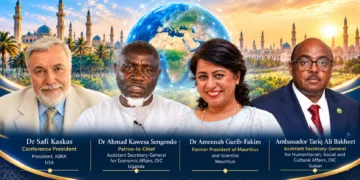
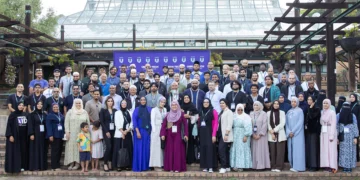
A similar event to the salaah at the Castle and Tuan Guru’s first public jumu’ah, occurred recently at Kirstenbosch Garden. The occasion was the Fourth International Conference on Islamic Civilisation hosted by IRCICA, the cultural wing of the 57-strong Organisation of Islamic Countries (OIC), and the local NGO, Awqaf SA.
With 2025 commemorating 1 500 lunar years since the Prophet’s birth, the conference was themed around the Prophet Muhammad (SAW) as depicted in African scholarship and literature.
While the Castle was an instrument of oppression, Kirstenbosch had been part of a cattle trail used by the Khoekhoen Gorachouqa and Goringhaiqua tribes for over 2 000 years. After grazing their long-horned Nguni cattle at the foot of Table Mountain in spring, they would then herd them to Hout Bay for the summer months.
In late 1657, the areas of Kirstenbosch and Newlands were taken over by the VOC for timber exploitation. The company’s wood-cutting camps lay in the path of the traditional Khoe grazing routes to-and-from Hout Bay, and from 1659-60, there were a series of uprisings led by the Gorachouqua chieftain, Nommoa.
In order to stifle the Khoekhoen, Governor Jan van Riebeeck began building a wooden fence from the mouth of the Salt River (near today’s traffic circle) to Kirstenbosch. This proved time-consuming and expensive, so he planted brambles and a wild almond hedge instead.
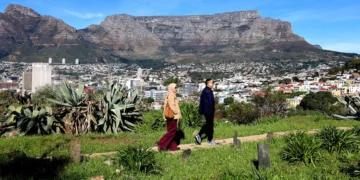
Van Riebeeck’s infamous hedge, remnants of which can be found in Kirstenbosch, marks what I believe is the first topographical manifestation of segregation – or Apartheid – being enforced in South Africa.
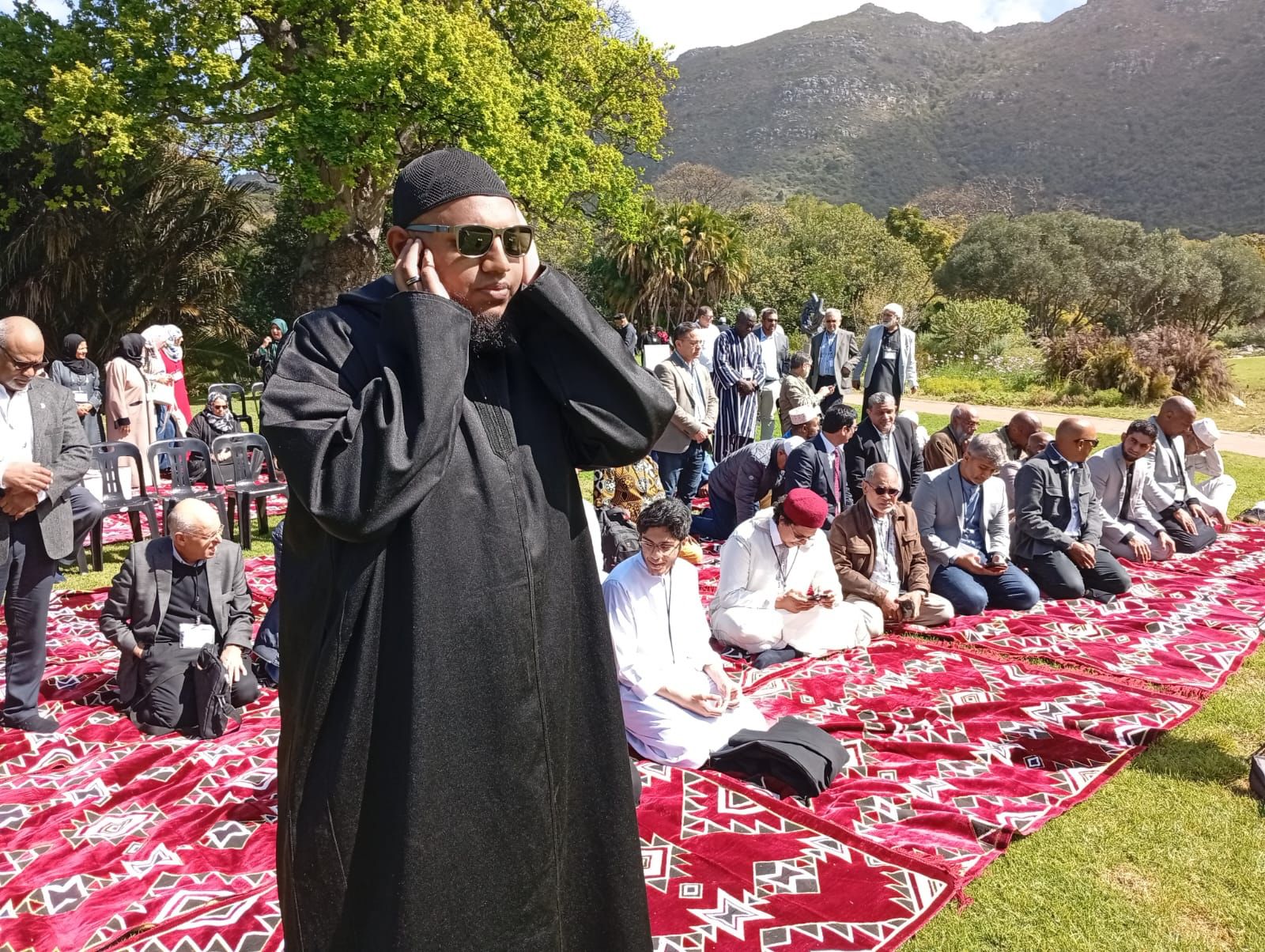
This is where the Friday prayer, the jumu’ah of September 12, 2025, becomes such a significant moment. The historical footprint of the Cape slave community, like that of the Khoekhoen, intersects with the story of the Kirstenbosch hedge and the ambitions of the VOC.
Our Constantia exiles, three of whom are kramats, and hundreds of slaves, would have trudged the old Khoekhoen cattle route – by 1666 turned into a wagon trail leading to the VOC lumber camps.
You may also want to read


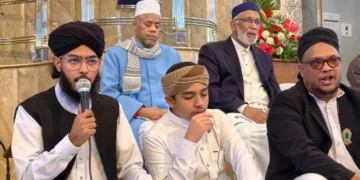
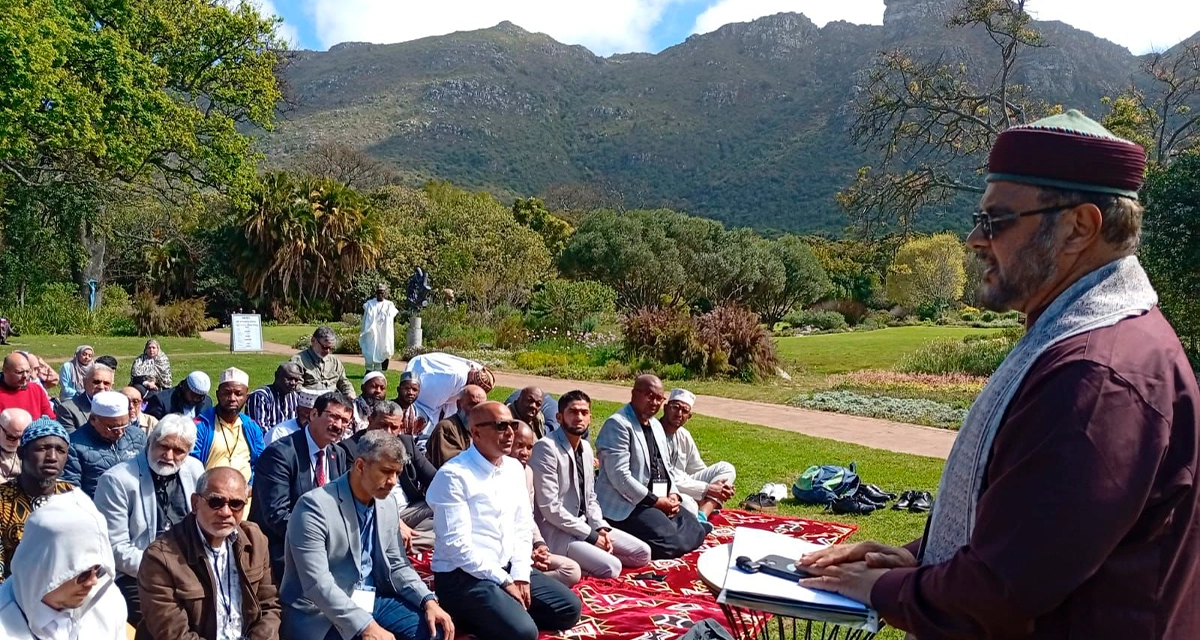
Led by Shaykh Sa’dullah Khan, the jumu’ah was held on a lawn edged by fynbos flowerbeds and the granite backdrop of Table Mountain. Attended by conference delegates, many in colourful African robes, I could only imagine the souls of the ancients smiling at this as tour groups aimed their cameras.
The choice of the Kirstenbosch conference venue by Awqaf SA was indeed a conscious entering of mainstream South African society. But the jumu’ah did have to be lobbied for by the organisers. Nonetheless, the occasion was an important expression of Muslims peacefully owning space, the inalienable right of any community in any democracy.
We are taught in Islam that the whole earth is a masjid, which makes it easy for us to move spontaneously into public places to worship. Where this primordial freedom is denied, as it was during colonialism and Apartheid, social justice is withheld.