














![Does ta’wīl mean interpretation or fulfilment? A Quranic reassessment [+video]](https://muslimviews.co.za/wp-content/uploads/2026/10/Tawil-Kaskas-360x180.webp)





















![Why becoming a wealthy Muslim is commendable in Islam [+videos]](https://muslimviews.co.za/wp-content/uploads/2026/09/Muslim-Trade-Business-1-360x180.webp)







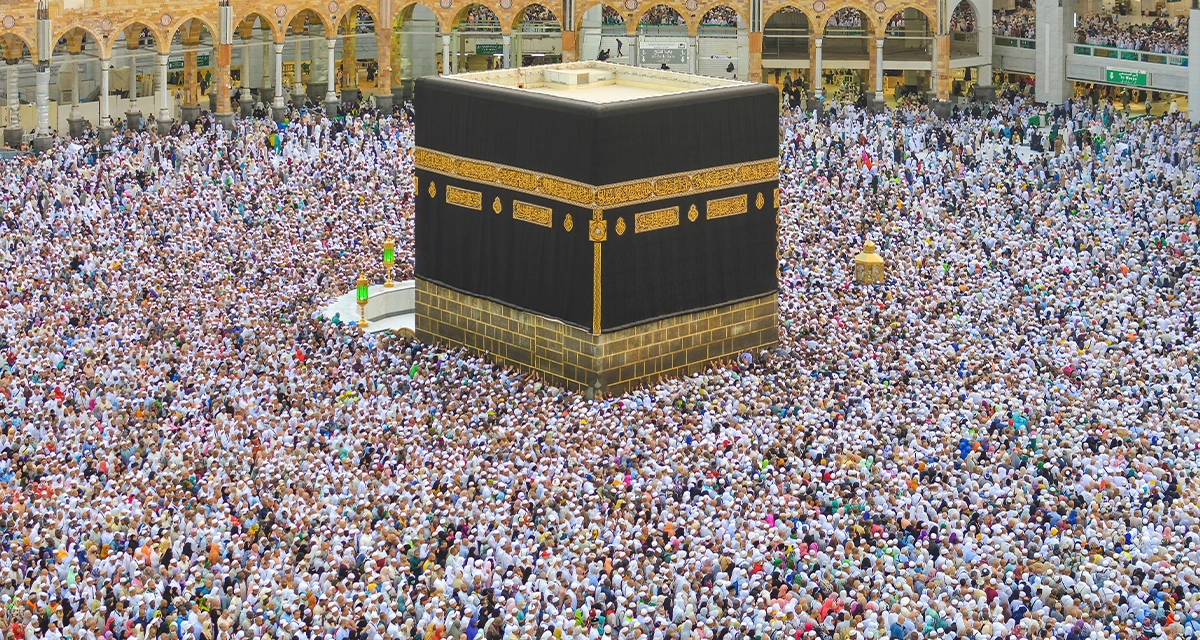

IMAM DR ABDUR RASHIED OMAR reflects on Hajj, human imperfection and the compassionate mercy of Allah.
The text of the Eid-ul-Adha khutbah delivered at Claremont Main Road Masjid on Wednesday, May 27, 2026.
ألله أكبر، الله أكبر، الله أكبر،
الله أكبر ولله الحمد
God is Greater than; God is Greater than; God is Greater than
All Praise, Thanks and Gratitude belongs to God Alone
Beloved Brothers and Sisters,
We begin in humble gratitude to Allah, Rabb al-Hidayah (the Lord of Guidance), who has guided us to celebrate this blessed day of Eid al-Adha in sacred unity and in spiritual solidarity with the hujjaj (the pilgrims) in Makkah. Since it is our firm conviction that Eid al-Adha is inseparably linked to the Hajj, it is fitting that in this khutbah we reflect more deeply on the significance of Hajj, the fifth and final pillar of Islam.
In doing so, we remind ourselves of one of the most profound lessons of Hajj: that the sacred rites of Hajj (the manasik al-hajj) are not meant to produce self-righteous or perfectionist human beings. Rather, they are meant to cultivate humble, compassionate, and God-conscious believers, people who recognise both their utter dependence upon Allah and their human frailty.
The Glorious Quran and the blessed Sunnah of our beloved Prophet affirm this understanding of the purpose of Hajj. Allow me to draw on one Quranic verse and one Prophetic hadith. Allah, the Lord of Guidance, proclaims in Sura Al-Nisa, Chapter 4, verse 28:
يُرِيدُ اللَّهُ أَن يُخَفِّفَ عَنكُمْ وَخُلِقَ الْإِنسَانُ ضَعِيفًا
“Allah desires to ease your path, for you were created weak and vulnerable, and your weakness and vulnerability are held tenderly in Divine Compassion.”
(Quran 4:28 — an interpretive rendering)
You may also want to read


The great classical commentator of the Quran, Imam Fakhr al-Din al-Razi, who died in the year 1209 of the Common Era, observed in his celebrated Quranic commentary Mafatih al-Ghayb that the connection between the two clauses of this verse is deeply intentional: Allah desires ease because Allah created human beings weak. The weakness is by divine design, and the religion of ease is not a concession to human failure but the compassionate response of a Creator who knows, with infinite intimacy, exactly what the creation can bear.
In other words, Allah, our Creator and Sustainer, is not rebuking us for our weakness. Allah is acknowledging it with compassion, saying: I know what you are made of, I fashioned you, and it is precisely because of your weakness that I have made this religion a path of ease and not a mountain of impossible demands.
This Quranic truth is beautifully and movingly illustrated in a well-known hadith from the Farewell Hajj of our beloved Prophet Muhammad (may Allah’s everlasting peace and blessings be upon him). During the Farewell Hajj, known as the Hajjatul Wida‘, pilgrims came to the Prophet in a state of anxiety and distress, one after another, each confessing that they had made a mistake in the performance of the rites of the Hajj.
One said: ‘O Messenger of Allah, I performed the sacrifice (udhiya) before throwing the pebbles (rami al-jamarat).’
Another said: ‘I had my head shaved before the sacrifice.’
Another: ‘I did this before that.’
The Prophet listened to each one with patience and gentleness. And to every single one of them, without exception, he gave the same response:
‘Proceed with your rites of Hajj, there is no blame upon you.’
افْعَلْ وَلَا حَرَجَ
(This hadith is reported by Abdullah ibn Amr ibn al-As, and recorded in Sahih al-Bukhari and Sahih Muslim)
Not once did the Prophet express frustration or impatience. Not once did he make anyone feel ashamed or inadequate. For every anxious pilgrim who came to him with a confession of a mistake, he had the same reassurance:
افْعَلْ وَلَا حَرَجَ
‘Proceed with your rites of Hajj, there is no blame on you.’
This is the spirit of Hajj. This is the compassion, mercy, and ethical beauty at the heart of Islam. And this is the message that each one of us should carry from this Eid khutbah into the rest of our lives.
While we should always strive to fulfil our religious obligations to the best of our abilities, seek excellence in worship, and embody the finest character and disposition in our dealings with others, we must do so with humility, recognising that we are not perfect human beings, but frail servants constantly in need of Allah’s mercy, compassion, and forgiveness.
And when we do stumble, as we inevitably will, we do not despair. We acknowledge our frailty honestly and with courage. We turn immediately to Allah in sincere tawbah, repentance, seeking Allah’s maghfirah (forgiveness) with a contrite heart. And we follow that repentance with acts of expiation and genuine moral resolve, a sincere and active willingness to change, to grow, and to transform our behaviour.
As I sit briefly between the two khutbahs, I invite each one of you to join me in quietly reflecting on some of our own personal weaknesses, shortcomings, and moral struggles, and to turn to Allah with hearts filled with humility, seeking Allah’s infinite mercy, forgiveness, and loving compassion.
Our beloved Prophet Muhammad (may Allah’s everlasting peace and blessings be upon him) taught:
كُلُّ بَنِي آدَمَ خَطَّاءٌ
وَخَيْرُ الْخَطَّائِينَ التَّوَّابُونَ
‘Every child of Adam makes mistakes, and the best of those who make mistakes are those who constantly repent.’
SECOND KHUTBAH
الْحَمْدُ لِلَّهِ الَّذِي هَدَانَا لِهَذَا
وَمَا كُنَّا لِنَهْتَدِيَ لَوْلَا أَنْ هَدَانَا اللَّهُ
Beloved Brothers and Sisters, in this second khutbah I want to tell you a story about a man who went to Makkah to perform the perfect Hajj, and found Allah in the last place he expected.
Hajji Yusuf had waited his entire life to perform the Hajj. He studied every rite carefully, memorised the du‘as, and carried a small notebook with the exact sequence of every act and movement.
He arrived in Makkah with one quiet, private determination: he was going to do everything correctly, in the right order, at the right time, with the right intention. This, he told himself, was what Allah deserved. Nothing less.
But Hajj had other plans for him.
During the Tawaf al-Qudum, the Tawaf of Arrival, the sheer scale of the crowd was unlike anything Yusuf had ever experienced. His attention was consumed by battling through the press of bodies to kiss the Hajar al-Aswad, touch the Rukn Yamani, and recite the supplications he had so carefully memorised, and in the effort and the chaos, he lost his focus and realised he had lost count of his seven circuits.
Was it the fourth shawt or the fifth?
He made a conservative estimate, completed what he hoped were the remaining circuits, and stepped away, troubled and uncertain whether his tawaf had been valid.
Shaken by his experience during the tawaf, Yusuf resolved to leave Mina for Arafah in the middle of the night, avoiding the crowds and arriving at fajr time. He threw himself immediately into his carefully prepared programme of Quran recitation, dhikr, and du‘a.
By mid-morning he made his way to Jabal al-Rahmah, found a shaded spot at the foot of the mountain, and continued his worship. But the heat and the accumulated exhaustion of the days before, and not having slept the night before, finally overcame him. He closed his eyes for a moment, and fell asleep.
He was woken an hour before sunset by the crowds stirring around him, preparing to depart for Muzdalifah. He had slept through some of the sacred hours of Wuquf al-‘Arafah, the very heart of the Hajj. He sat up in the fading light, his heart heavy with shame.
And then, as if the tawaf and ‘Arafah were not enough, Mina brought its own trial. Determined to pelt the jamarat at the correct Sunnah time immediately after zawal/midday, Yusuf pressed through the surging crowd, and in the crush and confusion, twisted his ankle badly.
The pain was immediate and sharp. He limped to the side and lowered himself into the dust of Mina, exhausted, in pain, and utterly convinced that his Hajj was broken.
As Hajji Yusuf sat in the dust of Mina an elderly man quietly sat down beside him. He saw Yusuf’s tears and said gently: ‘What is wrong, my brother?’
And Yusuf poured his heart out. The lost count in the tawaf. The sleep at ‘Arafah. The sprained ankle at the jamarat. Everything. His voice broke as he spoke.
The old man listened in silence. Then he looked at Yusuf and said: ‘Do you know what you have just described to me? You have described the Hajj of a human being. Not the Hajj of an angel. And Allah did not invite angels to Makkah. Allah invited you and me.’
He paused, and then continued with great tenderness: ‘The Prophet, peace be upon him, was asked about every mistake a pilgrim could make during the Farewell Hajj, and every single time, without exception, he said:
افْعَلْ وَلَا حَرَجَ
‘Proceed with your rites of Hajj, there is no blame on you.’
Do you think, my brother, that your mistakes are too great for that mercy to reach you?’
Yusuf wept. But not from shame this time. From something he had not felt since arriving in Makkah. Relief.
The old man placed his hand gently on Yusuf’s shoulder and said: ‘You came to Makkah to find Allah. And you found Allah. Not in your perfect tawaf. Not in your carefully memorised supplications. You found Allah here, in the dust of Mina, in your brokenness. This is where Allah was waiting for you all along.’
Beloved Brothers and Sisters,
Hajji Yusuf’s story is the story of every one of us. We come to Allah, in our salah, in our fasting and alms giving, in our Hajj, and in our daily lives, carrying the impossible burden of our own perfectionism.
We come convinced that we must get all our devotions and rituals right in the way that we have been taught, before we are worthy of divine acceptance.
And yet Allah, the Lord of Compassion and Wisdom, has no such expectation of us. Allah made us frail human beings, prone to mistakes and missteps. Not to humiliate us. But to liberate us.
I conclude with some among the most consoling words in all of divine revelation. Allah, the Lord of Guidance, proclaims in Sura Al-Zumar, Chapter 39, verse 53:
قُلْ يَا عِبَادِيَ الَّذِينَ أَسْرَفُوا عَلَىٰ أَنفُسِهِمْ
لَا تَقْنَطُوا مِن رَّحْمَةِ اللَّهِ
إِنَّ اللَّهَ يَغْفِرُ الذُّنُوبَ جَمِيعًا
إِنَّهُ هُوَ الْغَفُورُ الرَّحِيمُ
‘Say: O My servants who have transgressed against their own souls, do not despair of the mercy of Allah. Indeed Allah forgives all sins. For Allah is the Forgiving, the Merciful.’ (Quran 39:53)
Not some sins. All sins. For those who come to Allah, however broken, however late, however imperfect their coming.
And this, beloved brothers and sisters, is precisely what the Prophetic injunction has always been saying:
افْعَلْ وَلَا حَرَجَ
‘Proceed with your rites of Hajj, there is no blame on you.’
It is not a licence for carelessness. It is an invitation to humility and honesty. While we may strive for perfection in our worship and coming closer to Allah, we must also embrace our frailties and limitations and be assured of Allah’s infinite mercy, forgiveness, and loving compassion.
Allah’s test for us on this earth is not to reach perfection but rather to come to Allah with sincerity of intention and humility in action.
And know that the One who said to every struggling pilgrim at Mina is saying the same thing to me and you, right now, on this blessed Eid morning:
افْعَلْ وَلَا حَرَجَ
‘Proceed with your worship. There is no blame on you. Come back to Me. Come as you are.’
Closing Supplication/Du‘a
At this hallowed time of Eid al-Adha please join me in making a special supplication/du‘a.
O Allah, You know our weakness. You fashioned it. And You proclaimed that it is precisely because of that weakness that You have made this religion a path of compassion and mercy.
O Allah, forgive us for the times we have been harder on ourselves and on others than You have ever been. Forgive us for the arrogance that masquerades as piety. Forgive us for the perfectionism that keeps us from turning to You.
And accept from each one of us, gathered here this Eid morning, our imperfect, human, sincere turning toward You.
O Allah, accept from every pilgrim who stood at Arafah yesterday their imperfect, human, beautiful Hajj. Accept it not because it was flawless but because it was sincere.
اللَّهُمَّ اجْعَلْ حَجَّهُمْ حَجًّا مَبْرُورًا
وَسَعْيَهُمْ سَعْيًا مَشْكُورًا
وَذَنْبَهُمْ ذَنْبًا مَغْفُورًا
وَعَمَلَهُمْ عَمَلًا مَقْبُولًا
وَتِجَارَةً لَنْ تَبُورَ
يَا نُورَ النُّورِ
يَا عَالِمَ مَا فِي الصُّدُورِ
أَخْرِجْنَا وَأَخْرِجْهُمْ يَا اللَّهُ مِنَ الظُّلُمَاتِ إِلَى النُّورِ
بِرَحْمَتِكَ يَا أَرْحَمَ الرَّاحِمِينَ
O Allah! Grant our pilgrims an accepted Hajj
And let their strivings and endeavours be rewarded
And forgive them their sins and trespasses
And accept their good deeds
And protect their belongings
O Light upon Light
O Knower of all that is in our hearts
Lead us forth from Darkness unto Light
By Your Compassion and Mercy, for You are the Most Compassionate and Merciful of those who show Compassion and Mercy.