




![Does ta’wīl mean interpretation or fulfilment? A Quranic reassessment [+video]](https://muslimviews.co.za/wp-content/uploads/2026/10/Tawil-Kaskas-360x180.webp)










![Why becoming a wealthy Muslim is commendable in Islam [+videos]](https://muslimviews.co.za/wp-content/uploads/2026/09/Muslim-Trade-Business-1-360x180.webp)



From Fatḥ Makkah to the Farewell Sermon, the Prophet Muhammad (SAW) consistently challenged racism and affirmed human equality as central to Islam.
By MOEGAMMAD TAHIER KARA
LATELY, I’ve been reflecting deeply on two of the most significant moments in the life of the Prophet Muhammad ﷺ: the Fatḥ Makkah (Conquest of Makkah) and the Farewell Sermon during the Hajjatul Wida.
These events, occurring near the end of the Prophet’s life, were monumental historically and incredibly revealing in terms of the core values of Islam. What strikes me most is that at both of these moments – moments when the Prophet had the attention of the entire Muslim world – he chose to address the issue of racism and human equality.
During the Fatḥ Makkah, when the Prophet ﷺ stood at the door of the Ka’bah – victorious in reclaiming the holiest site in Islam – he could have spoken about power, strategy or even vengeance. But instead, he turned people’s attention to something much deeper and more lasting. He said: ‘Kullukum min Adam, wa Adam min turab’ – ‘All of you are from Adam, and Adam was (created) from dust.’
Then he recited a verse that continues to echo in my mind whenever I think of human dignity and diversity. From Sura Al-Hujurat (49:13), Allah says:
‘O mankind, indeed, We have created you from male and female and made you peoples and tribes that you may know one another. Indeed, the most noble of you in the sight of Allah is the most righteous of you. Indeed, Allah is Knowing and Acquainted.’ (Sura Al-Hujurat, 49:13)
This verse is powerful. It doesn’t just state a biological reality – it lays out a moral framework. It acknowledges our diversity while destroying the illusion that any of us is better because of our race, ethnicity or social background. What truly counts is taqwa – our consciousness of Allah and our righteous actions.
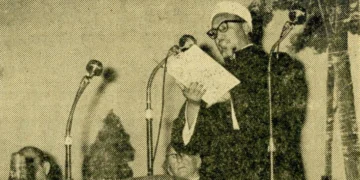
Then, just a few years later, in the final sermon the Prophet ﷺ gave during the Farewell Pilgrimage – his last public address before returning to his Lord – he again returned to this same message. In a crowd of thousands, in one of the most critical moments for delivering final guidance to the Muslim Ummah, he said:
‘All mankind is from Adam and Eve. An Arab has no superiority over a non-Arab, nor does a non-Arab have superiority over an Arab; a white has no superiority over a black, nor does a black have superiority over a white – except by piety and good action.’
Of all the things he could have chosen to emphasise, he focused on equality and the rejection of racism. That tells me something profound: that racism is not a side issue in Islam – it is central to our understanding of justice, community, and what it means to be truly Muslim.
When I look at these two moments – both at a time of complete power (the Conquest) and at a time of parting wisdom (the Farewell Sermon) – I see the Prophet ﷺ using those opportunities to dismantle one of the oldest diseases in human history: the illusion of superiority based on race or tribe. He reminded us, with clarity and authority, that no one is better than another because of where they come from or what they look like.
These reflections have stayed with me because they challenge me to look at how I view others and how our communities function today. If the Prophet ﷺ made such a strong stand against racism at the defining moments of his mission, then it’s clear to me that being anti-racist isn’t just a virtue – it’s a fundamental part of what it means to live and breathe Islam.
You may also want to read


We are meant to be people who look beyond the superficial, who see each other through the lens of piety, character and shared humanity. The Prophet ﷺ laid that foundation for us. It’s now on us to carry it forward – not just in words, but in how we build our societies, how we treat each other, and how we challenge injustice wherever we find it.
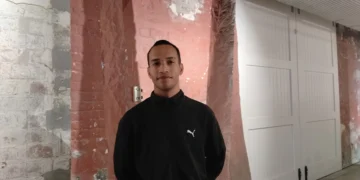
Moegammad Tahier Kara is a Master’s student in the Sociology of Education (MEd) at the University of Stellenbosch.