























![The market-builder who restrained the market [Part 2]](https://muslimviews.co.za/wp-content/uploads/2026/08/PHOTO-2026-08-25-17-16-32-360x180.jpg)
![The merchant preceding the Prophetic mission [Part 1]](https://muslimviews.co.za/wp-content/uploads/2026/08/01-360x180.jpg)









While Brazil’s 2024 G20 agenda was bold and managed to secure solid commitments on taxing the ultra-rich and a global compact on hunger and inequality, efforts by South Africa and the African Union to push a progressive development agenda has been muddled.
By ASHRAF PATEL
SOUTH AFRICA’S G20 leadership concludes with the apex G20 Leadership Summit taking place on November 22 in Johannesburg.
It has been a roller-coaster ride from the get-go, with the Trump 2.0 trade shocks bullying South Africa and Nigeria during Africa’s G20 year – and the United States downgrading its G20 commitments. This period was also marked by the intensification of civil wars and electoral violence on the African continent.
Media narratives and coverage of G20 events have failed to connect their relevance to everyday struggles – from the high cost of living and the need for AI regulation to mitigate social media harms, to calls for just climate finance and energy access.
Brazil’s 2024 G20 agenda was bold and managed to secure solid commitments on taxing the ultra-rich and a global compact on hunger and inequality. Two noteworthy expert groups were appointed – the Finance Group, chaired by Trevor Manuel, and the Inequality Group, chaired by Dr Joseph Stiglitz – in addition to dozens of ministerial meetings crafting communiqués.
G20 finance track stalling ‘IFI reforms’ and the need for a UN Tax Convention
Global finance reform is the genesis of the G20’s DNA – and this is its great test. Despite numerous finance and central bank meetings, there are no concrete commitments on core issues such as IMF reforms or the actual writing off of debts in Africa’s poorest nations. The Cost of Capital Commission – a promising initiative of this year’s G20 presidency – has sadly been downgraded. Here, South Africa and the African Union (AU) could have been bolder in pushing for a global UN tax treaty and debt write-offs, enabling resource mobilisation towards achieving the UN Sustainable Development Goals.
Given current geopolitical contestations and US disengagement from UN platforms, commitments on climate finance at the UN Seville Finance for Development Conference will be difficult to implement. Overall, the G20 Finance track has been mired in diplomatic rhetoric, and yet another expert group chaired by Manuel has failed to produce concrete recommendations. “Old wine in new bottles” is what South Africa gives to the world.
The G20 Inequality Report: promising shoots
You may also want to read





This week, the G20 under President Cyril Ramaphosa released the G20 Inequality Report, co-chaired by Dr Joseph Stiglitz. The report offers actionable plans building on the UN Panel on Inequality and reaffirms the deepening inequalities within and between regions in the global economy in the post-COVID world. The recommendation to establish an International Panel on Inequality (IPI) is laudable.
The key challenge, however, is what core agreements on reducing inequality will be implemented. But with all things G20, the sobering reality is that nations are not obliged to act on any G20 recommendations.
G20 and the WHO Pandemic Fund: a win for global public health
A notable achievement for global public health was South Africa’s National Department of Health (NDoH), in collaboration with the World Health Organization (WHO), the United Nations Children’s Fund (UNICEF) and the Food and Agriculture Organization (FAO), launching the Pandemic Fund Project under the One Health approach.
The Fund – the first multilateral financing mechanism dedicated to helping low- and middle-income countries contain disease outbreaks and prevent pandemics – marks a modest but positive start for scaling pandemic preparedness in 2025. The BRICS Pandemic Platform is already advancing technology transfer and resource mobilisation.
A docile South African civil society amid deepening crises
Finally, the people. South Africa once boasted one of the most vibrant civil societies and social justice movements. From the UN Aids Summit to the World Conference on Sustainable Development (WSSD) in the 2000s, we had a robust and independent civil society that inspired the Global South.
In contrast, while previous G20 meetings in Northern capitals saw social justice activists from Canada to Germany pushing for radical agendas, South Africa’s Civil 20 and Labour 20 platforms have been reduced to talk shops in comfortable urban settings.
This demobilisation is a scar on a nation that once led global civil society movements. In this era of rising right-wing populism, neoliberalism and domestic political crisis, these once-vibrant voices have fallen largely silent. Perhaps decades of donor dependency have taken their toll? South African civil society needs to return to the drawing board for critical reflection. There was a time when we led – today, we are led.
Despite laudable efforts by South Africa and the AU to push a progressive development agenda, the outcome has been muddled in “talks about talks” and the endless need to “find consensus” – the default position on all things G20.
As the US under Trump prepares to assume the G20 presidency in 2026 and downgrades much of the current G20 development agenda, South Africans and Africans – along with the media as the fourth estate – must ask sobering questions about whether hosting it was really worth it.
Another world possible? Not at this stage.
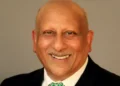
Ashraf Patel is a Senior Research Associate at the Institute for Global Dialogue, UNISA.