


















![Does ta’wīl mean interpretation or fulfilment? A Quranic reassessment [+video]](https://muslimviews.co.za/wp-content/uploads/2026/10/Tawil-Kaskas-360x180.webp)




























![Why becoming a wealthy Muslim is commendable in Islam [+videos]](https://muslimviews.co.za/wp-content/uploads/2026/09/Muslim-Trade-Business-1-360x180.webp)









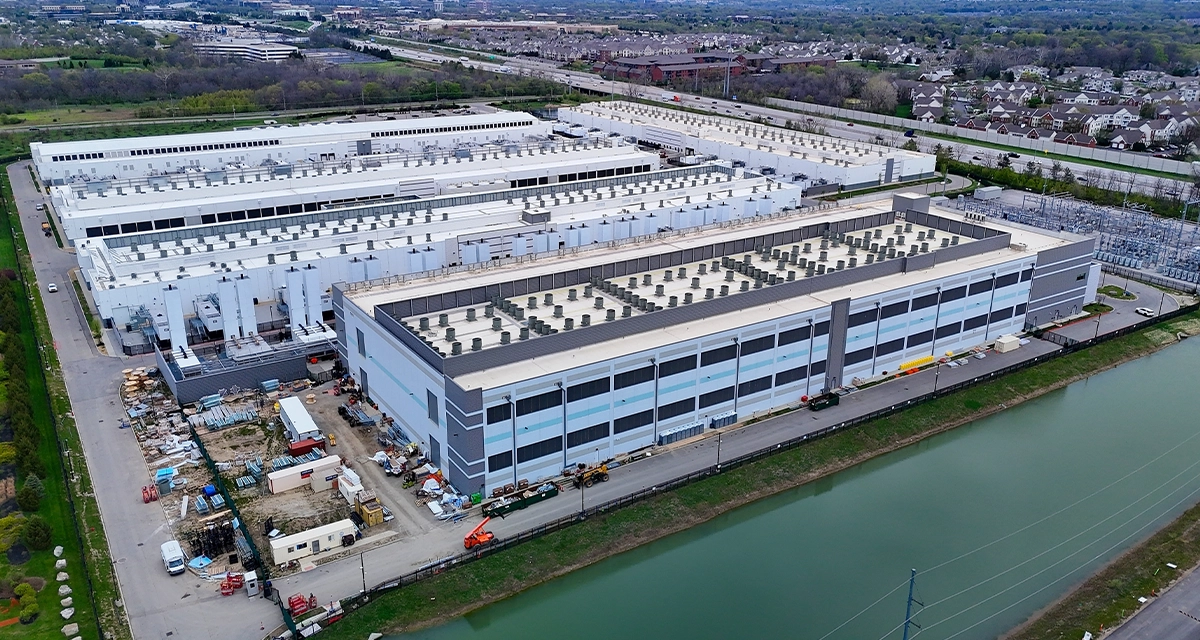

Attacks on Amazon data centres in Bahrain show that AI infrastructure carries risks far beyond cloud disruption. As South Africa expands this sector, it must confront military, surveillance, water, energy and human rights concerns.
By HASSEN LORGAT
The reported attacks on July 28 on artificial intelligence (AI) data centres in Bahrain are not unprecedented, but it is widely acknowledged that they come at a significant cost.
Iran has reportedly struck two Amazon data centres in Bahrain, with satellite images appearing to confirm substantial damage—potentially destroying the facilities. The Iranian Revolutionary Guard Corps (IRGC) confirmed that the missile attack was “a retaliatory strike” for an American assault on an alleged Iranian nuclear site. The targeting of data centres due to their role in supporting US-Israel war efforts, as well as ownership links to government leaders, makes it imperative that we in South Africa tread carefully regarding our investment options, as this may invite unwanted conflicts.
Amazon’s close ties to the Trump administration—which Iran cites as a reason for targeting the company—are revealing. These ties include smaller gestures, such as supporting Trump’s White House ballroom project, contributing $1 million to Trump’s inauguration fund, and spending $40 million on a Melania Trump documentary. However, the strongest concern that makes it a prime target revolves around Pentagon cloud and AI contracts with the US military.
We must bear in mind the costs of such attacks. These extend beyond injuries and the deaths of soldiers and civilians; they include the disruption of educational and other services that rely on data services to function. This attack on these data centres was not the first. On March 1, 2026, drone strikes marked the first time in history that commercial cloud data centres were deliberately targeted for military attack, hitting Amazon Web Services facilities in the United Arab Emirates and Bahrain, according to University News Services.
In media reports at the time, authors acknowledged the dual-use nature of data centres. They noted that the US military has confirmed using a “variety” of artificial intelligence tools in its war with Iran. It is also known that the US military uses AI systems hosted on Amazon Web Services—such as Anthropic’s Claude—“for intelligence analysis and war simulations”, according to a March 12 Tech Policy Press report.
These were followed by Iranian drone strikes during March and into April on Amazon Web Services (AWS) data centres in the United Arab Emirates (UAE) and Bahrain, which directly disrupted the higher education sector and also impacted critical digital infrastructure—all of which went out with the cloud. Yes, our reliance on cloud systems presents problems that require deeper public debate about AI and AI data centres.
If anything, these attacks place greater demands upon us—beyond material concerns (critical and otherwise) and surveillance roles—when considering whether to involve groups like Elon Musk’s Starlink and SpaceX in our national operations, as some lobby groups have suggested. We all know that Starlink evolved from civilian tech into a critical operational tool for both Ukraine (for drone strikes and communications) and Russian forces (via black-market terminals for tactical coordination). However, in February 2026, a shift occurred when both SpaceX and Ukraine implemented a geographic “whitelist” system, cutting off all unauthorised terminals in the conflict zone. This strategic cut-off reportedly severely disrupted Russian operations, causing communication chaos—including so-called “friendly fire incidents”—and stalled assaults, just as Moscow also cracked down on the Telegram app. Simply put, technology choices are not only policy choices; they also raise questions about political-military uses and alliances.
Furthermore, advocates for data centres explain that demand for data centre services is expected to grow, driven by cloud computing, artificial intelligence and digitalisation, although the scale and timing of this growth are uncertain. Currently, South Africa has about 56 data centres and the UK more than 450, while the United States hosts approximately 5 500 data centres, accounting for over 40% of global AI capacity.
Many of us have raised concerns about how AI data centres consume water and electricity, as well as land resources, with little oversight. Of relevance to a water-scarce country is the water use by data centres. A briefing to the UK Parliament noted:
“Water can be used directly, for instance in some cooling systems, and indirectly, for example, in electricity generation or semiconductor manufacturing. The International Energy Agency estimated global data-centre water consumption at around 560 billion litres in 2025, with about two-thirds from electricity generation.”
Yet this briefing was silent on the military, surveillance or repressive capacities of these data centres. Similarly, the South African Human Rights Commission (SAHRC), in its mandate, excluded this aspect, as I argue below.
This lack of due diligence is what the Data Centres Working Group has complained about in its submission to the SAHRC, which is due today. The SAHRC is investigating the impact of data centres on human rights in South Africa, focusing on land use, energy, water and labour practices. It is calling for public submissions to understand these effects and ensure compliance with the Bill of Rights. The probe aims to address potential harms to communities and the environment while balancing digital infrastructure needs. This forms part of a broader inquiry into the sector’s adherence to constitutional standards.
The earlier attacks on March 24 and April 1 were undertaken by Iran’s Islamic Revolutionary Guard Corps (IRGC), which warned that US tech companies operating in the Middle East—including Microsoft, Google, Apple, Amazon and others—were part and parcel of a military-industrial campaign against the Islamic Republic.
You may also want to read



There exists “an incredibly tight-knit integration of the tech sector into the military-industrial complex”, and that universities have become embedded into this system.
These strikes exposed a critical vulnerability for educational institutions across the Arab region. Universities have increasingly migrated their core operations to corporate-owned cloud facilities, but until now, they had only focused on software security and basic physical infrastructure, never contemplating the possibility of direct military damage to data centres.
Academic Adib-Moghaddam, author of The Myth of Good AI: A Manifesto for Critical Artificial Intelligence, confirms that in the USA there exists “an incredibly tight-knit integration of the tech sector into the military-industrial complex”, and that universities have become embedded into this system. He has also stated that Iran has promised to disrupt the monarchies of the Persian Gulf. His preferred solution is a clear distinction between civilian AI used in universities and military AI, with both placed under the supervision of lawmakers at national, domestic and international levels.
The most recent attacks, confirmed by major mainstream media, including Bloomberg, at the end of July, have placed data centres firmly on the global agenda—not only for their promised AI benefits but also for the risks of them being used as instruments of war. Data centre managers and owners are thinking of ways of defending their assets, but this will not be easy.
I have written about AI and its military uses before, based on international NGO and expert evidence about recent genocides, including in Palestine and Gaza. They wrote that AI systems like Lavender and The Gospel are used in Gaza and the West Bank to generate kill or arrest lists with minimal human oversight. In addition, tracking tools such as “Where’s Daddy?” monitor individuals in their homes, endangering civilians in residential areas. Surveillance technologies like Red Wolf and Blue Wolf deploy facial recognition at checkpoints and in cities like Hebron, operating without Palestinian consent. (These facial recognition tools are used in a few malls in South Africa, without any regard to privacy laws such as POPIA.)
These systems are internationally marketed as “battle-tested” solutions, with their tactics and technologies being exported to other regions. Notably, some facial recognition tools are already in use outside the conflict zone, including in South Africa.
Groups like Stop Killer Robots are already making their mark—and the clock is running out. Since its public launch in 2013, it has grown to over 300 member organisations worldwide. Its website opens with a warning that should chill every one of us:
“Technology should be used to empower all people, not to reduce us to stereotypes, labels, objects, or just a pattern of 1’s and 0’s. With growing digital dehumanisation, the Stop Killer Robots coalition works to ensure human control in the use of force. Our campaign calls for new international law on autonomy in weapons systems.”
That call is now urgent beyond words. The push for United Nations (UN) regulation is widely supported—but support alone means nothing without enforceable teeth. The Lethal Autonomous Weapons Systems (LAWS) negotiations, held under the UN Convention on Certain Conventional Weapons, aim to stop machines that can select and engage targets without human intervention. Yet here is the brutal truth: those negotiations have been stalled for years, blocked by a handful of powerful military states exploiting the consensus rule to kill any binding treaty. Activists are clear—these bans must not be nice-to-have words on paper. They require enforceable international prohibitions, with real consequences for violations. The UN Secretary-General and the ICRC have demanded a treaty by the end of 2026. That is not a luxury—it is a marker critical for our collective survival.
But this is not only about war. As Stop Killer Robots and others have warned, these battlefield-tested technologies are already leaking into civilian life—and they are diminishing our civic space in profound, dangerous ways. It begins with policing: inner cities, border controls, predictive surveillance. Then it creeps into hiring, welfare, credit scoring, education and healthcare. Soon, every one of us becomes a potential data point, a risk score, a pattern of ones and zeros to be flagged, denied or neutralised by an algorithm with no accountability, no conscience and no appeal. These systems are on autopilot—and we are dispensable. They simply do not care. And that is far more terrifying than any human malice.
We have been duly warned. The script has already played out in Gaza, Ukraine, on migrant borders and in predictive policing algorithms that target minorities wherever they are. The technology does not stay on the battlefield. It comes home—and to a mall near you.
So we must wake up—not to panic, but to action. We need long-term, sustainable, inclusive solutions that serve people, not profits, not military dominance, not the cold efficiency of machines. That international treaty must be binding, because we are on a long march to stop these autonomous killers from becoming so embedded in every layer of society that we cannot extricate them. It is a battle against time and the machine. They may be getting smarter, faster and more integrated into our lives—but we still have agency. We still have the right to say NO to harmful and wasteful technologies. And we still have the capacity to choose what we want for ourselves, and for generations yet to come.
Hassen Lorgat is part of the Data Centres, Surveillance, Control Working Group, an activist collective associated with CSOs 4 Tailings Justice. He is writing in his personal capacity.