




![Does ta’wīl mean interpretation or fulfilment? A Quranic reassessment [+video]](https://muslimviews.co.za/wp-content/uploads/2026/10/Tawil-Kaskas-360x180.webp)










![Why becoming a wealthy Muslim is commendable in Islam [+videos]](https://muslimviews.co.za/wp-content/uploads/2026/09/Muslim-Trade-Business-1-360x180.webp)

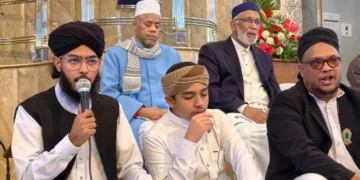



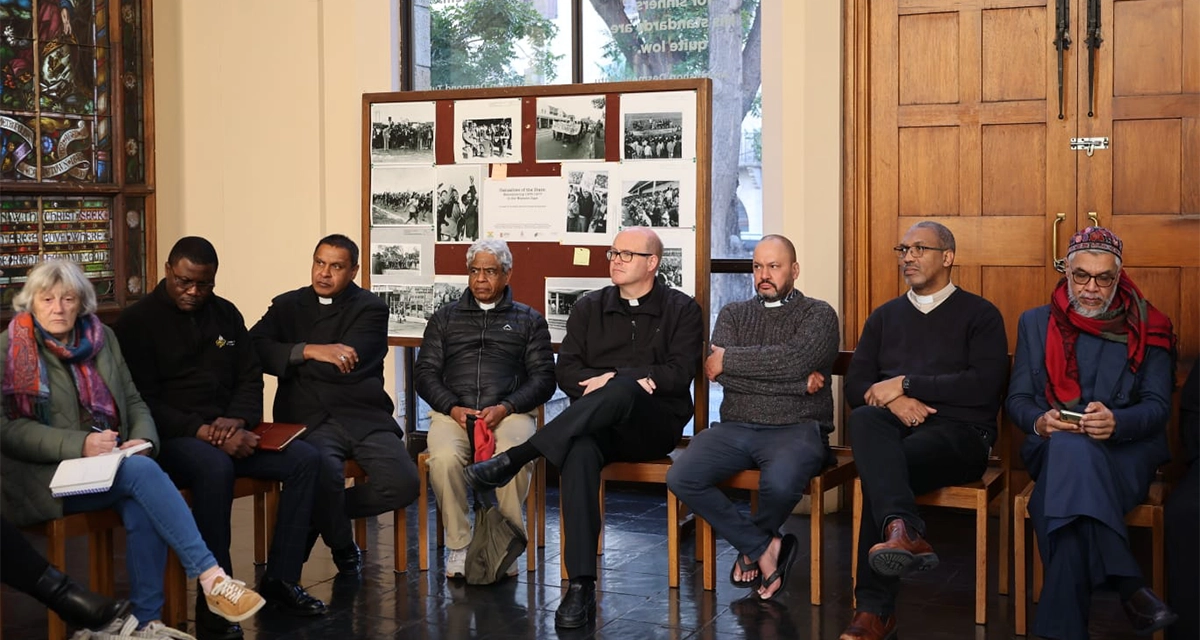

In the aftermath of the March and March deadline, faith leaders, community workers and migrants met at St George’s Cathedral to confront humanitarian realities, discuss migration, and seek practical responses rooted in dignity and justice.
By ANWAR OMAR
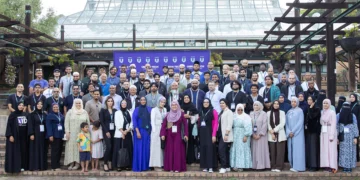
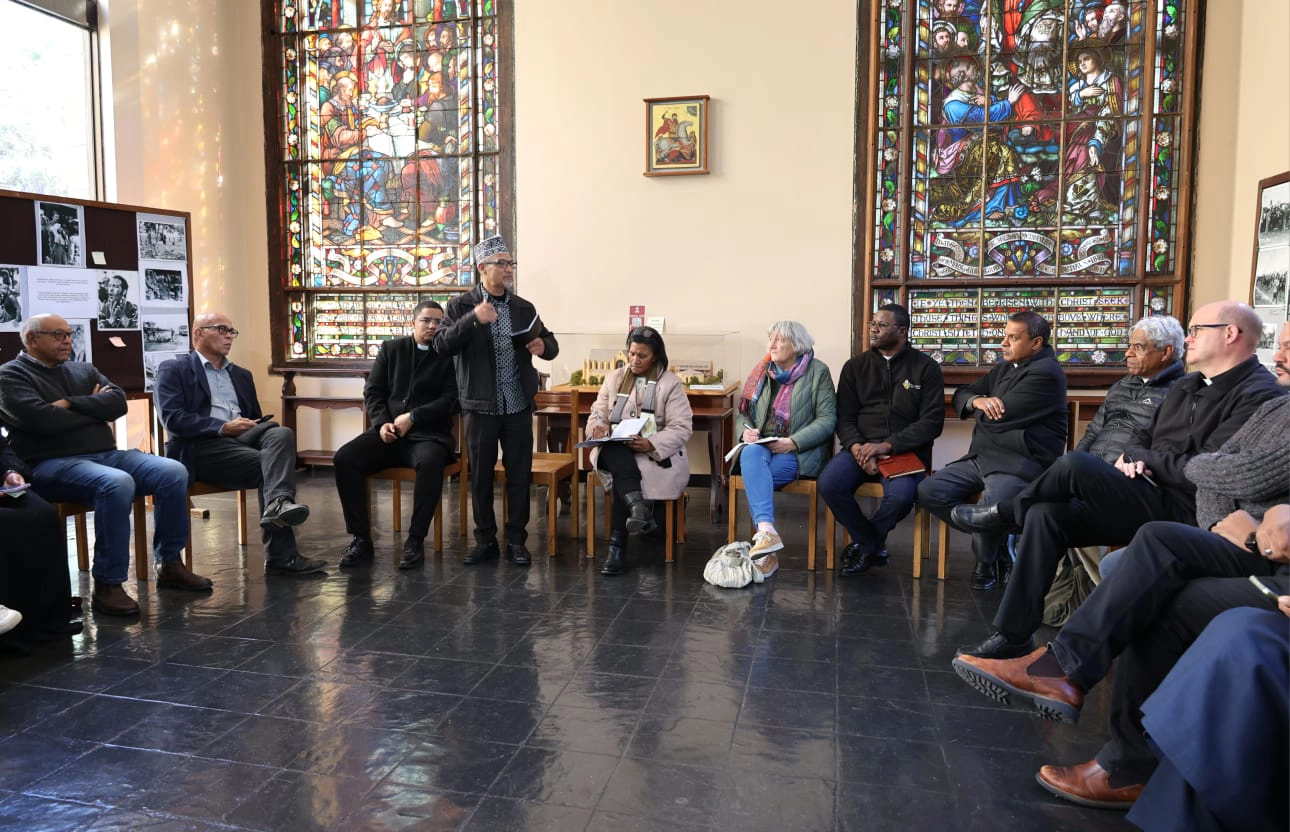
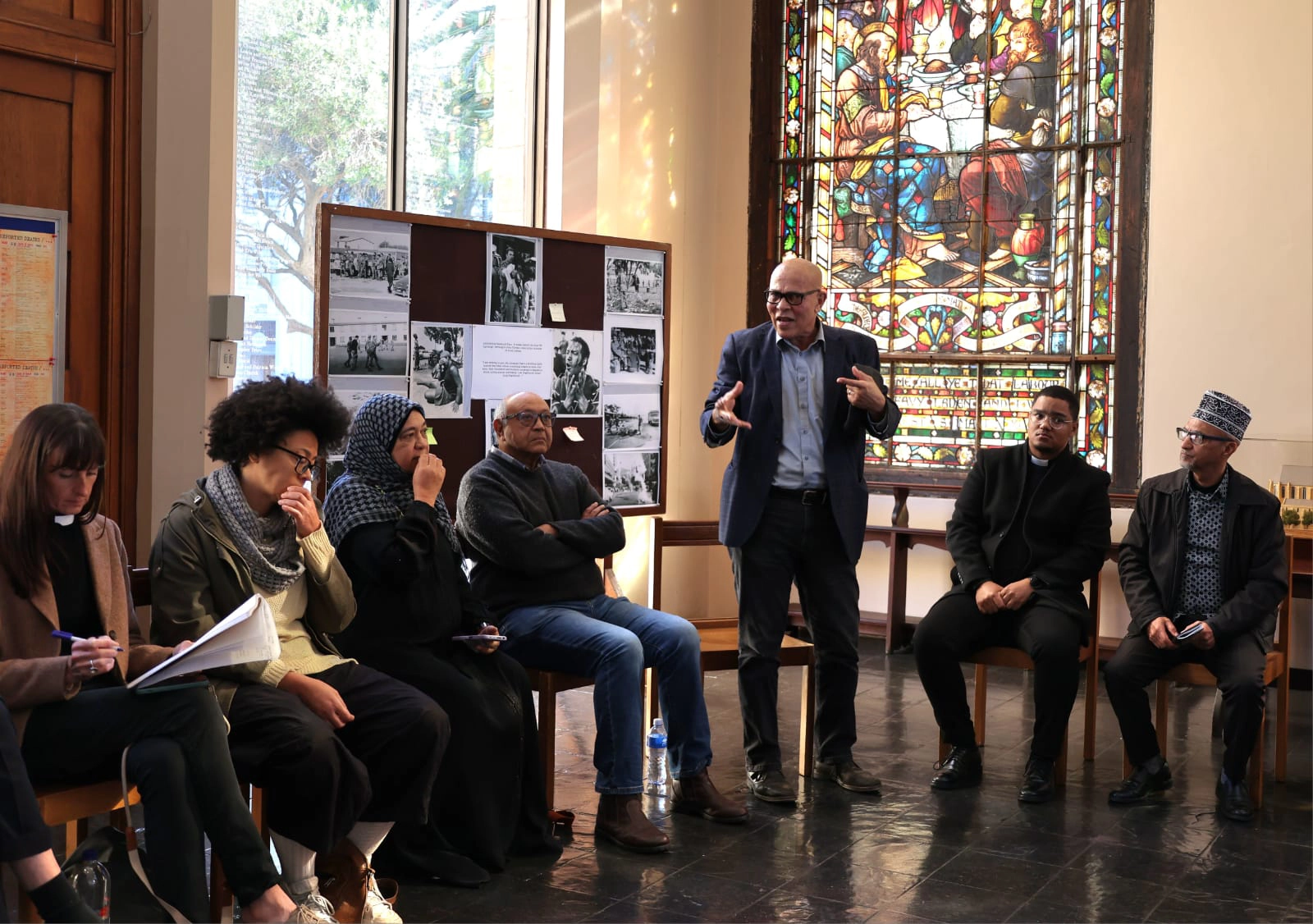
The interfaith gathering at St George’s Cathedral in the aftermath of the March and March deadline was not the polished declaration many may have expected. It was something more valuable and considerably more difficult: a room of religious leaders, community workers, lawyers and foreign nationals talking honestly about a crisis that has no easy resolution.
What emerged was not a unified statement, but concrete commitments, an acknowledgement of gaps in the interfaith response to date, and a series of uncomfortable truths spoken in a cathedral that was, this time, considerably more representative than the press conference held at Masjid al-Quds two nights before.
The gathering was convened by Western Cape Council of Churches, South African Council of Churches, Muslim Judicial Council and Cape Town Ulama Board.
The immediate humanitarian crisis: Dignity before declarations
The session opened with a ground-level account of conditions at the Epping Home Affairs processing facility, where thousands of Zimbabwean nationals have been sheltering. The picture was one of acute material need.
Gift of the Givers has been coordinating food distribution inside the facility and for those on the surrounding streets. A collection point at St Stephen’s Anglican Church has been receiving hygiene donations. Wet wipes, nappies, sanitary pads and baby food are in critical demand. Blankets are also urgently needed, particularly at night.
One speaker described the human reality plainly: people had gone days without washing; the metal benches at the reception office were never designed as accommodation; and ablution facilities were wholly inadequate. Women and children had been left outside in the cold wind at night before the facility eventually opened. The word used was ‘undignified’.
Clergy from several denominations visited the facility to offer pastoral support. Some 15 northern suburbs churches were identified as potential additional support venues. The message from the floor was consistent: humanitarian obligation does not wait for legal or political resolution.

The representation question was partially answered
Before this gathering, a pointed concern had been raised that the Al-Quds panel convened to address a crisis disproportionately affecting Black South Africans had not included a single Black voice at its table. The gathering at St George’s did not entirely resolve this gap, but it attempted to close it.
Shaykh Mohammed Sisi, representing the Community Mosque in Khayelitsha, and Wendy Pekeur from the Ubuntu Rural Women and Youth Movement both spoke with direct authority from the communities most affected. A foreign national representative addressed the administrative failures rendering people ‘illegal’ not through choice but through systemic collapse. These were among the sharpest contributions of the afternoon.
But one participant noted pointedly that St George’s Cathedral, despite its historical human rights significance, is located near embassies, not at what she called ‘the cold face of where people are actually going’. If the interfaith response is to reach the communities it speaks about, she argued, its gatherings need to move to those communities, not convene in the comfort of the cathedral and expect the crisis to come to them.
Two legitimate problems and a dangerous conflation
The most substantive work of the afternoon involved untangling what has been deliberately conflated in public debate: the difference between legitimate service-delivery grievances and the xenophobia and Afrophobia being used to express them.
One speaker put it plainly: unemployment, resource scarcity and pressure on public services are real concerns. But when those concerns are consistently framed as being caused by foreigners, and when migration is associated wholesale with crime and met with the threat of violence, something else is happening. A legitimate problem is being used as a vehicle for a different agenda entirely.
Another speaker said that having an unemployed family member is a real hardship, but it is not a licence to trample on the life of another poor person. Scarcity is not a justification for cruelty.
The administrative failure dimension was also raised forcefully. Many of those labelled ‘illegal’ are people whose documentation extensions under Sections 22 and 24 of the Refugees Act have not been processed by the Department of Home Affairs, sometimes for years. Their bank accounts are frozen. Their children’s schooling has been disrupted. They are undocumented not by choice, but because the system designed to document them has failed them. Holding individuals responsible for institutional collapse is not justice.
Outcomes
You may also want to read



The session produced concrete commitments. Humanitarian relief will be expanded, with Gift of the Givers leading food distribution, northern suburbs churches being approached as additional support hubs, and facilities being assessed for improved bathing and changing conditions. Engagement with the mayor and premier is already under way, and legal options remain available but will only be pursued after formal engagement has been exhausted.
A major interfaith service is being planned across faith traditions. Questions of location and whether it should move out of the city centre into affected communities were raised, but the practicalities were not yet resolved.
In a week when some public voices have been using the language of religion to justify what amounts to organised intimidation of some of the country’s most vulnerable people, a room of faith leaders wrestled honestly with the tensions in their own response to the crisis. The session ended with honest momentum, and the grievances of both South African communities under strain and foreign nationals caught in administrative failure were recognised without being weaponised.
The real test, as one participant noted, is where the next gathering happens, and who is in the room when it does.
- The article was amended on July 2, 2026 at 9:33 to reflect the names of the organisers of the gathering.