
















![The market-builder who restrained the market [Part 2]](https://muslimviews.co.za/wp-content/uploads/2026/08/PHOTO-2026-08-25-17-16-32-360x180.jpg)
![The merchant preceding the Prophetic mission [Part 1]](https://muslimviews.co.za/wp-content/uploads/2026/08/01-360x180.jpg)






The recent court ruling on the Moslem Cemetery Board addresses urgent questions about amanah, governance and trust in the Cape Muslim community.
By SALIH DAVIDS and ADLI YACUBI
A quiet courtroom in the Western Cape has delivered a ruling whose implications reach far beyond its legal setting. What began as a dispute over a proposed mortuary at a Muslim cemetery has unfolded into something deeper: a reckoning with governance, accountability, and the meaning of trust within communal life.
The Western Cape High Court judgment on the Moslem Cemetery Board on March 24, 2026 has stirred strong reactions across the Cape Muslim community. For some, it marks a long-overdue correction. For others, it introduces discomfort, even disruption. But beyond the immediate outcome lies a deeper question — one that touches history, memory, and our understanding of amanah.
At its core, this case was never simply about a mortuary.
It was about trust.
When institutions drift
For years, the Moslem Cemetery Board functioned with limited oversight. Annual general meetings were irregular or absent, governance processes weakened, and the broader Muslim community — whose heritage is bound to these burial grounds — found itself increasingly excluded.
What should have remained a communal trust became, in effect, insular.
The court found this untenable.
What the court decided
The judgment delivered three clear outcomes.
First, the Board itself was declared unlawful. Its authority was nullified, and the notion that control could rest within a closed circle — whether by lineage, tradition, or internal arrangement — was firmly rejected. The cemetery does not belong to a few. It belongs to the community.
Second, the proposed mortuary was decisively blocked. The court issued a final interdict preventing its construction or operation on cemetery grounds. The reasoning was straightforward: the land is designated for burial. A mortuary serves a different function — one not incidental to that purpose.
Third, the court ordered a full governance reset. Membership must be reopened. A special general meeting must be convened. A new, representative board must be elected under clear timelines and oversight.
This is not symbolic reform.
It is structural correction.
More than law: a return to principle
What is striking is how closely this legal ruling echoes principles long embedded within Islamic tradition.
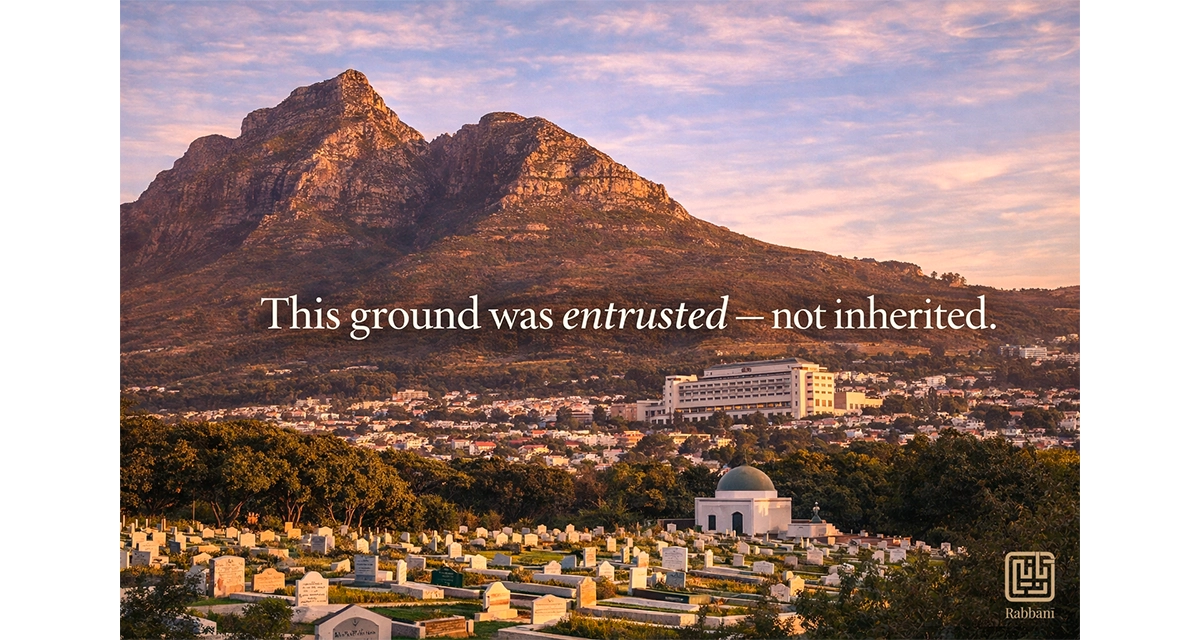
A cemetery is not simply land. It is a waqf — an endowment held for Allah, in perpetuity, for the benefit of the Muslimeen. Its purpose is defined: burial. It cannot be owned, inherited, or enclosed within private control.
Those entrusted with such a space are not owners.
They are custodians — mutawallīs.
Their role is not to possess, but to serve.
They are bound by shūrā (consultation), ʿadl (justice), and amanah (trust). When consultation disappears, when decisions become unilateral, the failure is not only administrative. It is ethical. It is spiritual.
The sanctity of the space
The mortuary question also finds resonance within classical fiqh. Across the major schools, a cemetery (maqbara) is designated strictly for burial. Its sanctity is not symbolic — it is binding.
Facilities that support burial may exist in proximity. But they cannot redefine the nature of the space itself.
In this light, the court’s reasoning — that a mortuary is not incidental to burial — reflects a principle already well established in the tradition.
At the heart of this lies ḥurmah — the inviolable dignity of the dead.
The Prophet ﷺ said:
‘Breaking the bone of a dead person is like breaking it while alive.’ (Sahih Muslim)
The deceased are not absent from rights.
They remain under protection.
A communal duty, not a private domain
You may also want to read

![Jeffrey Sachs critiques the US, Israel and Europe + [video]](https://muslimviews.co.za/wp-content/uploads/2025/03/Jeffery-Sachs-Michael-Von-Der-Schulenburg-120x86.jpg)


Equally central is the concept of farḍ kifāyah — the shared obligation of the community. Funeral rites are not private matters. They are collective responsibilities.
Cemeteries must therefore remain accessible, inclusive, and in service of the Ummah.
To restrict them — whether through structure, control, or exclusion — is not merely poor governance.
It is a breach of duty.
History, memory, and the shadow of control
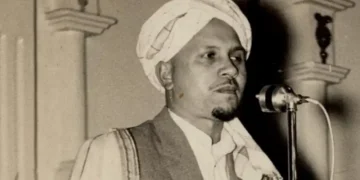
Cape Muslim institutions were historically sustained through trust, scholarship, and lived accountability. Figures such as Tuan Guru embodied a model where moral authority carried greater weight than legal formality.
But colonial legal frameworks reshaped these structures. Waqf became ‘trust property’. Governance became formalised — and, at times, distanced from the community it was meant to serve.
Over time, this opened the door to forms of control that could drift towards exclusion.
This tension is not new.
But it is now visible.
Protection or gatekeeping?
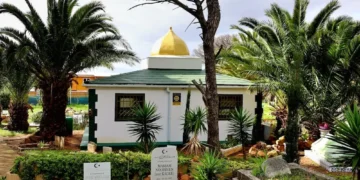
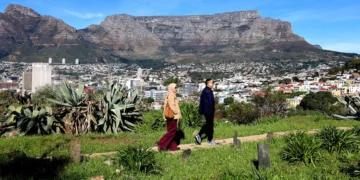
Cemeteries like Tana Baru are not only burial grounds. They are archives of memory — places where identity, resistance, and continuity are held in the soil itself.
To protect them is necessary.
But protection can become something else.
It can become gatekeeping.
And when it does, the trust begins to erode.
An interruption — and an opening
This judgment should not be read as intrusion.
It is an interruption.
A pause.
A moment that asks whether our structures still reflect our principles.
What comes next
The path forward is clear, though not without difficulty.
A reconstituted board must reflect both legal compliance and ethical depth. Membership must be open. Governance must be transparent. Decisions must emerge from consultation and be guided by both scholarly insight and professional competence.
Future developments must remain aligned with the purpose of the waqf.
The options are visible: compliance, appeal, or careful reconsideration of permissible developments.
But beyond these lies something more important.
The rebuilding of trust.
What has been returned
In the end, the judgment does not take from the community.
It restores.
Board: Invalid
Mortuary: Blocked
Governance: Reset
Community access: Restored
But more than structure, something deeper has been returned:
Responsibility.
The court may not have intended to affirm Islamic principles. Yet its ruling resonates with them: no monopoly over sacred trust, no deviation from purpose, no authority without accountability.
This moment calls for introspection.
Leadership is not ownership.
Position is not possession.
Authority is not control.
These are trusts.
And what we hold in trust, we hold in service.
And that trust… is before Allah.
Salih Davids is a Cape Town–based writer whose reflections engage questions of governance, faith, and communal trust. Drawing on experience in public service and sustained study of religion, he writes from within an ongoing journey of accountability.
Adli Yacubi is a writer and designer between Johannesburg and Cape Town. Through Rabbānī Creative Studio, his work explores faith, heritage, and moral witness — weaving memory, story, and visual form into acts of remembrance.