













![The market-builder who restrained the market [Part 2]](https://muslimviews.co.za/wp-content/uploads/2026/08/PHOTO-2026-08-25-17-16-32-360x180.jpg)
![The merchant preceding the Prophetic mission [Part 1]](https://muslimviews.co.za/wp-content/uploads/2026/08/01-360x180.jpg)








People are not persuaded by facts alone; they are moved by feelings, by grief, anger, love, hope. A mother in Gaza grieving her child, a farmer cut off from ancestral land, a student living under blockade. These stories touch universal emotions. When framed with care and respect, they can open hearts that facts alone leave untouched.
By PROFESSOR ASLAM FATAAR
The Palestinian struggle has become one of the most visible global justice movements of our time, yet it remains sharply polarising, especially in cities marked by racial, religious, cultural, and political diversity.
For some, supporting Palestine feels morally urgent. For others, it feels distant, complex, or even uncomfortable. To build meaningful and sustainable solidarity, we need an approach that does not shame or dismiss sceptics, but invites them into thoughtful, inclusive, and emotionally resonant dialogue.
At the heart of this approach is what I call ‘democratic populist solidarity’: an effort to bring ordinary people together across their differences of race, class, religion, and culture, to challenge injustice and advance collective change. Importantly, this is not about pushing ideological purity or forcing people into political camps. Rather, it is about opening space for conversation, education, and reflection, about linking Palestine to the everyday struggles people already know and care about.
For sceptics, a common objection is: Why should we focus on Palestine when there is so much suffering at home? This is where a bread-and-butter solidarity approach matters. It recognises that people are often most moved by the issues closest to their daily lives: housing, unemployment, gender-based violence, religious discrimination, or lack of access to healthcare and education. But rather than seeing these local issues as separate from Palestine, an inclusive solidarity approach makes connections, showing, for example, how militarised borders, forced displacement, racial exclusion, and economic dispossession are global patterns, not isolated problems.
In working-class townships, the Palestinian struggle resonates sharply with the lived memory of forced removals, land dispossession, and apartheid policing. Among migrant communities, it echoes the pain of border controls, precarity, and institutional exclusion. For faith-based communities, especially those grounded in values of justice and compassion, Palestine poses an urgent moral challenge — a call to align belief with action. For young people, it connects to global movements for decolonisation, dignity, and the defence of life under occupation and surveillance.
But building solidarity is not simply about affirming the already-convinced. In communities where Zionist affinity has been nurtured — including among certain religious expressions— the work must be precise, respectful, and strategic. Many people in these contexts have not encountered the full historical and present-day reality of Palestinian life under occupation. The task is not to provoke or alienate, but to offer clear facts, framed in language that speaks to their moral and spiritual frameworks. This requires informed, patient outreach — not indignation or ideological pressure. Understanding these communities’ discourses, and identifying meaningful entry points for dialogue, is essential.
Solidarity cannot afford to be diffuse or reactive. It must be targeted and tactical, disrupting the toxic narratives peddled by parties like the Democratic Alliance and the Patriotic Alliance, whose political strategies hinge on sowing fear, racial suspicion, and disdain for the Palestinian cause. These actors exploit silence and confusion. They rely on a public discourse where Palestine is rendered foreign, threatening, or irrelevant. The task is to interrupt that discourse, not with empty slogans, but with grounded, compelling campaigns rooted in communities’ own moral vocabularies and daily struggles.
This is not about imposing Palestine onto people’s lives. It is about showing how it is already present, in the logics of dispossession they’ve known, the violence they’ve survived, and the justice they seek. And it is through focused educational work, carefully crafted messaging, and disciplined organising that this shared terrain can be made visible and politically powerful.
I believe local communities are key to solidarity building. It is within neighbourhoods, congregations, classrooms, sports clubs, women’s groups, and cultural spaces that people develop the trust, connection, and everyday language through which solidarity can take root. National and global campaigns may set the agenda, but it is local communities that turn solidarity into a lived practice, shaping it with their own histories, struggles, and aspirations.
Education plays a critical role here. But education cannot mean top-down lecturing or shaming people into agreement. It means fostering conscientisation, a process of awakening critical awareness through dialogue, storytelling, art, and reflection. For sceptics, this might involve encountering personal stories from Palestinians, learning about the daily realities of life under occupation, or exploring the historical roots of the conflict in a setting that feels safe, respectful, and non-coercive.
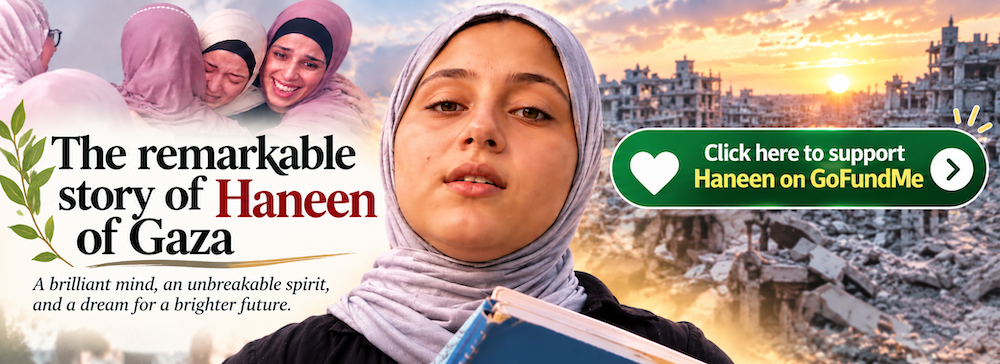
Here, the politics of affect is indispensable. People are not persuaded by facts alone; they are moved by feelings, by grief, anger, love, hope. A mother in Gaza grieving her child, a farmer cut off from ancestral land, a student living under blockade. These stories touch universal emotions. When framed with care and respect, they can open hearts that facts alone leave untouched.
Media strategy should follow the same principle. Rather than amplifying outrage or engaging in polarising rhetoric, effective campaigns humanise Palestinian voices, tell emotionally resonant stories, and present clear moral arguments. For sceptics, media should not feel like propaganda but like an invitation to understand, reflect, and ask questions.
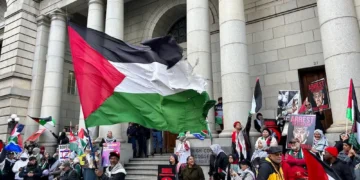
Protests and public actions should likewise be designed to welcome, not exclude. Often, protests can feel performative or alienating to those outside activist circles. Making space for interfaith vigils, cultural events, sports tournaments, or community fundraisers can create diverse points of entry, making solidarity accessible and meaningful across different social groups.
Strategic thinking is critical. What persuades one community may not move another. For religious communities, appeals to shared values of justice and mercy may resonate. For working class neighbourhoods, the focus may be on poverty, housing, and economic justice. For youth, it may be about decolonisation, human rights, and climate justice. Effective solidarity adapts to its audience rather than expecting everyone to come on board through the same slogans or symbols.
Finally, none of this works without inclusive dialogue and an ethic of care. Many sceptics worry about the divisive tone of public discourse around Palestine. They fear being accused, misunderstood, or alienated. Building sustainable solidarity means creating spaces where disagreement is allowed, where doubts can be voiced, and where people can come to understanding at their own pace. It means actively countering antisemitism, Islamophobia, and any form of bigotry, and making clear that Palestinian solidarity is a fight for human dignity, not a fight against any one people or faith.
In short, advancing the Palestinian cause is not about demanding instant agreement or forcing people into hardened positions. It is about inviting people into a process of moral awakening, emotional connection, and critical reflection. By grounding solidarity in democratic populism, focusing on bread-and-butter concerns, using the politics of affect wisely, and centring local communities as the key agents of change, we can build a broad-based movement that not only stands with Palestine but also strengthens the social fabric of our own cities.
You may also want to read


For sceptics, the invitation is not to sign up for an ideology, but to open themselves to listening, questioning, and connecting, and perhaps to discover that the struggle for justice in Palestine is deeply intertwined with the struggles for justice we face at home.
Professor Aslam Fataar is Research Professor in Higher Education Transformation, based in the Department of Education Policy Studies, Stellenbosch University.