


















![The market-builder who restrained the market [Part 2]](https://muslimviews.co.za/wp-content/uploads/2026/08/PHOTO-2026-08-25-17-16-32-360x180.jpg)
![The merchant preceding the Prophetic mission [Part 1]](https://muslimviews.co.za/wp-content/uploads/2026/08/01-360x180.jpg)








South Africa is facing a worsening governance crisis as criminal networks infiltrate policing, intelligence and justice structures. With communities exposed to rising violence and weakened state protection, the country stands at a decisive crossroads demanding ethical leadership and civic action.
By PROFESSOR ASLAM FATAAR
South Africa stands in a dangerous place. The police, prosecutors and intelligence services face deep criminal capture. Influential political figures treat state offices as private fiefdoms. Syndicates operate inside the very institutions meant to protect the public. Poor communities live in daily fear under the pressure of gangs, drug traders and gun traffickers.
The evidence presented at the Madlanga Commission and in recent parliamentary hearings leaves little doubt that significant parts of the state have drifted into compromised governance. Institutions that once served the public now, in too many cases, serve criminal interests and political factions. This situation has emerged through years of institutional decay, public silence and the erosion of ethical political leadership.
A policing and security system in free fall
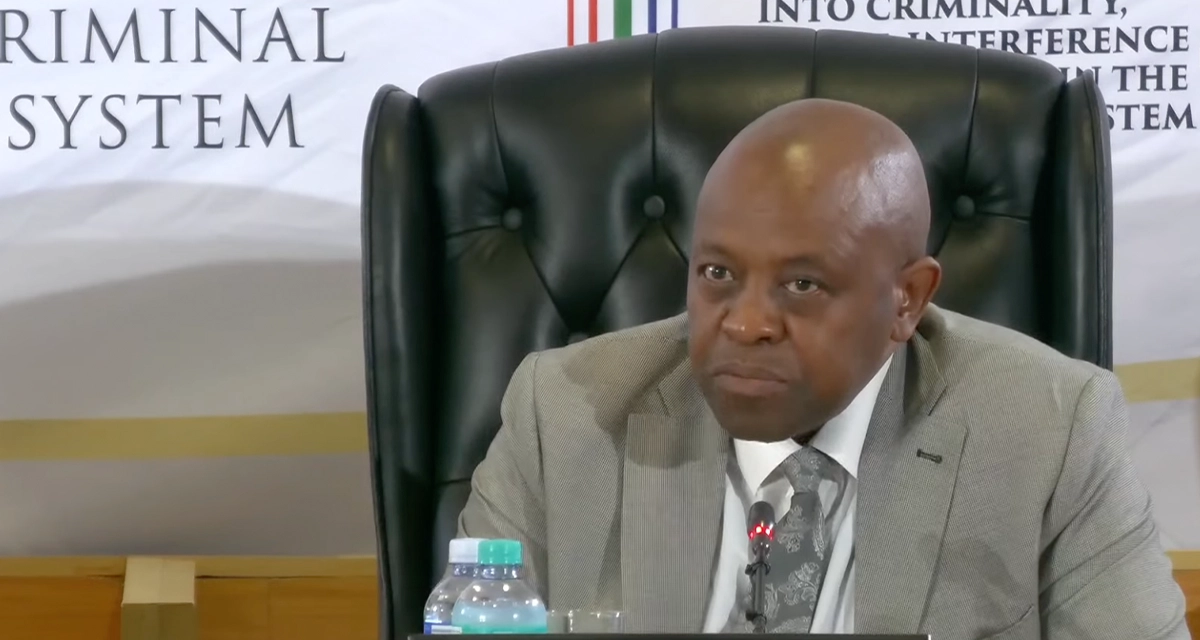
Testimony before the commission shows how senior police figures have enabled criminal networks inside units meant to fight crime. Officers describe compromised leadership, broken procurement systems and political interference in investigations. They speak about rogue policing groups in areas such as Ekurhuleni, fear in the ranks, and open protection of criminal elements.
One senior official offered a bizarre “thumb-sucking” explanation for his actions, now likely facing perjury charges. This reflects a collapse of leadership and contempt for the public. While such excuses play out in parliament, communities face shootings, extortion, drug markets and a near-total loss of safety.
Many families hear gunfire each night. Illegal weapons move freely. Victims remain silent because some police officers sit inside the same networks that harm them. Parents walk their children to school in fear. Shopkeepers open their doors expecting threats. These scenes shape the everyday lives of millions.
A criminal justice system unable to act
The National Prosecuting Authority faces a similar collapse. Its head, Shamilah Batohi, told parliament that it feels as if criminals have taken over the state. This is deeply significant. It shows a prosecuting system unable to stand firm because political support for clean justice has broken down.
Fighting organised crime becomes impossible when political protection flows towards criminal actors rather than investigators. These failures form a pattern across the state. Criminal groups operate across provinces, municipalities and national departments. Tender corruption, political intimidation and unlawful enrichment sit at the centre of the system.
The political roots of the crisis
At the base of this crisis lies a political culture that treats the state as a feeding trough. Factions across parties compete for contracts, jobs and influence. Some speak for the poor while diverting public resources to private networks. They speak of empowerment while empowering only themselves.
The promise of redistribution formed the heart of the democratic settlement. It aimed to restore dignity, equality and opportunity. Instead, it became an empty slogan while real redistribution moved money, contracts and power to criminal entrepreneurs and political insiders.
The public watched this unfold with anxiety, yet also with caution. Many hoped for self-correction. Many believed institutions would recover. This hesitation gave corrupt actors the silent space they needed to embed themselves deep inside the state.
The human cost
The poor bear the heaviest burden. Their streets are unsafe. Their schools face intimidation. Their daily lives lose stability. Gangs grow stronger while the police grow weaker. Children learn to live with fear. Parents learn to expect danger.
Community patrols grow. Private security expands. These efforts help but they fracture society. Those with resources build private safety. Those without remain exposed. Shared citizenship becomes thin.
This moment calls for a renewed national commitment to justice and to the lives of the poor, whose struggles highlight the harshest aspects of the crisis. Any recovery effort must prioritise their safety, dignity and economic stability.
A point of no return
South Africa now stands at a threshold. The country can accept this rogue order as a new normal and watch criminal rule deepen. Or it can refuse this path and demand a complete change in political direction.
The diagnosis exposes a stark reality: the dominant political actors, including those who rely on selective or exclusionary appeals to nationalism to legitimise themselves, are structurally incapable of resolving this crisis. Many are deeply embedded in the networks that produced the current collapse, while others rely on silencing the public to maintain their hold on the state. It is clear that South Africa requires a fundamentally different political approach.
The need for a new moral and political realignment
The country now requires a moral and political realignment drawing energy from all corners of society. Civic groups, faith communities, unions, youth networks, student bodies, professional associations and neighbourhood structures must converge around ethical governance.
This need not take the form of a named movement, but it must become palpable civic pressure arising from the diagnosis itself. Recognition of criminal capture must produce a public conduct that refuses accommodation, demands clean governance and brings fire to the centres of power.
Ethically charged and targeted mass action must become part of our common-sense politics. It must remind political leaders that public anger is organised, continuous and morally grounded.
You may also want to read



This realignment must demand firm oversight of the police and a justice system that acts without fear. It must track political money. It must expose networks linking public officials to criminal syndicates. It must push for the renewal of policing leadership and reform of recruitment, training and command structures.
This realignment must also carry consequences at the ballot box. Parties unwilling or unable to break from criminal influence must face electoral accountability so that ethical leadership is incentivised rather than punished.
The role of ordinary citizens
The public must reclaim the democratic imagination. This work sits in marches, petitions to parliament, public hearings, neighbourhood assemblies and civic education. These actions aim to rebuild the state, not break it. They show that democratic citizenship holds weight.
Citizens must demand open funding records from political parties. They must demand strict candidate screening. They must force parties to remove figures linked to criminal activity. They must show that fear and secrecy will not shape public life.
Civil society holds a decisive role. Faith networks, school bodies, NGOs, research institutes and community leaders can disrupt the points where criminal networks enter the state. Their pressure can shift political outcomes.
A path back to dignity
South Africa can reclaim dignity and democratic purpose. This demands courage from the public and honesty from new voices. It requires a clear moral vision for a society where people live without fear.
The truth remains steadfast: our nation is on a path towards becoming a rogue state. Only tangible, ethically driven and unified action across society can restore it.
Aslam Fataar is a research professor in Higher Education Transformation and a member of the Department of Education Policy Studies, Stellenbosch University.