













![The market-builder who restrained the market [Part 2]](https://muslimviews.co.za/wp-content/uploads/2026/08/PHOTO-2026-08-25-17-16-32-360x180.jpg)
![The merchant preceding the Prophetic mission [Part 1]](https://muslimviews.co.za/wp-content/uploads/2026/08/01-360x180.jpg)






Zohran Mamdani, the empire, and the politics of being grounded
By ADLI YACUBI
In part one of this reflection, we traced how New York State Assemblyman Zohran Mamdani drew strength from his Cape Town childhood — a city whose mosques and movements shaped his early moral imagination.
In this second instalment, I explore how that same inheritance of conscience continues to guide Mamdani’s public life: from his call for justice in Gaza to his unflinching stand for housing, food and human dignity in the heart of the empire.
It is a story that joins the pulpits of Imam Gassan Solomon and Imam Abdullah Haron to the streets of Queens — a lineage of faith that still refuses apology.
IN an age where moral clarity is muddied by performance, the quiet steadfastness of Zohran Mamdani stands apart.
A New York State Assemblyman from Queens, Mamdani’s name surged into global awareness — not because of loud proclamations but because he refused to look away.
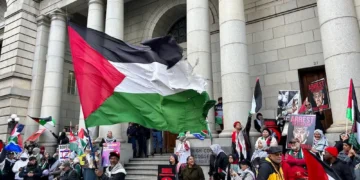
In October 2023, while the skies over Gaza burned with phosphorus and screams, Zohran stood in protest outside the Israeli consulate in Manhattan. He joined thousands calling for a ceasefire — for humanity.
For this, speaking a truth so many politicians fear, he was removed from his position as Housing Committee Chair.
But he did not retract. He did not soften. He did not apologise.
You may also want to read



‘My seat on a committee does not matter more than my conscience.’ — Zohran Mamdani
The return of a different politics
Zohran is the son of Indian-Ugandan scholar Mahmood Mamdani and filmmaker Mira Nair.
He is not simply American; he is a child of East Africa, of South Asia, of displacement and return. His roots grow in Kampala and Queens, Mumbai and Manhattan.
His commitments, though, are local — deeply local: housing, tenants’ rights, food justice.
‘There is no life without food. Roti and Roses is a riff on Bread and Roses as a rallying cry for what workers deserve … When I speak to New Yorkers about what you need to live a dignified life in this city, food is non-negotiable.’ — Zohran Mamdani
These are not glamorous portfolios in the American empire, but they are the work of the grounded.
When faith refuses to be silent
What sets Zohran apart is not only his politics but his refusal to be severed from conscience.
In a time when ‘progressive’ often means ‘carefully curated’, Mamdani’s stance echoes the interfaith alliances that shaped South Africa’s own anti-apartheid struggle — from Desmond Tutu to Imam Abdullah Haron — where politics and faith walked together, not apart.
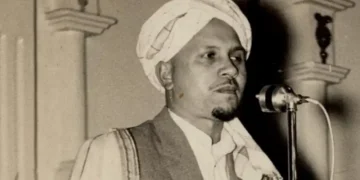
He once attended Claremont Main Road Mosque, the same space that birthed the Call of Islam in the 1980s. It was the mosque of Imam Gassan Solomon, Ebrahim Rasool and Shaykh Seraj Hendricks — men who believed that silence in the face of oppression is complicity.
Their pulpit taught that worship without justice is hollow. From that tradition, Zohran carries the same charge: faith as witness, not ornament.
Mandy Patinkin, a Jewish actor known for his role in Homeland, publicly supported Mamdani. So too did conservative ultra-Orthodox Jewish groups opposed to Zionism.
It is precisely this unusual coalition — of the grounded, the dispossessed, the principled — that speaks to a new moral geography. The map is shifting.
‘There are lines we do not cross, because our dignity will not let us.’ — From a protester’s sign, Queens
New York is not neutral
Some call him reckless. Others, naïve.
But this is not about rhetoric; it is about refusal.
Zohran stood not just in Queens but in the shadow of an empire whose silence is violence. To live in the United States and still say ‘Not in my name’ takes something rare.
In this, Mamdani joins the quiet lineage of those who disobey when the cost is high. His stance, though rooted in New York, finds echoes in Cape Town, Ramallah and Ferguson.
As my friend Khaliq Dollie wrote in response:
‘Beautifully written … how apt that he attended Claremont Main Road Mosque.
If I may be bold, I link this back to Imam Haron, who showed us that religion and politics are not separate.’
To be Muslim, African, grounded and vocal in America is no easy feat. To do it in service of justice — with no apology — is rarer still.
Politics is a field of survival
Let it be said: politics is survival.
Strange alliances will emerge. Mamdani may make compromises. There will be critics.
But we must support him — not for perfection, but for direction.
He is charting a map where empire does not get the final word.
As Tony Karon, my former editor and comrade from the 1980s, recently quipped:
‘Marking myself safe in the NYC Soviet …’
Even in satire, there is recognition — that something is shifting, that the old guards of silence are losing their grip.
‘We don’t need an investigation to know that the NYPD is racist, anti-queer and a major threat to public safety. What we need is to #DefundTheNYPD.’ — Zohran Mamdani
Let us not be afraid to walk with those who try.
Let us not allow empire to define the boundaries of our solidarity.
From Queens, with no apology.
The future is still possible.
Adli Yacubi is a writer, designer and storyteller and the Creative Director, Rabbānī Scrolls & Rafiq al-Bunduqia