

![Does ta’wīl mean interpretation or fulfilment? A Quranic reassessment [+video]](https://muslimviews.co.za/wp-content/uploads/2026/10/Tawil-Kaskas-360x180.webp)







![Why becoming a wealthy Muslim is commendable in Islam [+videos]](https://muslimviews.co.za/wp-content/uploads/2026/09/Muslim-Trade-Business-1-360x180.webp)



The collaborative spirit affirmed that the event was not a one-off occasion but a milestone in an ongoing journey of memory, justice, and education.
MUSLIM VIEWS CORRESPONDENT
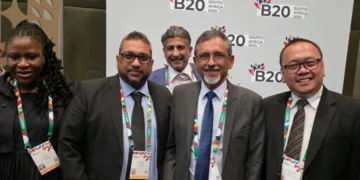
The GG Cillie Building at Stellenbosch University was filled with solemn remembrance, critical engagement, and collective resolve on Wednesday, September 10, 2025, as around 50 participants gathered for a workshop on Mapping the Vlakte through Counter-Surveying.
The session was hosted by the Dialogue, Democracy and Development (DDD) project at Stellenbosch University, led by Professor Aslam Fataar, who also served as moderator of the event.
The gathering brought together members of the displaced Vlakte community, alongside academics and students from Stellenbosch University, the University of Cape Town (UCT), and the Cape Peninsula University of Technology (CPUT).
The Vlakte in Stellenbosch was a vibrant, multiracial community that was systematically destroyed during Apartheid’s forced removals, displacing families from their homes and erasing their neighbourhood life. Today, its restitutional context speaks to the struggle for memory, justice, and redress for those uprooted and dispossessed.
A call to engage
You may also want to read



The symposium opened with a poignant address by Mr Joseph Jacobs, representing the Stellenbosch Vlakte Community Forum. He urged participants to engage actively in processes of restitution and repair, stressing that the memory of the Vlakte must serve as a catalyst for justice and renewal. His words set a reflective and determined tone for the discussions that followed.
Mr Jacobs’ call resonated throughout the day’s proceedings, reminding all present that the task of memory work is inseparable from the responsibility of building fairer futures.
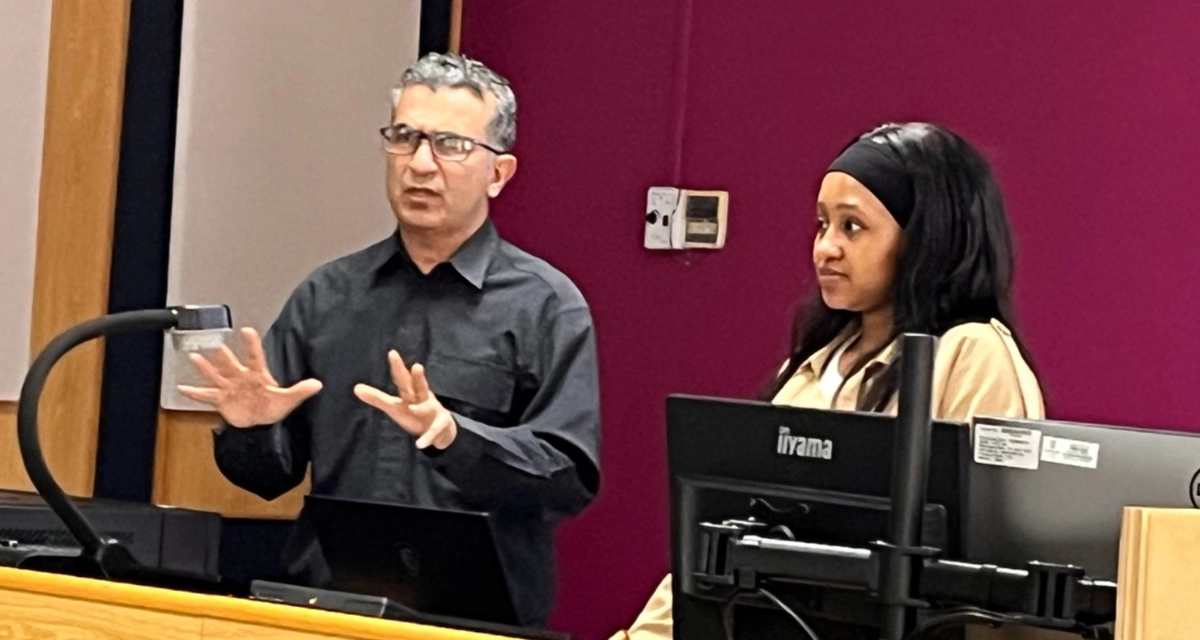
Reclaiming the memory of place
The academic core of the symposium was anchored by Dr Siddique Motala of UCT’s Faculty of Engineering and the Built Environment, who worked in partnership with the Stellenbosch Vlakte Community Forum, and Ms Tlotliso Mokomane, a recent UCT Master’s graduate. Together, they presented their Vlakte mapping project, which seeks to reconstruct the geography and memory of the area erased under apartheid’s Group Areas Act.
At the heart of their work was the testimony of Mr Mogamad Cassiem Ras, whose recollections of everyday life in the Vlakte provided the backbone for the counter-surveying process. Through an integration of oral history and geographic information systems (GIS), the project transformed memory into spatial data, offering a vivid reconstruction of the streets, homes, and social networks that once defined the Vlakte.
The audience received the presentations with deep appreciation. Attendees noted how the method of mapping not only retrieved the memory of space but also dignified the stories of those who were uprooted. The atmosphere was solemn yet generous, critical and constructive, as community voices and academic reflections intertwined.
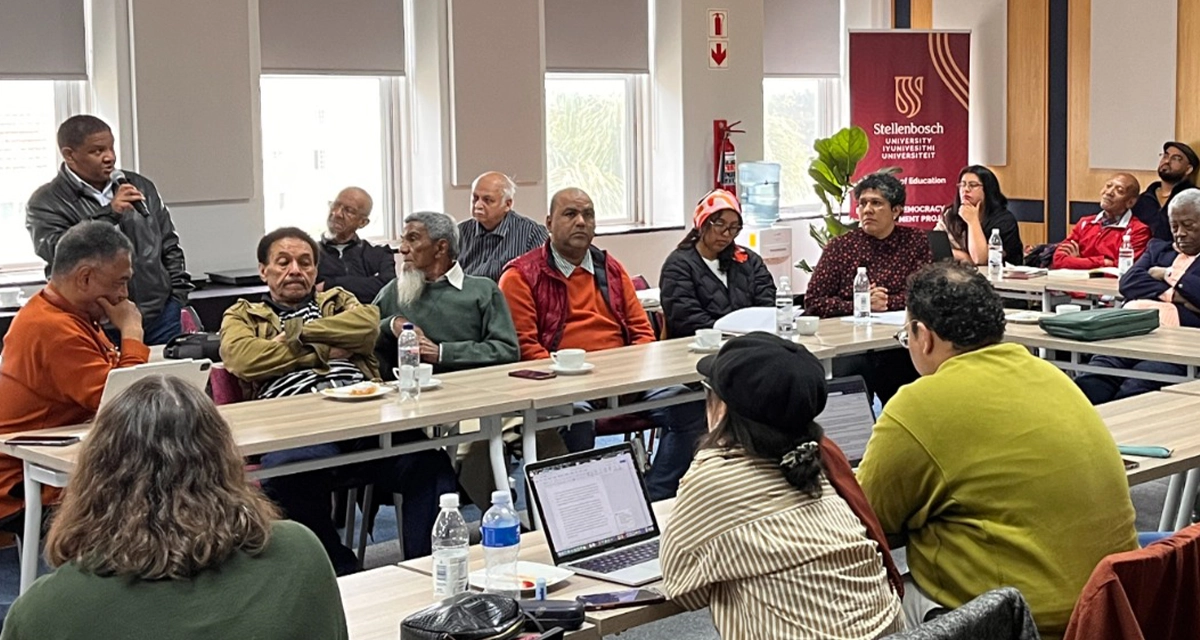
Audience participation and community voice
The open discussion was marked by respectful attentiveness and a willingness to wrestle with difficult questions. Members of the Vlakte community shared their lived experiences of loss, resilience, and yearning for recognition. Younger attendees expressed a desire to engage with this history as part of their educational journey. Academics and students reflected on how counter-surveying opens up new possibilities for research and pedagogy rooted in justice.
A recurring theme was the call for youth education exposure to the Vlakte’s history. Participants argued that the maps and stories should become part of school and university curricula, serving as a basis for active citizenship and futures-making.
Exploring the idea of a walking archive
Among the suggestions raised was the proposal to transform the mapping process into a concrete memorialisation project through a walking archive. This idea, presented as a possible methodology, would entail turning maps and oral histories into guided community walks across the Vlakte’s erased geography.
Restitution, repair, and ownership
Another strong theme of the discussions was the call for restitution and repair under the control of the Vlakte community. Participants stressed that while universities and partners can support the process, decision-making authority must rest with those whose histories were dislocated. The mapping project, they argued, must not become an academic exercise detached from community needs, but rather a collaborative project where knowledge is returned to those who entrusted their stories.
Some participants suggested that restitution could take the form of educational programmes, heritage projects, and symbolic returns to spaces of memory.
Others called for tangible reparations, facilitated through partnerships with the university and broader society. What united the voices in the room was the conviction that repair must be led by the Vlakte community itself.
Success of the workshop
By the close of the session, there was a strong sense of achievement. Participants clearly expressed that they felt honoured by the symposium – both in the recognition of their history and in the openness of the dialogue. The collaborative spirit affirmed that the event was not a one-off occasion but a milestone in an ongoing journey of memory, justice, and education.
For the Vlakte community, it was a moment of reclaiming presence and voice in a space from which they had been historically excluded.
Looking ahead
As the last words of gratitude and commitment were exchanged, it was clear that the symposium had ignited a process that will extend far beyond the walls of the GG Cillie Building. The mapping project, coupled with youth education initiatives, promises to turn the Vlakte’s memory into a resource for building more just and inclusive futures.
In the words of one academic participant: ‘Memory is not about dwelling in loss. It is about carrying forward the dignity of those who came before us, so that new generations can inherit a more just inheritance. Today’s symposium showed us that such work is possible when community and university walk together.’
The Vlakte symposium of September 10, 2025, thus stands as a testament to the power of memory, the promise of intergenerational dialogue, and the possibility of repair.