

























![The market-builder who restrained the market [Part 2]](https://muslimviews.co.za/wp-content/uploads/2026/08/PHOTO-2026-08-25-17-16-32-360x180.jpg)
![The merchant preceding the Prophetic mission [Part 1]](https://muslimviews.co.za/wp-content/uploads/2026/08/01-360x180.jpg)












A sharp critique of Pakistan’s liberal intelligentsia, examining Kashmir, Imran Khan and the shifting politics shaping the region.
By PROFESSOR JUNAID S AHMAD
Empires rarely need propagandists. Their most reliable collaborators tend to arrive dressed as intellectuals.
Pakistan’s liberal intelligentsia is not undergoing a reckoning; it is undergoing a costume change. Yesterday’s embarrassment about Kashmir has been hastily replaced with today’s theatrical militancy. The wardrobe has changed. The opportunism beneath it has not.
For years, large segments of this class treated Kashmir less as a moral catastrophe than as a vulgar Pakistani fixation. Pakistanis who marched in solidarity with Kashmir were dismissed as useful idiots of the security state, ventriloquising Rawalpindi’s paranoia. India, meanwhile — even after the rise of Narendra Modi and the ideological consolidation of Hindutva — remained, in this telling, the region’s flawed but fundamentally liberal democracy. Pakistan’s supposed ‘obsession’ with Kashmir was the real pathology.
It was a comforting thesis for people who preferred diplomatic etiquette to political truth.
During the Nawaz Sharif–Modi moment, this posture hardened into doctrine. Pakistan’s liberals aligned themselves with civilian rapprochement and advertised normalisation with India as enlightened statecraft. Trade corridors, visa regimes, cultural exchanges — the usual incense of elite delusion. And what, precisely, was to be sacrificed to make this maturity possible? Kashmir. It was to be ‘put aside’, as though the central colonial question of South Asia were merely an inconvenient folder that responsible adults could slide off the desk. The idea had the moral coherence of hosting a symposium on racial harmony in apartheid South Africa, provided everyone agreed not to mention apartheid.
Reality, predictably, refused the arrangement.
Kashmir did not vanish. Hindutva did not mellow. The India–Israel alliance became so glaring that ordinary Muslims — from Jakarta to Johannesburg, Bradford to Boston — could explain the ideological affinity between Zionism and Hindutva with more clarity than the think-tank analysts who once treated the observation as impolite exaggeration. The child in the village had grasped what the columnist in the city was still pretending to analyse.
Azad Essa’s Hostile Homelands matters because it exposes this moral evasion with ruthless clarity. The book documents Kashmir as the Achilles’ heel of India’s liberal mythology — revealing how even progressive circles could host dazzling conferences on democracy while maintaining a disciplined silence about colonial rule in Kashmir. But the Pakistani subplot is just as instructive. Sections of Pakistan’s liberal intelligentsia now praise arguments they would once have dismissed as crude nationalist propaganda. The evidence did not change. The politics did.
And the politics now orbit a single gravitational centre: Imran Khan.
Here the intellectual acrobatics become almost comic. The same liberal class that spent decades condemning Pakistan’s security state — often correctly — for its interventions, its war-on-terror brutalities, its architecture of repression, has discovered a remarkable new tolerance for authoritarianism. The reason is embarrassingly simple. The security state’s enemy number one has become their own.
Not Empire.
Not Hindutva.
Not Zionism.
Imran Khan.
Suddenly the military establishment is no longer the principal villain. Suddenly the machinery of repression appears less alarming when it is dismantling the one political force liberals cannot defeat electorally. Thus the miracle: yesterday’s anti-establishment intellectuals quietly become today’s eloquent rationalisers for it.
Which explains why the newly fashionable liberal enthusiasm for Kashmir reeks of bad theatre. Kashmir has become rhetorically useful again — not as principle but as positioning. One can sound militant toward India while remaining exquisitely silent about repression at home. Exported courage remains the cheapest form of heroism in the Muslim world: thunderous against distant tyrannies, whispering before the local dungeon.
And the dungeon, in Pakistan today, contains the most inconvenient fact in any honest discussion of Kashmir: the most popular recent Pakistani political figure among many Kashmiris sits inside it.
You may also want to read



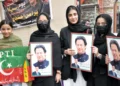
Imran Khan.
Whatever one thinks of him, the political reality is undeniable. He treated Kashmir not as ceremonial rhetoric but as a central diplomatic question. He sought better relations with India — yes — but not by asking Kashmiris to politely disappear so elites could toast ‘regional stability’. More dangerously, he hinted that Kashmiris might deserve political horizons beyond the custodianship of rival states.
Which is precisely why Kashmir discussions in Pakistan that omit his imprisonment are not merely incomplete — they are fraudulent. Panels debate freedom while ignoring the prison down the road.
Recent events have only sharpened the indictment. The largest demonstrations in Asia against the US–Israeli war on Iran erupted not in think-tank auditoriums but in Kashmir and Pakistan’s streets. In Karachi, protesters gathered outside the US Consulate. American marines opened fire and gunned down Pakistani citizens. And the response of the Pakistani regime was not outrage but apology — regret that the consulate had been inconvenienced by Pakistani protesters who had just been shot on Pakistani soil.
Empires appreciate that level of discipline.
Meanwhile, when a Pakistani television channel recently interviewed Kashmiris about Pakistan’s support, many respondents thanked Pakistan — but specifically praised Imran Khan, while also expressing scepticism about Pakistan’s geopolitical management of their struggle. The channel reportedly trimmed the footage. Kashmiri agency has a habit of ruining scripts.
And that is the final irony. Sections of Pakistan’s liberal intelligentsia once mocked Pakistanis for caring about Kashmir, mirrored the evasions of Indian liberals who preferred not to mention it, and now perform sudden anti-India militancy because it serves one domestic obsession.
Their enemy is not occupation, empire, or militarism.
It is the man the security state has caged.
That is not principle. It is opportunism with elegant grammar. And history — patient, unsentimental, and unimpressed by intellectual costume changes — usually recognises the difference.
Prof. Junaid S Ahmad teaches Law, Religion, and Global Politics and is the director of the Center for the Study of Islam and Decolonisation (CSID), Islamabad, Pakistan. He is a member of the International Movement for a Just World (JUST), Movement for Liberation from Nakba (MLN), and Saving Humanity and Planet Earth (SHAPE).