
























![The market-builder who restrained the market [Part 2]](https://muslimviews.co.za/wp-content/uploads/2026/08/PHOTO-2026-08-25-17-16-32-360x180.jpg)
![The merchant preceding the Prophetic mission [Part 1]](https://muslimviews.co.za/wp-content/uploads/2026/08/01-360x180.jpg)









MAHMOOD SANGLAY
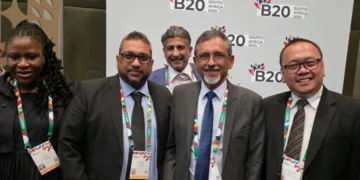
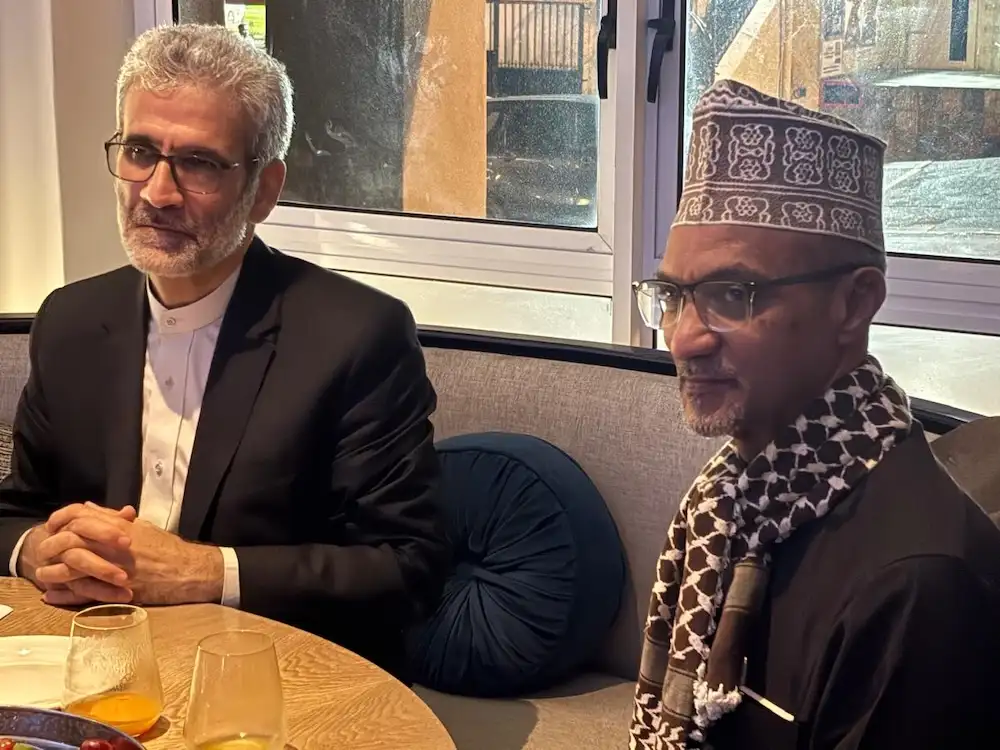
The Iranian ambassador to South Africa, Mansoor Shakibmehr, met with some prominent and diverse Muslims and social justice activists in Cape Town on June 24, 2025 at the Hyatt Hotel.
In a spirited and wide-ranging exchange with an audience of eighteen interlocutors, the ambassador responded to some probing questions following his address on the Israeli attack on Iran on June 13.
The gathering included civil society representatives, journalists, and Palestine solidarity activists. It was also marked by expressions of solidarity with Iran’s support for Palestine and her tenacious response to Israel’s aggression. However, the engagement also featured pointed questions about Iran’s military preparedness, diplomatic consistency and international alliances.
The ambassador was unequivocal in condemning the Israeli assault calling it a flagrant violation of Articles 2 and 4 of the United Nations Charter. The ambassador said Iran invoked its right to self-defence under Article 51 and launched over 500 long-range missiles and 1000 drones targeting Israeli military installations.
In response to questions on Iran’s unprepared for Israel’s attack, the high-level Iranian casualties and apparent gaps in intelligence, the appeared to deny any surprise, insisting Iran had anticipated such aggression. He explained that Iran’s military had been on high alert since the open genocide in Gaza erupted in October 2023. However, he acknowledged the loss of senior military and nuclear scientists, which he attributed to ‘exploited vulnerabilities,’ including the infiltration of foreign nationals. He claimed these setbacks were swiftly addressed through immediate reappointments and counter-attacks.
A participant raised the contradiction between Ayatollah Khamenei’s declaration of ‘no war, no negotiation’ and the government’s reported indirect talks with the United States. Ambassador Shakibmehr stressed that no policy—ceasefire or negotiation—could proceed without the Supreme Leader’s endorsement. He insisted decisions were made through extensive consultation and strategic foresight, not unilateral deviation.
A community activist expressed disappointment at reports of a ceasefire with Israel, asking why Iran had not ‘taken it to the end.’ Shakibmehr clarified that the ceasefire was not an act of appeasement, nor a recognition of Israel, but a tactical pause to consolidate military positioning. He underlined that hostilities may resume and reiterated Iran’s commitment to the Palestinian cause.
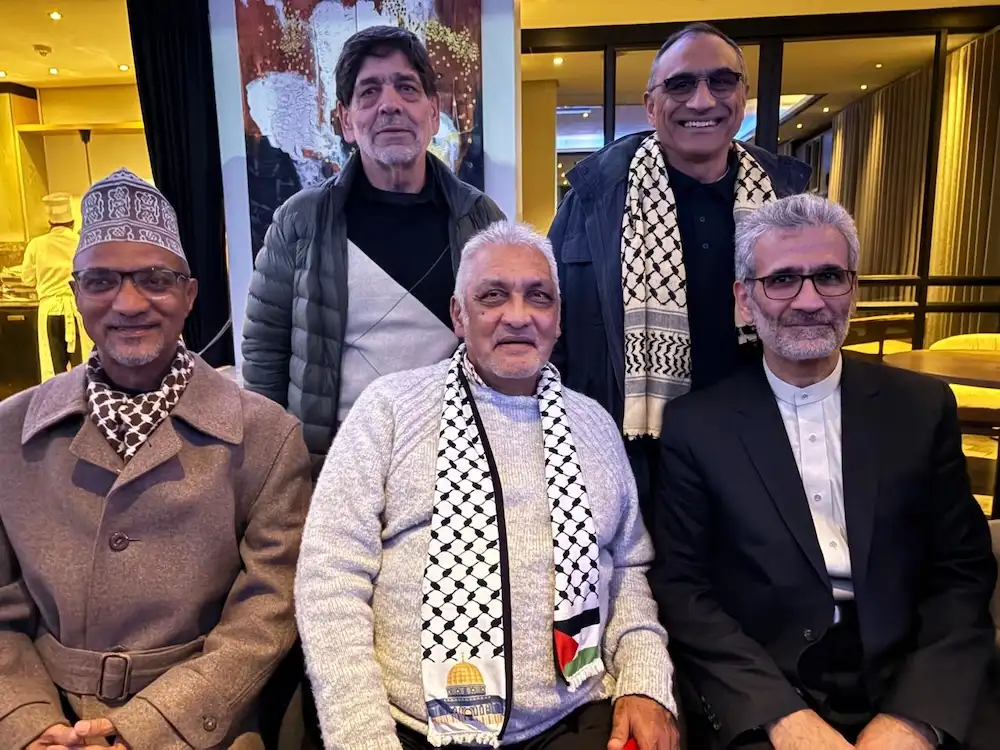
Photo ANWAR ARENDSE
South Africa and global hypocrisy
A representative of the Palestine Solidarity Campaign challenged South Africa’s mild response to the US bombing of Iranian nuclear sites. Ambassador Shakibmehr acknowledged this concern but praised South Africa’s role at the International Court of Justice. He contrasted Iran’s uncompromising anti-Zionist stance with what he called the ‘hypocrisy of Western powers,’ adding that Iran continues to operate within international law and the Non-Proliferation Treaty (NPT).
Questions also probed Iran’s uranium enrichment levels. When asked why Iran enriched uranium to 60%, Ambassador Shakibmehr responded that such enrichment is not prohibited by the NPT. He framed Iran’s nuclear programme as a peaceful but sovereign initiative, stating that the programme is ‘localised and indestructible,’ regardless of external attacks.
A question was raised about Iran allegedly refusing strategic military support from Russia. The ambassador confirmed ongoing cooperation with Russia but denied that any offers were turned down due to Western negotiations. He insisted Iran’s military decisions remain independent and are shaped by Iran’s long-term strategic calculations.
Commenting on the meeting, Imam Abdul Rashied Omar, who attended the gathering, observed that Ambassador Shakibmehr highlighted three critical elements of Iran’s resilience: the deep faith of the Iranian people, their national unity, and the wise leadership of the Iranian state.
Reflecting on the broader tone of the meeting, Imam Omar concluded that despite the immense costs of the conflict, the ambassador saw strategic benefits for Iran. He recalled that Shakibmehr encouraged attendees to challenge the hegemonic narratives of the Western media and promote truthful, independent accounts of global injustice.
The ambassador was candid when addressing Iran’s continued engagement with the United Nations. While acknowledging the institution’s flaws, Shakibmehr reportedly said there are currently no practical alternatives, although Iran remains committed to deepening alliances with like-minded nations in the Global South.
You may also want to read



Ambassador Shakibmehr expressed dismay at the failure of the United Nations Security Council to respond appropriately, citing the dominance of global superpowers within the institution. He also drew attention to allegations that some Afghan refugees, initially received by Iran on humanitarian grounds, were later revealed to be Israeli spies.
Throughout the session, Ambassador Shakibmehr called on the South African public and Muslim leaders to amplify Iran’s narrative and expose ‘Zionist crimes’ and Western complicity. He praised South Africans for their historical understanding of apartheid and urged them to continue advocating for justice, particularly for Palestinians.
‘We ask you, as leaders, as preachers, as people with influence, to help clarify our side of the story to the public,’ he concluded.