













![The market-builder who restrained the market [Part 2]](https://muslimviews.co.za/wp-content/uploads/2026/08/PHOTO-2026-08-25-17-16-32-360x180.jpg)
![The merchant preceding the Prophetic mission [Part 1]](https://muslimviews.co.za/wp-content/uploads/2026/08/01-360x180.jpg)








A reflection on genetic testing, colonial history and District Six, exploring how belonging is formed through movement, ethics and shared responsibility.
By PROFESSOR ASLAM FATAAR
A genetic test is often framed as a personal exercise — a way of discovering who one is and where one comes from. Yet, approached carefully, it opens onto questions that extend far beyond individual identity. It draws attention to long histories of movement, coercion, intimacy and survival that shape lives across generations, particularly in societies marked by colonialism.
This became clear when my family decided to take genetic tests together. When the results arrived, my wife, Najwa, and our daughter, ʿImadah, eagerly opened theirs. They examined their genetic maps with curiosity and pleasure, pausing to explore surprising links and distant regions. I, by contrast, approached my own results more cautiously.
What they encountered was not treated as explanation or proof, but as an invitation — an opportunity to imagine connection without fixing identity. Their response was open-ended and affirmative, rooted in wonder rather than certainty. This offered me a vital cue: the exercise did not need to resolve who we are. Instead, it could help us reflect on how lives are shaped through history and encounter. That attitude gave me a platform to make sense of my own results.
Routes rather than roots
Read this way, a genetic map does not settle questions of belonging. It offers a language of circulation. It traces routes rather than roots. In my case, the map stretches across Maritime Southeast Asia and India, the Deccan and the Gulf of Mannar, the Philippines, Bengal, South, East and West Africa, and Europe. Oceans, ports, crossings, labour routes, intimacy and adaptation are written into it. The story that emerges is not one of a single origin, but of movement across many worlds — movement deeply shaped by colonial power, yet never fully defined by it.
You may also want to read




Dutch and British colonialism sit centrally in this circulation. Empire organised forced migration, labour regimes, racial classification and the violent remaking of social worlds. Enslavement, indenture, dispossession and surveillance were not incidental; they were structural to how people were moved, managed and made unequal. Yet reading this history only through domination risks flattening human experience.
Within and against these coercive systems, people formed families, communities, ethical worlds and ways of living that exceeded imperial control. Colonialism constrained lives, but it did not exhaust human agency or moral imagination.
District Six and the making of ethical life
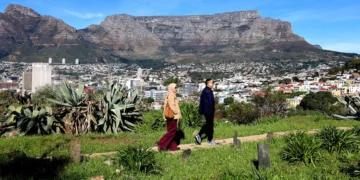
This understanding resonates strongly with the Cape’s history. District Six, where I was born, was a social world forged under conditions of inequality, yet sustained through proximity, care, faith, humour and shared responsibility.
Families with roots in places such as the Bo-Kaap, Claremont and Salt River came together in dense neighbourhoods shaped by labour, faith and survival. People lived closely, materially and emotionally. Children belonged to streets and neighbours as much as to households. Difference was ordinary. Dignity was sustained collectively. These were not abstract ideals, but lived practices developed in the shadow of racial domination.
Life on the Cape Flats extended this formation. In areas such as Grassy Park, where I spent my childhood and early adult life, difference was part of everyday experience. Schooling, recreation, sport and social life crossed religious, group and class lines as a matter of course. Homes were entered easily. Food was shared generously. Dignity was sustained through collaboration, humour, generosity and mutual dependence. These ways of living quietly resisted apartheid’s fragmenting effects, even as people remained subject to its harsh structures.
Political awakening under apartheid
The political atmosphere of the 1980s deepened this awareness. School boycotts and youth activism cultivated an anti-racist stance rooted in solidarity rather than division. While identity mattered, it was understood within a broader ethical framework centred on justice, responsibility and collective resistance. This political consciousness emerged in response to colonial and apartheid oppression, rejecting imposed labels that restricted human potential.
Restitution beyond land and compensation
District Six continues to shape contemporary debates about restitution and belonging. Its destruction was not only the loss of homes and land — devastating as that was — but also the dismantling of a way of living together: a dense moral and social ecology built over generations under oppressive conditions.
Much of today’s restitution discourse understandably focuses on property, compensation and legal redress. District Six and similar places remind us that what was taken was also relational — social worlds, informal economies, networks of care and shared moral practices. Meaningful restitution therefore requires attention not only to material loss, but to restoring the conditions for living together with dignity, security and mutual recognition.
Seen through this lens, genetic knowledge becomes less about self-discovery and more about historical complexity. It reveals how colonial power organised movement and inequality, while also showing how people forged ethical lives within those constraints.
Oceanic routes, African resilience and European entwinement
The Southeast Asian oceanic world plays a significant role in my genetic make-up. Maritime Southeast Asia and South India have long traditions of sea travel, exchange and contact predating European colonialism. Alongside trade, these routes carried knowledge, faith, belief, language and ethical practices. Even during colonial times, lifestyles were shared through trust, action and adaptation. This history shows how values at the Cape were preserved through everyday relationships rather than rigid borders.
African ancestry appears as a smaller genetic strand, yet it carries profound political and moral weight. It connects to Bantu, Khoisan, and West and East African peoples whose lives were violently disrupted, but never emptied of meaning. These histories speak of lives reassembled under extreme constraint, of dignity carried quietly through care for others, cultural fragments preserved against erasure and resilience grounded in everyday ethics. Such experiences sit at the heart of how the Cape was made.
European ancestry also appears, reflecting histories of colonial settlement, dominance and often coerced intimacy shaped by unequal power relations. Colonialism unfolded through personal connection as much as through policy. Acknowledging this requires honest history and an acceptance of intertwinement rather than denial.
Belonging as practice
Taken together, my genetic map offers a language of circulation and localisation shaped by colonial power and human resilience. These routes converged at the Cape, where identities were formed under pressure. Belonging emerged not only as inheritance, but as practice — sustained through care, community and ethical improvisation.
Held reflectively, genetic knowledge reveals how deeply interconnected human lives are. It shows how colonial histories live on in bodies as well as institutions. It reminds us that the past is carried not only in archives and monuments, but in people shaped by labour, violence, trauma, love and ethical commitment.
Why this matters now
These reflections matter at a time when debates about race, restitution and belonging are sharply contested. Claims of origin and entitlement often harden into exclusion. A more capacious reading of history points elsewhere. Belonging is rarely singular. Injustice and intimacy are intertwined. Ethical responsibility grows from acknowledging this complexity.
Histories of apartheid taught many that survival depends on others. Traditions of political struggle taught that justice is collective. Read carefully, a genetic map shows how interwoven human lives remain, even under domination.
Our origins, circulation and local roots lead to the same conclusion: belonging cannot be discovered or inherited in full. It is created through acts of care, justice and responsibility towards one another and the shared world we inhabit.
Aslam Fataar is a Research Professor in Higher Education Transformation in the Department of Education Policy Studies at Stellenbosch University.
- The book in which our featured image appears, District Six – Memories, Thoughts and Images, is available from the District Six Museum (25a Buitenkant Street), Timbuktu Books (19 Golf Course Rd, Sybrand Park), Select Books (56 Surrey Street, Claremont), Clarkes (199 Long Street), The Book Lounge (71 Roeland Street) and Bokmakiri Books (Swellendam).